Department of Microbiology and Immunology, Stanford University School of Medicine, Stanford, CA 94305, USA.
Department of Genetics, Stanford University School of Medicine, Stanford, CA 94305, USA.
Cell. 2018 Jun 14;173(7):1742-1754.e17. doi: 10.1016/j.cell.2018.05.008.
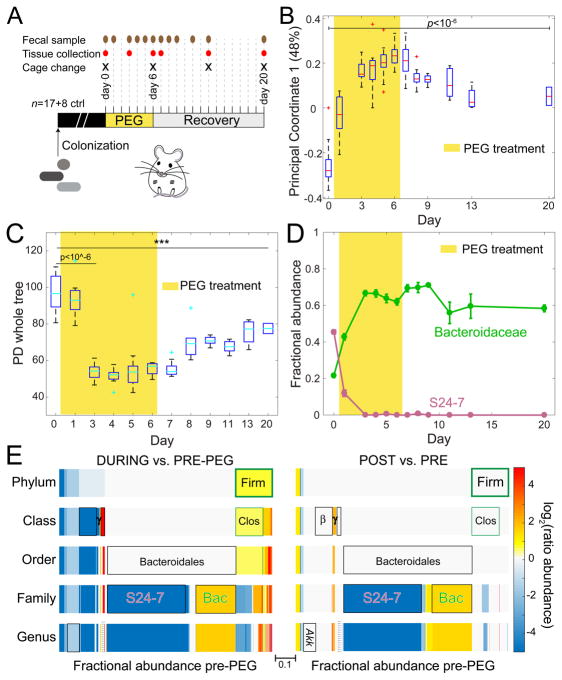
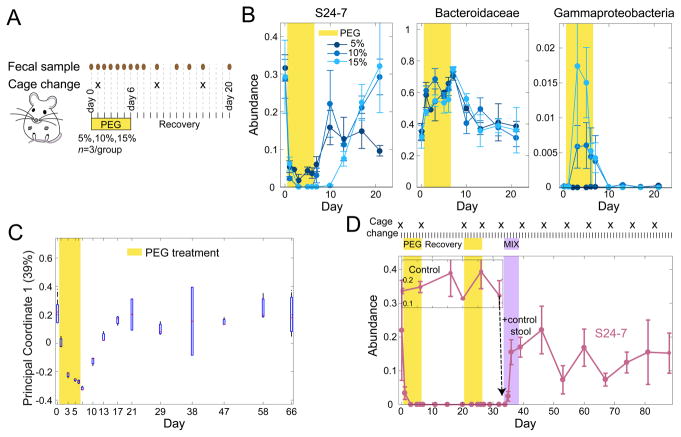
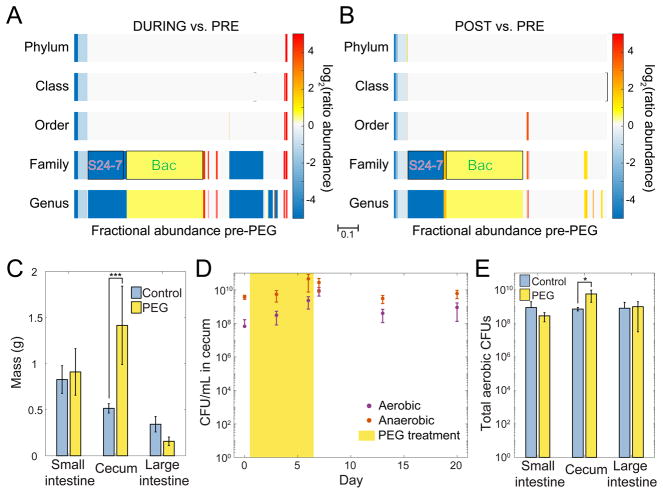
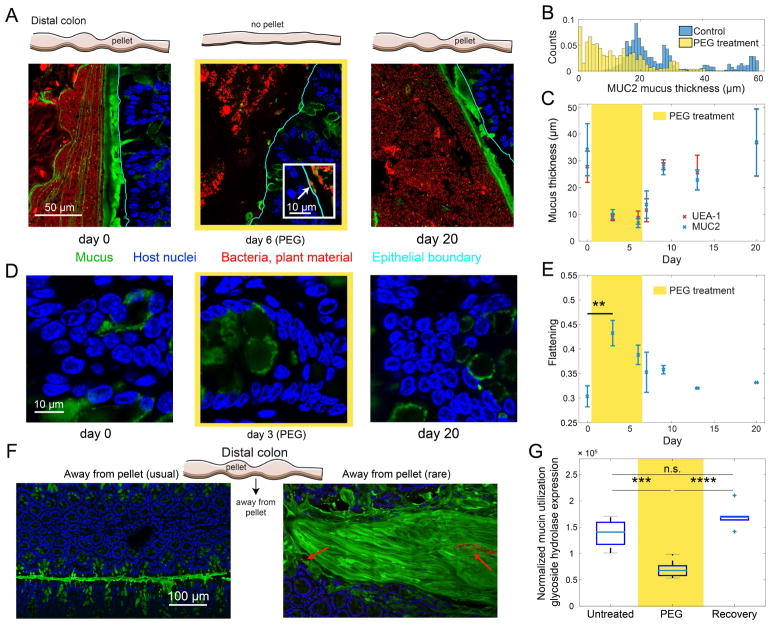
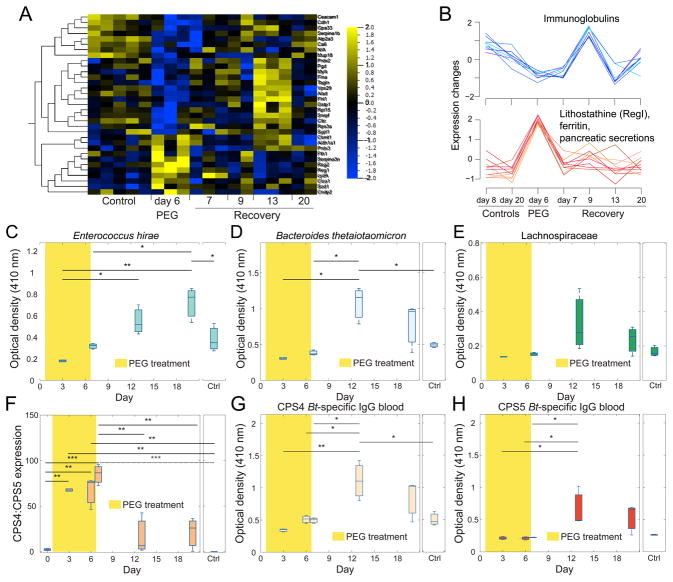
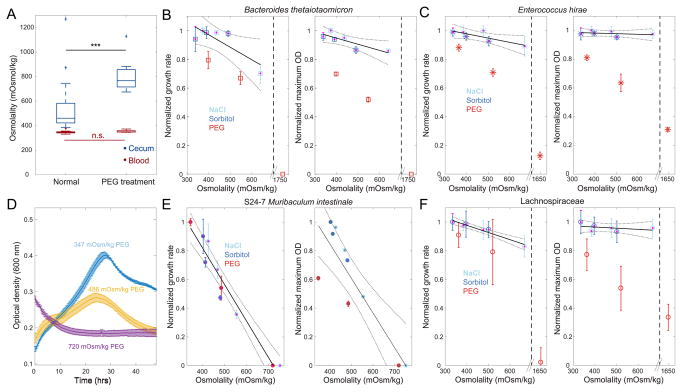
Osmotic diarrhea is a prevalent condition in humans caused by food intolerance, malabsorption, and widespread laxative use. Here, we assess the resilience of the gut ecosystem to osmotic perturbation at multiple length and timescales using mice as model hosts. Osmotic stress caused reproducible extinction of highly abundant taxa and expansion of less prevalent members in human and mouse microbiotas. Quantitative imaging revealed decimation of the mucus barrier during osmotic perturbation, followed by recovery. The immune system exhibited temporary changes in cytokine levels and a lasting IgG response against commensal bacteria. Increased osmolality prevented growth of commensal strains in vitro, revealing one mechanism contributing to extinction. Environmental availability of microbiota members mitigated extinction events, demonstrating how species reintroduction can affect community resilience. Our findings (1) demonstrate that even mild osmotic diarrhea can cause lasting changes to the microbiota and host and (2) lay the foundation for interventions that increase system-wide resilience.
渗透性腹泻是一种常见病症,由食物不耐受、吸收不良和广泛使用通便剂引起。在这里,我们使用小鼠作为模型宿主,在多个长度和时间尺度上评估肠道生态系统对渗透性扰动的恢复能力。渗透胁迫导致人类和小鼠微生物群中高度丰富的分类群可重复地灭绝,而较少流行的成员则扩张。定量成像显示渗透胁迫过程中粘液屏障被破坏,随后恢复。免疫系统表现出细胞因子水平的暂时变化和对共生菌的持久 IgG 反应。较高的渗透压阻止了共生菌株在体外生长,揭示了导致灭绝的一种机制。微生物群成员的环境可利用性减轻了灭绝事件,表明物种再引入如何影响群落的恢复力。我们的发现(1)表明,即使是轻度的渗透性腹泻也会对微生物群和宿主造成持久的影响,(2)为提高系统整体恢复力的干预措施奠定了基础。