Department of Emergency Medicine, Muhimbili University of Health and Allied Sciences, P.O. Box 65001, Dar es Salaam, Tanzania.
Division of Emergency Medicine, Faculty of Health Sciences, University of Cape Town, Private Bag X24 • Bellville, Cape Town, 7535, South Africa.
BMC Emerg Med. 2020 Apr 23;20(1):29. doi: 10.1186/s12873-020-00325-y.
In Tanzania, there is no national trauma registry. The World Health Organization (WHO) has developed a data set for injury that specifies the variables necessary for documenting the burden of injury and patient-related clinical processes. As a first step in developing and implementing a national Trauma Registry, we determined how well hospitals currently capture the variables that are specified in the WHO injury set.
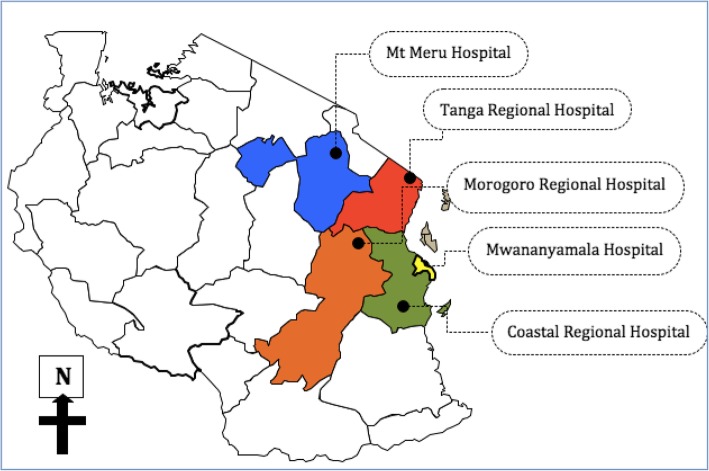
This was a prospective, observational cross-sectional study of all trauma patients conducted in the Emergency Units of five regional referral hospitals in Tanzania from February 2018 to July 2018. Research assistants observed the provision of clinical care in the EU for all patients, and documented performed assessment, clinical interventions and final disposition. Research assistants used a purposefully designed case report form to audit the injury variable capture rate, and to review Ministry of Health (MoH) issued facility Register book recording the documentation of variables. We present descriptive statistics for hospital characteristics, patient volume, facility infrastructure, and capture rate of trauma variables.
During the study period, 2891 (9.3%) patients presented with trauma-related complaints, 70.7% were male. Overall, the capture rate of all variables was 33.6%. Documentation was most complete for demographics 71.6%, while initial clinical condition, and details of injury were documented in 20.5 and 20.8% respectively. There was no documentation for the care prior to Emergency Unit arrival in all hospitals. 1430 (49.5%) of all trauma-related visits seen were documented in the facility Health Management Information System register submitted to the MoH. Among the cases reported in the register book, the date of EU care was correctly documented in 77% cases, age 43.6%, diagnosis 66.7%, and outcome in 38.9% cases. Among the observed procedures, initial clinical condition (28.7%), interventions at Emergency Unit (52.1%), investigations (49.0%), and disposition (62.9%) were documented in the clinical charts.
In the regional hospitals of Tanzania, there is inadequate documentation of the minimum trauma variables specified in the WHO injury data set. Reasons for this are unclear, but will need to be addressed in order to improve documentation to inform a national injury registry.
坦桑尼亚没有国家创伤登记处。世界卫生组织(WHO)制定了一套用于伤害的数据集,其中规定了记录伤害负担和患者相关临床过程所需的变量。作为开发和实施国家创伤登记处的第一步,我们确定了医院目前对 WHO 伤害集规定的变量的捕获情况。
这是一项针对坦桑尼亚五个地区转诊医院急诊部所有创伤患者的前瞻性、观察性横断面研究。研究助理观察了所有患者在欧盟的临床护理情况,并记录了进行的评估、临床干预和最终处置。研究助理使用专门设计的病例报告表来审核伤害变量的捕获率,并审查卫生部(MoH)发布的记录变量的设施登记册。我们为医院特征、患者数量、设施基础设施和创伤变量的捕获率提供描述性统计数据。
在研究期间,有 2891 名(9.3%)患者因与创伤相关的投诉就诊,其中 70.7%为男性。总体而言,所有变量的捕获率为 33.6%。人口统计学数据记录最完整,为 71.6%,而初始临床状况和伤害细节分别记录了 20.5%和 20.8%。所有医院都没有记录在到达急诊部之前的护理情况。所有创伤相关就诊中有 1430 例(49.5%)记录在提交给 MoH 的设施健康管理信息系统登记册中。在登记册中报告的病例中,有 77%的病例正确记录了欧盟护理日期,年龄记录了 43.6%,诊断记录了 66.7%,结局记录了 38.9%。在观察到的程序中,初始临床状况(28.7%)、急诊部干预(52.1%)、检查(49.0%)和处置(62.9%)都记录在临床病历中。
在坦桑尼亚的地区医院中,对 WHO 伤害数据集规定的最低创伤变量记录不足。原因尚不清楚,但需要加以解决,以改善记录,为国家伤害登记处提供信息。