Department of Biomedical Engineering, Carnegie Mellon University, Pittsburgh, PA, USA.
Department of Biomedical Engineering, University of Minnesota, Minnesota, MN, USA.
Nat Commun. 2020 Apr 23;11(1):1946. doi: 10.1038/s41467-020-15781-0.
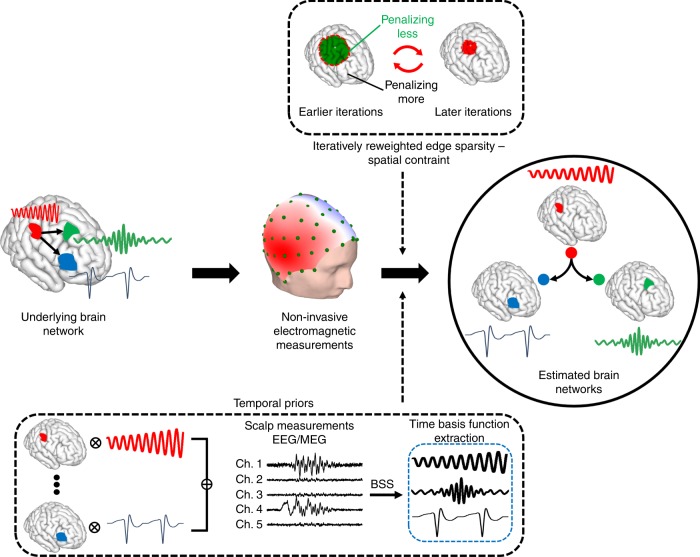
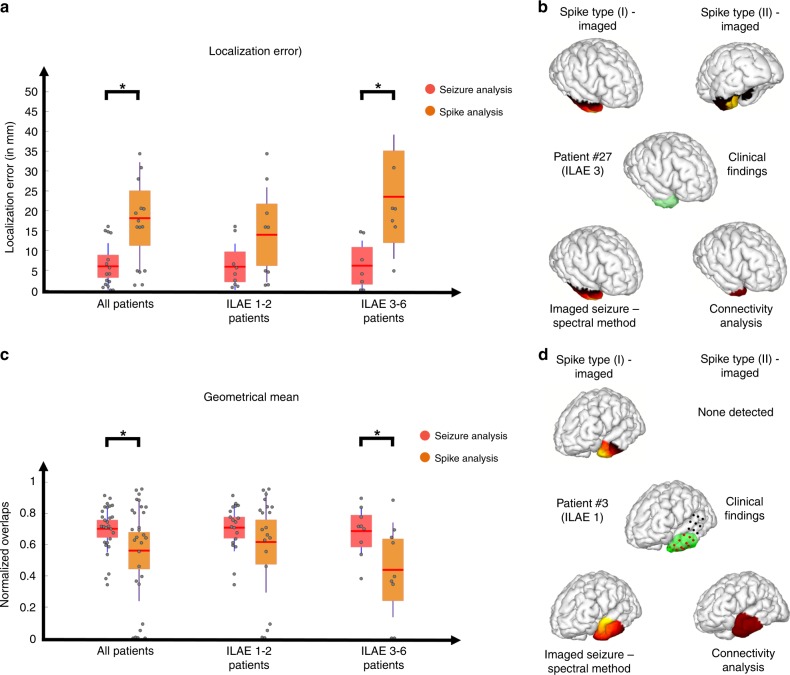
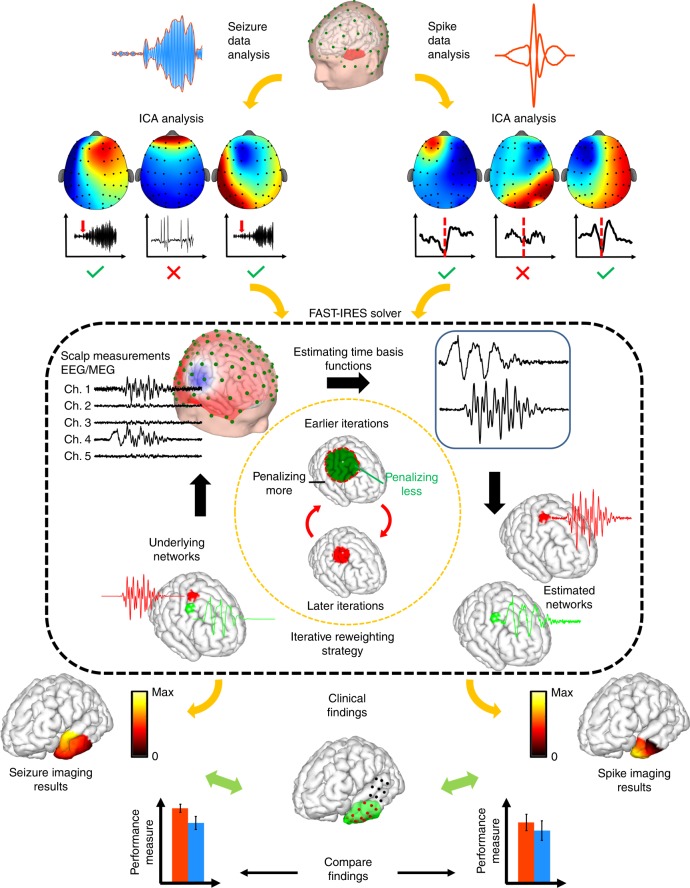
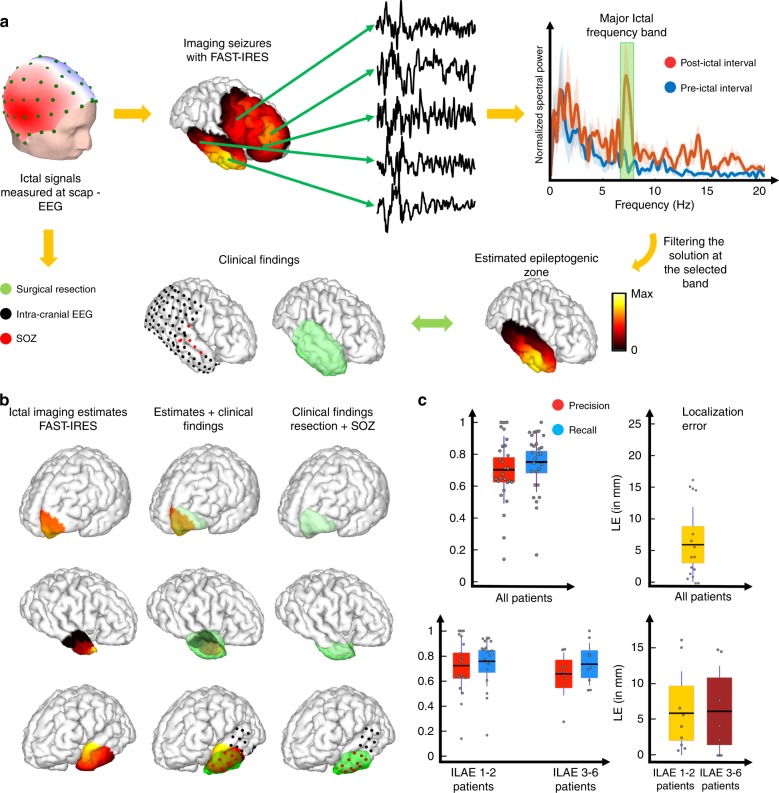
Brain networks are spatiotemporal phenomena that dynamically vary over time. Functional imaging approaches strive to noninvasively estimate these underlying processes. Here, we propose a novel source imaging approach that uses high-density EEG recordings to map brain networks. This approach objectively addresses the long-standing limitations of conventional source imaging techniques, namely, difficulty in objectively estimating the spatial extent, as well as the temporal evolution of underlying brain sources. We validate our approach by directly comparing source imaging results with the intracranial EEG (iEEG) findings and surgical resection outcomes in a cohort of 36 patients with focal epilepsy. To this end, we analyzed a total of 1,027 spikes and 86 seizures. We demonstrate the capability of our approach in imaging both the location and spatial extent of brain networks from noninvasive electrophysiological measurements, specifically for ictal and interictal brain networks. Our approach is a powerful tool for noninvasively investigating large-scale dynamic brain networks.
脑网络是时空现象,随时间动态变化。功能成像方法旨在无创地估计这些潜在过程。在这里,我们提出了一种新的源成像方法,使用高密度 EEG 记录来绘制脑网络。该方法客观地解决了传统源成像技术的长期局限性,即难以客观估计潜在脑源的空间范围和时间演变。我们通过在 36 例局灶性癫痫患者的队列中直接将源成像结果与颅内 EEG(iEEG)发现和手术切除结果进行比较来验证我们的方法。为此,我们分析了总共 1027 个尖峰和 86 个发作。我们展示了我们的方法在从非侵入性电生理测量中成像脑网络的位置和空间范围的能力,特别是对于发作期和发作间期脑网络。我们的方法是一种用于无创研究大规模动态脑网络的强大工具。