Infectious Diseases and Immunity in Global Health Program, Research Institute, McGill University Health Centre, Montréal, QC, Canada.
Chronic Viral Illness Service, McGill University Health Centre, Montréal, QC, Canada.
Front Immunol. 2020 Apr 9;11:645. doi: 10.3389/fimmu.2020.00645. eCollection 2020.
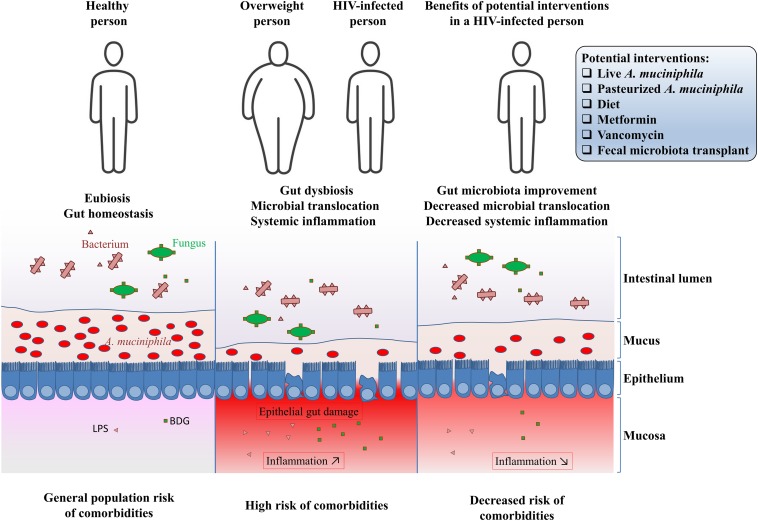
Gut dysbiosis, namely dysregulation of the intestinal microbiota, and increased gut permeability lead to enhanced inflammation and are commonly seen in chronic conditions such as obesity and aging. In people living with HIV (PLWH), several lines of evidence suggest that a depletion of gut CD4 T-cells is associated with gut dysbiosis, microbial translocation and systemic inflammation. Antiretroviral therapy (ART) rapidly controls viral replication, which leads to CD4 T-cell recovery and control of the disease. However, gut dysbiosis, epithelial damage and microbial translocation persist despite ART, increasing risk of developing inflammatory non-AIDS comorbidities such as cardiovascular disease, diabetes mellitus, liver steatosis and cancer. In addition to ART, an emerging research priority is to discover strategies to improve the gut microbial composition and intestinal barrier function. Probiotic interventions have been extensively used with controversial benefits in humans. Encouragingly, within the last decade, the intestinal symbiotic bacterium has emerged as the "sentinel of the gut." A lower abundance of has been shown in diabetic and obese people as well as in PLWH. Interventions with high levels of polyphenols such as tea or diets rich in fruit, the antibiotic vancomycin and the antidiabetic drug metformin have been shown to increase abundance, contributing to improved metabolic function in diabetic and obese individuals. We hypothesize that gut microbiota rich in can reduce microbial translocation and inflammation, preventing occurrences of non-AIDS comorbidities in PLWH. To this aim, we will discuss the protective effect of and its potential applications, paving the way toward novel therapeutic strategies to improve gut health in PLWH.
肠道菌群失调,即肠道微生物群落失调,以及肠道通透性增加导致炎症增强,常见于肥胖和衰老等慢性疾病。在感染人类免疫缺陷病毒(HIV)的人群(PLWH)中,有几条证据表明肠道 CD4 T 细胞耗竭与肠道菌群失调、微生物易位和全身炎症有关。抗逆转录病毒疗法(ART)可迅速控制病毒复制,从而导致 CD4 T 细胞恢复和疾病控制。然而,尽管进行了 ART,肠道菌群失调、上皮损伤和微生物易位仍持续存在,增加了发生非艾滋病炎症合并症(如心血管疾病、糖尿病、脂肪肝和癌症)的风险。除了 ART,一个新的研究重点是发现改善肠道微生物组成和肠道屏障功能的策略。益生菌干预在人类中得到了广泛应用,但效果存在争议。令人鼓舞的是,在过去十年中,肠道共生细菌 已成为“肠道的哨兵”。在糖尿病和肥胖人群以及 PLWH 中, 的丰度较低。研究表明,摄入高水平多酚(如茶)或富含水果的饮食、抗生素万古霉素和抗糖尿病药物二甲双胍等干预措施可以增加 的丰度,有助于改善糖尿病和肥胖个体的代谢功能。我们假设富含 的肠道微生物群可以减少微生物易位和炎症,从而预防 PLWH 中非艾滋病合并症的发生。为此,我们将讨论 的保护作用及其潜在应用,为改善 PLWH 肠道健康的新型治疗策略铺平道路。