Service d'ophtalmologie, CHU Bordeaux, Bordeaux, France.
Inserm, Bordeaux Population Health Research Center, team LEHA, Université de Bordeaux, UMR 1219, F-33000, Bordeaux, France.
Graefes Arch Clin Exp Ophthalmol. 2020 Jun;258(6):1149-1156. doi: 10.1007/s00417-020-04703-x. Epub 2020 Apr 23.
There is an urgent need to address how to best provide ophthalmic care for patients with retinal disease receiving intravitreal injections with anti-vascular endothelial growth factor agents during the ongoing global COVID-19 pandemic. This article provides guidance for ophthalmologists on how to deliver the best possible care for patients while minimizing the risk of infection.
The Vision Academy's Steering Committee of international retinal disease experts convened to discuss key considerations for managing patients with retinal disease during the COVID-19 pandemic. After reviewing the existing literature on the issue, members put forward recommendations that were systematically refined and voted on to develop this guidance.
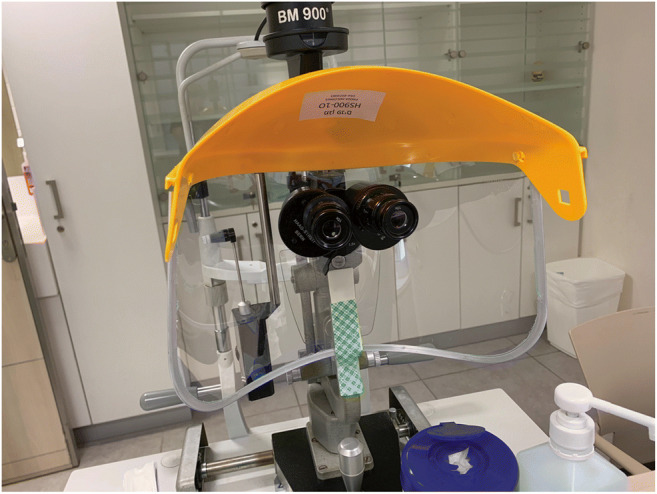
The considerations focus on the implementation of steps to minimize the exposure of patients and healthcare staff to COVID-19. These include the use of personal protective equipment, adherence to scrupulous hygiene and disinfection protocols, pre-screening to identify symptomatic patients, and reducing the number of people in waiting rooms. Other important measures include triaging of patients to identify those at the greatest risk of irreversible vision loss and prioritization of treatment visits over monitoring visits where possible. In order to limit patient exposure, ophthalmologists should refrain from using treatment regimens that require frequent monitoring.
Management of patients with retinal disease receiving intravitreal injections during the COVID-19 pandemic will require adjustment to regular clinical practice to minimize the risk of exposure of patients and healthcare staff, and to prioritize those with the greatest medical need. The safety of patients and healthcare staff should be of paramount importance in all decision-making.
在全球 COVID-19 大流行期间,如何为接受抗血管内皮生长因子(VEGF)药物玻璃体腔注射的视网膜疾病患者提供最佳眼科护理,这是一个亟待解决的问题。本文为眼科医生提供了在尽量降低感染风险的同时为患者提供最佳护理的指导。
Vision Academy 的国际视网膜疾病专家指导委员会召开会议,讨论在 COVID-19 大流行期间管理视网膜疾病患者的关键注意事项。在回顾了关于该问题的现有文献后,委员们提出了建议,并对建议进行了系统的细化和投票,以制定本指南。
这些注意事项集中在实施措施以尽量减少患者和医护人员暴露于 COVID-19 的风险上。这些措施包括使用个人防护设备、严格遵守卫生和消毒方案、对有症状的患者进行预先筛查、以及减少候诊室的人数。其他重要措施包括对患者进行分诊,以确定那些最有可能发生不可逆视力丧失的患者,并尽可能优先处理治疗就诊,而不是监测就诊。为了限制患者的暴露,眼科医生应避免使用需要频繁监测的治疗方案。
在 COVID-19 大流行期间管理接受玻璃体腔注射治疗的视网膜疾病患者,需要对常规临床实践进行调整,以尽量降低患者和医护人员暴露的风险,并优先考虑那些有最大医疗需求的患者。在所有决策中,患者和医护人员的安全应是重中之重。