Department of Gynecology, The First Affiliated Hospital of Nanjing Medical University, Nanjing, China.
Department of Gynecology, The Affiliated Huai'an No.1 People's Hospital of Nanjing Medical University, Huai'an, China.
J Cell Mol Med. 2020 Jun;24(11):6137-6148. doi: 10.1111/jcmm.15228. Epub 2020 Apr 24.
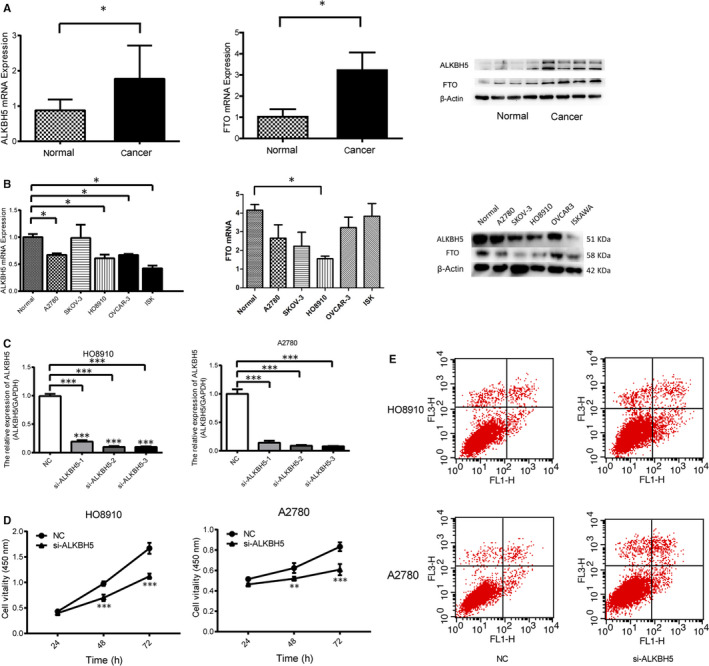
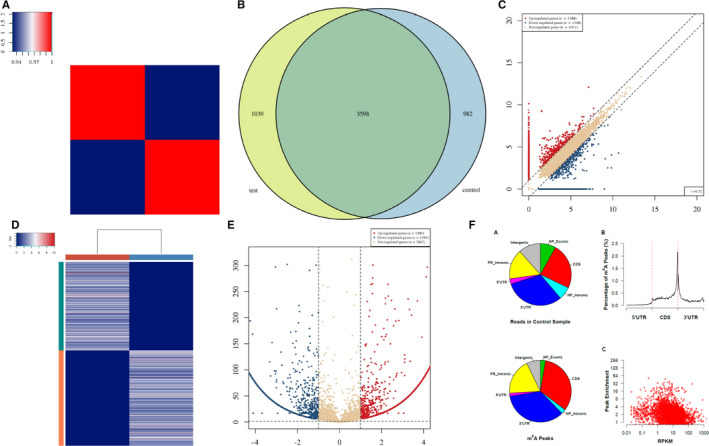
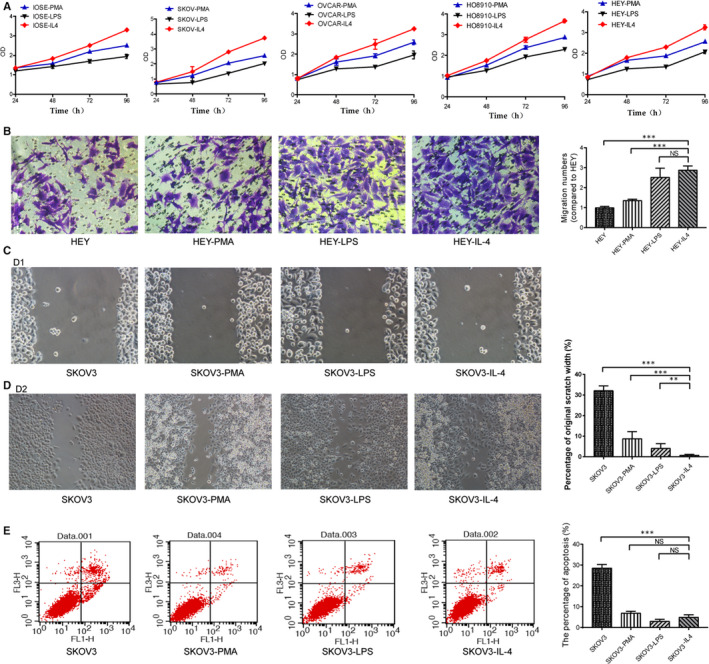
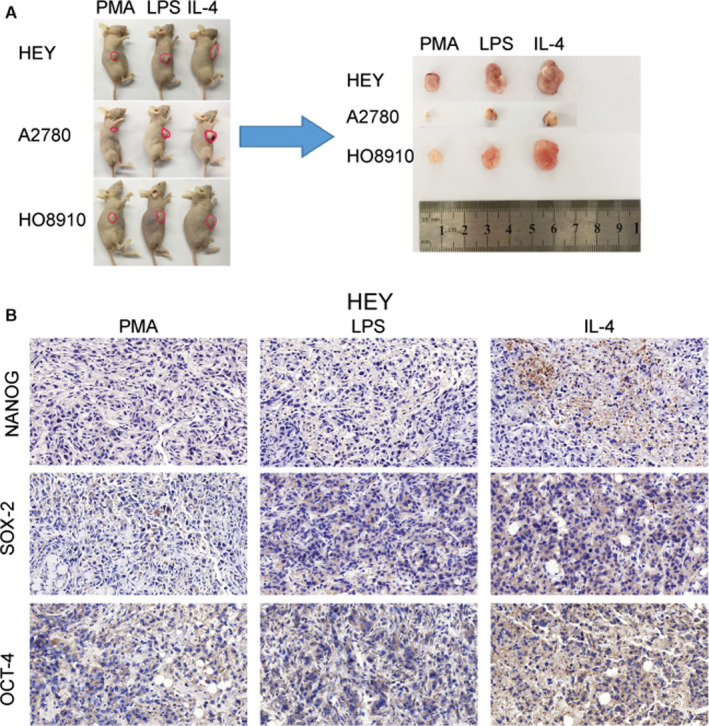
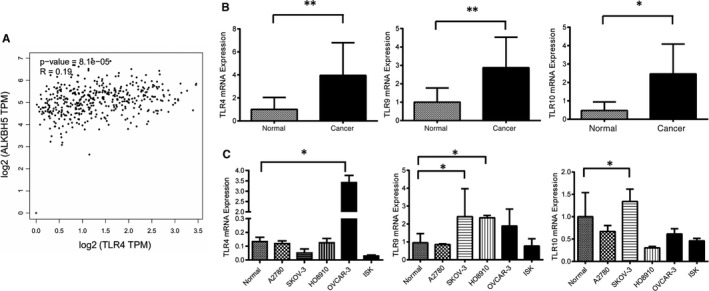
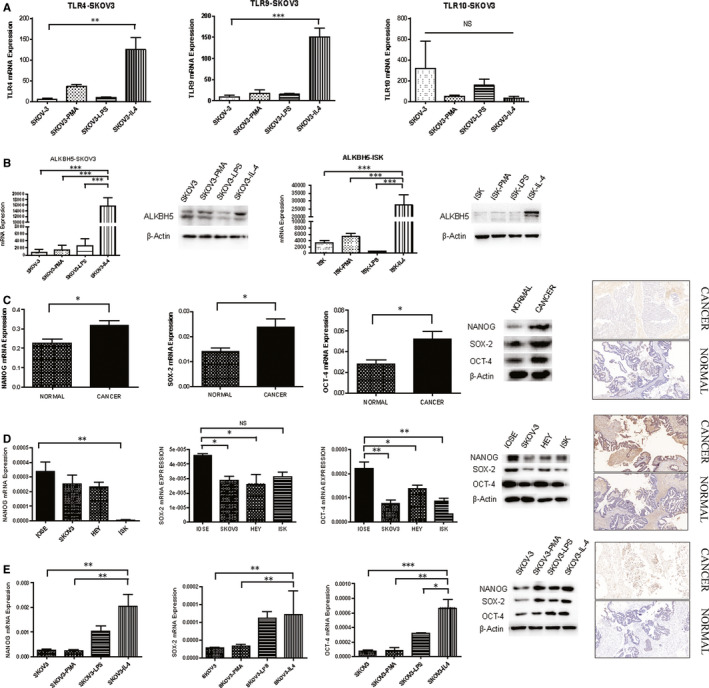
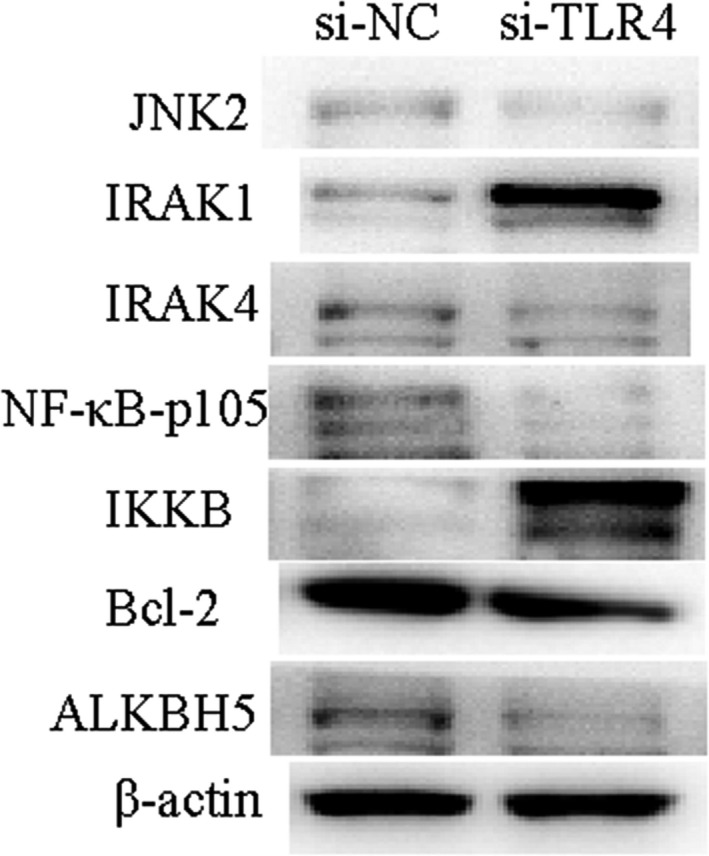
Methylation is the main form of RNA modification. N6-methyladenine (m6A) regulates the splicing and translation of mRNA. Alk B homologue 5 (ALKBH5) participates in the biological regulation of various cancers. However, its role in ovarian carcinogenesis has not been unveiled. In the present study, ALKBH5 showed higher expression in ovarian cancer tissue than in normal ovarian tissue, but lower expression in ovarian cancer cell lines than in normal ovarian cell lines. Interestingly, Toll-like receptor (TLR4), a molecular functioning in tumour microenvironment (TME), demonstrated the same expression trend. To investigate the effect of abnormal TME on ovarian carcinogenesis, we established an in vitro model in which macrophages and ovarian cancer cells were co-cultured. In the ovarian cancer cells co-cultured with M2 macrophages, the expression of ALKBH5 and TLR4 increased. We also verified that TLR4 up-regulated ALKBH5 expression via activating NF-κB pathway. Depending on transcriptome sequencing, m6A-Seq and m6A MeRIP, we found that NANOG served as a target in ALKBH5-mediated m6A modification. NANOG expression increased after mRNA demethylation, consequently enhancing the aggressiveness of ovarian cancer cells. In conclusion, highly expressed TLR4 activated NF-κB pathway, up-regulated ALKBH5 expression and increased m6A level and NANOG expression, all contributing to ovarian carcinogenesis. Our study revealed the role of m6A in ovarian carcinogenesis, providing a clue for inventing new target therapy.
甲基化是 RNA 修饰的主要形式。N6-甲基腺嘌呤(m6A)调节 mRNA 的剪接和翻译。 Alk B 同源物 5(ALKBH5)参与各种癌症的生物调控。然而,其在卵巢癌发生中的作用尚未揭示。在本研究中,ALKBH5 在卵巢癌组织中的表达高于正常卵巢组织,但在卵巢癌细胞系中的表达低于正常卵巢细胞系。有趣的是,Toll 样受体(TLR4),一种在肿瘤微环境(TME)中发挥作用的分子,表现出相同的表达趋势。为了研究异常 TME 对卵巢癌发生的影响,我们建立了一个体外模型,其中巨噬细胞和卵巢癌细胞共培养。在与 M2 巨噬细胞共培养的卵巢癌细胞中,ALKBH5 和 TLR4 的表达增加。我们还验证了 TLR4 通过激活 NF-κB 通路上调 ALKBH5 的表达。基于转录组测序、m6A-Seq 和 m6A MeRIP,我们发现 NANOG 作为 ALKBH5 介导的 m6A 修饰的靶标。mRNA 去甲基化后 NANOG 表达增加,从而增强卵巢癌细胞的侵袭性。总之,高表达的 TLR4 激活 NF-κB 通路,上调 ALKBH5 表达,增加 m6A 水平和 NANOG 表达,共同促进卵巢癌的发生。我们的研究揭示了 m6A 在卵巢癌发生中的作用,为发明新的靶向治疗提供了线索。