From the Department of Psychiatry and Behavioral Sciences, Northwestern Feinberg School of Medicine, Chicago, IL.
Department of Psychiatry, University of Arkansas School of Medicine, Little Rock, AR.
J Clin Psychopharmacol. 2020 May-Jun;40(3):240-249. doi: 10.1097/JCP.0000000000001205.
PURPOSE/BACKGROUND: In addition to clozapine, other atypical antipsychotic drugs pharmacologically similar to clozapine, for example, olanzapine, risperidone, and melperone, are also effective in a similar proportion of treatment-resistant schizophrenia (TRS) patients, ~40%. The major goal of this study was to compare 2 doses of lurasidone, another atypical antipsychotic drug, and time to improvement in psychopathology and cognition during a 6-month trial in TRS patients.
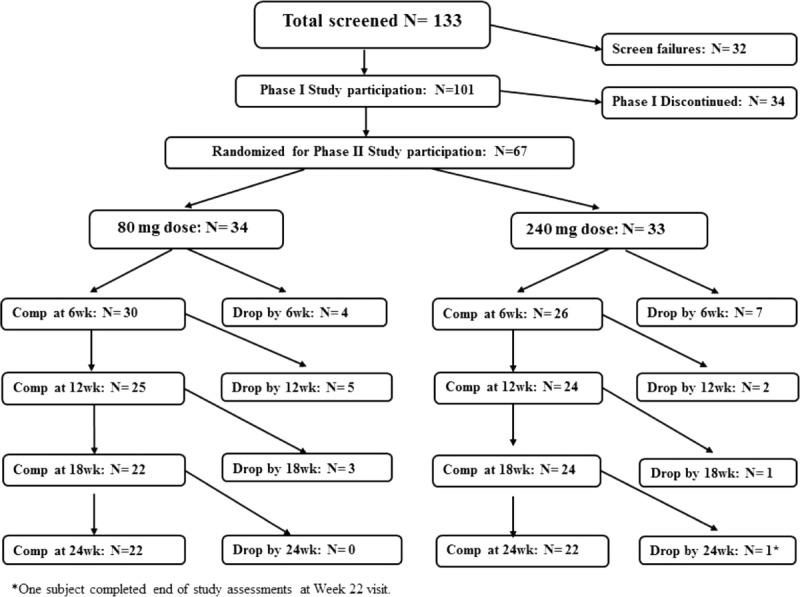
METHODS/PROCEDURES: The diagnosis of TRS was based on clinical history and lack of improvement in psychopathology during a 6-week open trial of lurasidone 80 mg/d (phase 1). This was followed by a randomized, double-blind, 24-week trial of lurasidone, comparing 80- and 240-mg/d doses (phase 2).
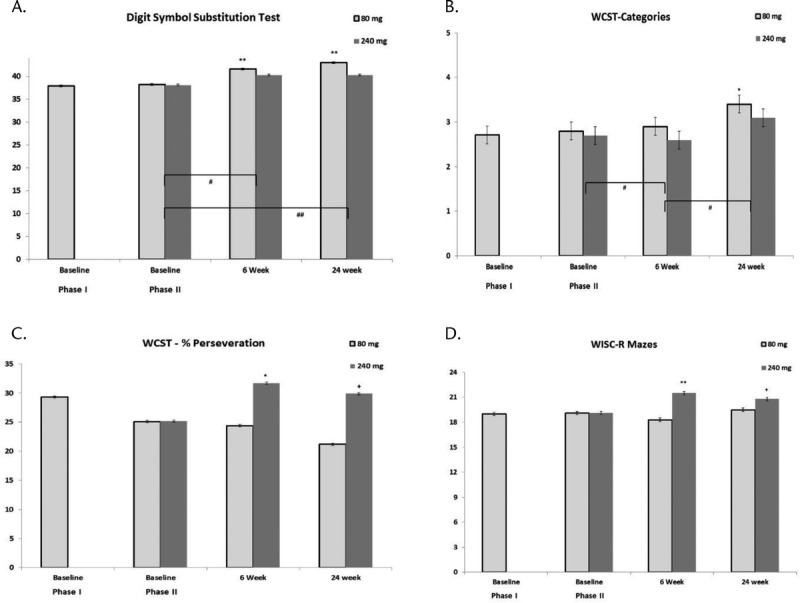
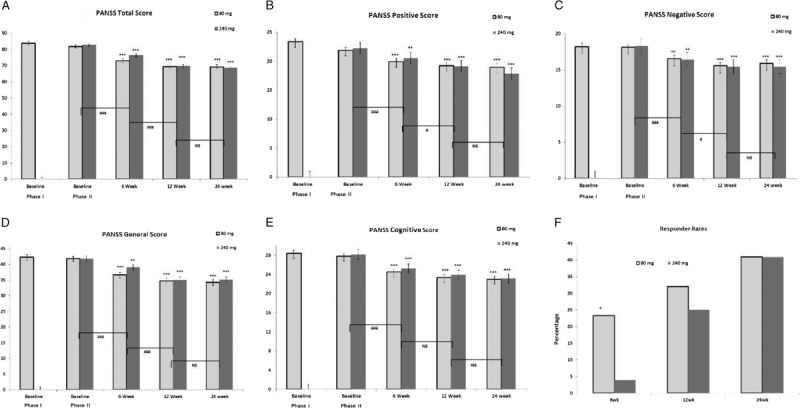
FINDINGS/RESULTS: Significant non-dose-related improvement in the Positive and Negative Syndrome Scale-Total and subscales and in 2 of 7 cognitive domains, speed of processing and executive function, were noted. Twenty-eight (41.8%) of 67 patients in the combined sample improved ≥20% in the Positive and Negative Syndrome Scale-Total. Of the 28 responders, 19 (67.9%) first reached ≥20% improvement between weeks 6 and 24 during phase 2, including some who had previously failed to respond to clozapine.
IMPLICATIONS/CONCLUSIONS: Improvement with lurasidone is comparable with those previously reported for clozapine, melperone, olanzapine, and risperidone in TRS patients. In addition, this study demonstrated that 80 mg/d lurasidone, an effective and tolerable dose for non-TRS patients, was also effective in TRS patients but required longer duration of treatment. Direct comparison of lurasidone with clozapine in TRS patients is indicated.
目的/背景:除氯氮平外,其他与氯氮平药理学相似的非典型抗精神病药物,例如奥氮平、利培酮和甲硫哒嗪,在治疗抵抗性精神分裂症(TRS)患者中也有类似比例的疗效,约为 40%。本研究的主要目的是比较另一种非典型抗精神病药物鲁拉西酮的 2 种剂量,以及在 TRS 患者的 6 个月试验中改善精神病理学和认知的时间。
方法/程序:TRS 的诊断基于临床病史和鲁拉西酮 80mg/d 开放试验 6 周时精神病理学无改善(第 1 阶段)。随后进行了为期 24 周的随机、双盲、双盲试验,比较了 80mg/d 和 240mg/d 剂量(第 2 阶段)。
结果/发现:阳性和阴性综合征量表总分和子量表以及 7 个认知领域中的 2 个领域(加工速度和执行功能)有显著的非剂量相关性改善。在合并样本的 67 例患者中,有 28 例(41.8%)在阳性和阴性综合征量表总分中改善≥20%。在 28 名应答者中,有 19 名(67.9%)在第 2 阶段的第 6 周到第 24 周之间首次达到≥20%的改善,其中包括一些先前对氯氮平无反应的患者。
意义/结论:鲁拉西酮的改善与之前报道的氯氮平、甲硫哒嗪、奥氮平和利培酮在 TRS 患者中的改善相当。此外,本研究表明,80mg/d 的鲁拉西酮是一种对非 TRS 患者有效且耐受良好的剂量,在 TRS 患者中也同样有效,但需要更长的治疗时间。因此,需要在 TRS 患者中直接比较鲁拉西酮与氯氮平。