Zhai Junyu, Li Shang, Hu Min, Di Fangfang, Liu Jiansheng, Du Yanzhi
Center for Reproductive Medicine, Ren Ji Hospital, School of Medicine, Shanghai Jiao Tong University, 845 Lingshan Road, Shanghai, 200135, China.
Shanghai Key Laboratory for Assisted Reproduction and Reproductive Genetics, Shanghai, 200135, China.
Reprod Biol Endocrinol. 2020 Apr 25;18(1):32. doi: 10.1186/s12958-020-00592-1.
The interface between environmental risk factors and genetic factors could contribute to the pathogenesis of hyperandrogenism and insulin resistance in polycystic ovary syndrome (PCOS); however, the underlying complex mechanism remains to be elucidated.
We used dehydroepiandrosterone (DHEA)-induced PCOS-like rat model to measure circadian clock genes and insulin resistance-related genes. Additionally, we performed in vitro experiments in mature adipocytes to verify the molecular mechanisms.
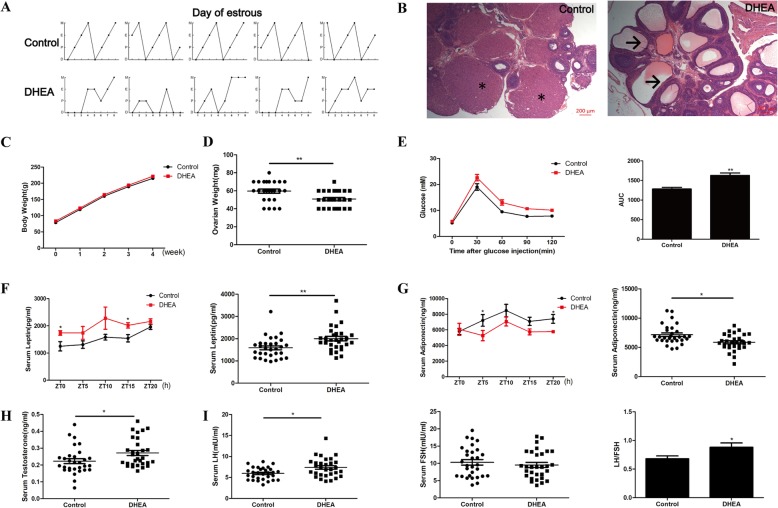
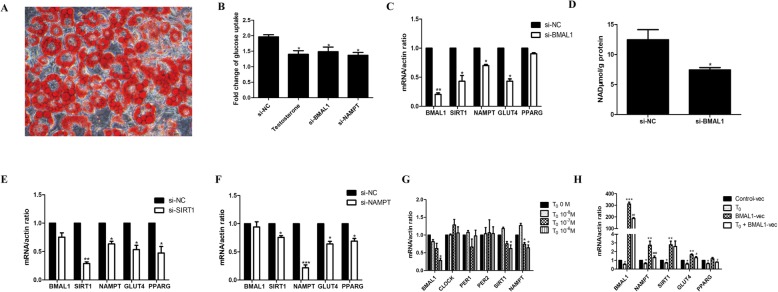
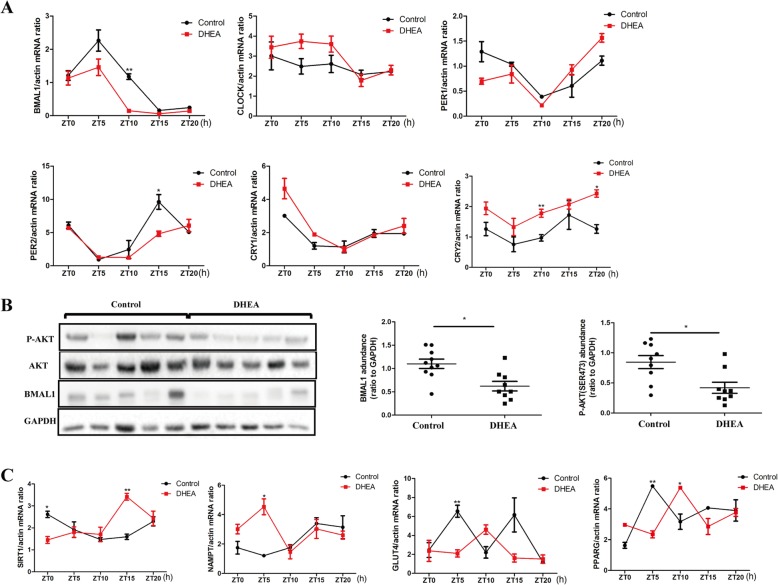
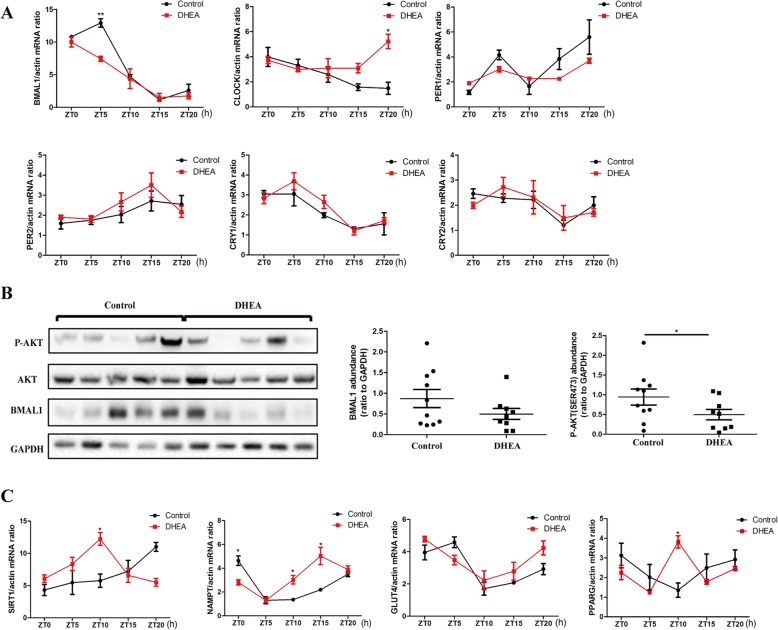
DHEA-induced PCOS-like rats exhibited insulin resistance and arrhythmic expression of circadian clock genes in the liver and adipose tissues, particularly showing decreased brain and muscle ARNT-like protein 1 (BMAL1) expression. In addition, hyperandrogenism gave rise to negative regulation of BMAL1 expression to nicotinamide phosphoribosyltransferase and sirtuin 1, which further inhibited downstream glucose transporter type 4, leading to insulin resistance in mature adipocytes, which was consistent with our previous results in HepG2 cells.
Decreased BMAL1 expression in the liver and adipose played a potentially novel role in the contribution of hyperandrogenism to insulin resistance, which might be a possible mechanism accounting for the pathogenesis of PCOS.
环境风险因素与遗传因素之间的相互作用可能在多囊卵巢综合征(PCOS)的高雄激素血症和胰岛素抵抗发病机制中发挥作用;然而,其潜在的复杂机制仍有待阐明。
我们使用脱氢表雄酮(DHEA)诱导的PCOS样大鼠模型来检测生物钟基因和胰岛素抵抗相关基因。此外,我们在成熟脂肪细胞中进行了体外实验以验证分子机制。
DHEA诱导的PCOS样大鼠表现出胰岛素抵抗以及肝脏和脂肪组织中生物钟基因的节律性表达紊乱,尤其表现为脑和肌肉芳香烃受体核转运蛋白样蛋白1(BMAL1)表达降低。此外,高雄激素血症导致BMAL1表达对烟酰胺磷酸核糖转移酶和沉默调节蛋白1产生负调控,进而进一步抑制下游葡萄糖转运蛋白4,导致成熟脂肪细胞中的胰岛素抵抗,这与我们之前在HepG2细胞中的结果一致。
肝脏和脂肪组织中BMAL1表达降低在高雄激素血症导致胰岛素抵抗的过程中发挥了潜在的新作用,这可能是解释PCOS发病机制的一种可能机制。