A Ghadimi-Moghadam, M Haghani, J J Bevelacqua, A Kaveh-Ahangar, S M J Mortazavi, A Ghadimi-Moghadam, S A R Mortazavi
MD, Pediatric Infectious Ward, Yasuj University of Medical Sciences, Yasuj, Iran.
PhD, Department of Radiology, School of Paramedical Sciences, Shiraz University of Medical Sciences, Shiraz, Iran.
J Biomed Phys Eng. 2020 Apr 1;10(2):241-246. doi: 10.31661/jbpe.v0i0.2003-1085. eCollection 2020 Apr.
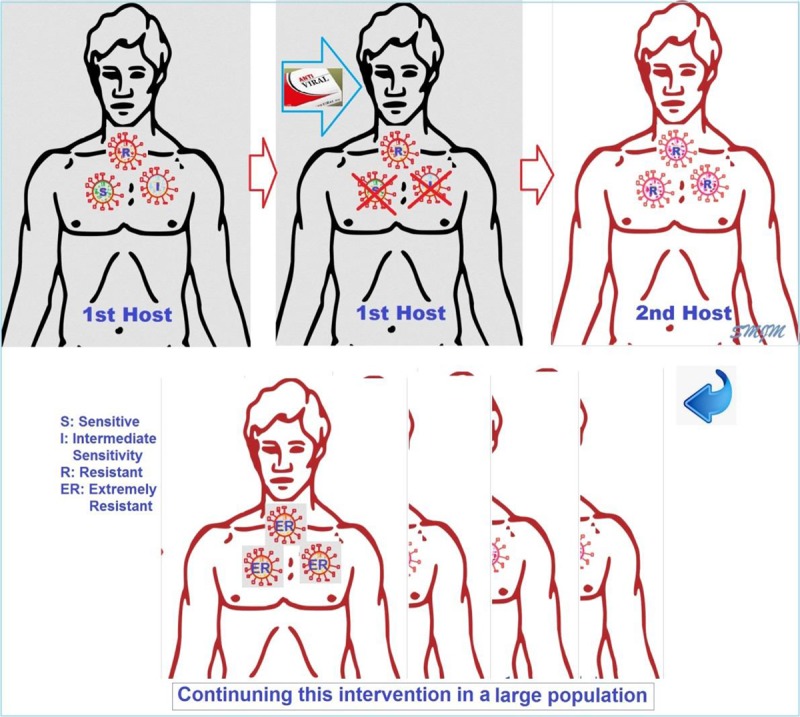
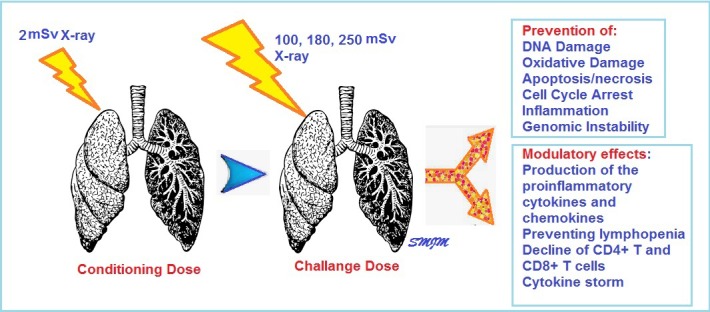
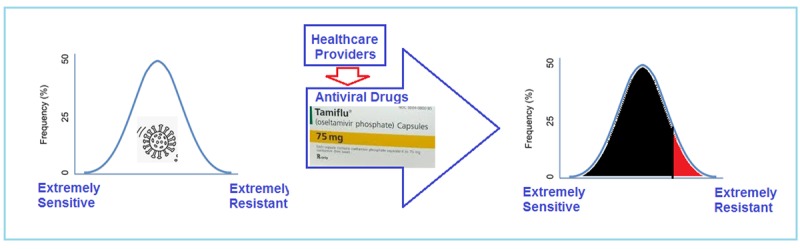
Global health authorities are trying to work out the current status of the novel coronavirus (COVID-19) outbreak and explore methods to reduce the rate of its transmission to healthy individuals. In this viewpoint we provide insights concerning how health care professionals can unintentionally shift the novel coronavirus type to more drug-resistant forms. It is worth noting that viruses usually have different sensitivities to physical and chemical damaging agents such antiviral drugs, UV and heat ranging from extremely sensitive (ES) to extremely resistant (ER) based on a bell-shaped curve. Given this consideration, the widespread infection of people with such ER viruses would be a real disaster. Here, we introduce a modified treatment method for COVID-19-associated pneumonia. In this proposed method, COVID-19 patients will receive a single dose of 100, 180 or 250 mSv X-ray radiation that is less than the maximum annual radiation dose of the residents of high background radiation areas of Ramsar that is up to 260 mSv. In contrast with antiviral drugs, a single dose of either 100, 180 or 250 mSv of low LET X-rays cannot exert a significant selective pressure on the novel coronavirus (SARS-CoV-2) and hence does not lead to directed accelerated evolution of these viruses. Moreover, Low Dose Radiation (LDR) has the capacity of modulating excessive inflammatory responses, regulating lymphocyte counts, and controling bacterial co-infections in patients with COVID-19.
全球卫生当局正在努力弄清新型冠状病毒(COVID-19)疫情的现状,并探索降低其向健康个体传播速度的方法。在这一观点中,我们提供了有关医护人员如何无意中将新型冠状病毒转变为更具耐药性形式的见解。值得注意的是,病毒通常对抗病毒药物、紫外线和热等物理和化学损伤剂具有不同的敏感性,基于钟形曲线,从极其敏感(ES)到极其耐药(ER)。考虑到这一点,此类ER病毒在人群中的广泛感染将是一场真正的灾难。在此,我们介绍一种针对COVID-19相关肺炎的改良治疗方法。在这种提议的方法中,COVID-19患者将接受单次剂量为100、180或250毫西弗的X射线辐射,该剂量低于拉姆萨尔高本底辐射地区居民的年度最大辐射剂量,该剂量高达260毫西弗。与抗病毒药物不同,单次剂量为100、180或250毫西弗的低线性能量传递(LET)X射线不会对新型冠状病毒(SARS-CoV-2)施加显著的选择压力,因此不会导致这些病毒的定向加速进化。此外,低剂量辐射(LDR)具有调节COVID-19患者过度炎症反应、调节淋巴细胞计数和控制细菌合并感染的能力。