Department of Biological Sciences, University of Pittsburgh, Pittsburgh, United States.
Department of Bioengineering, University of Pittsburgh, Pittsburgh, United States.
Elife. 2020 Apr 27;9:e55965. doi: 10.7554/eLife.55965.
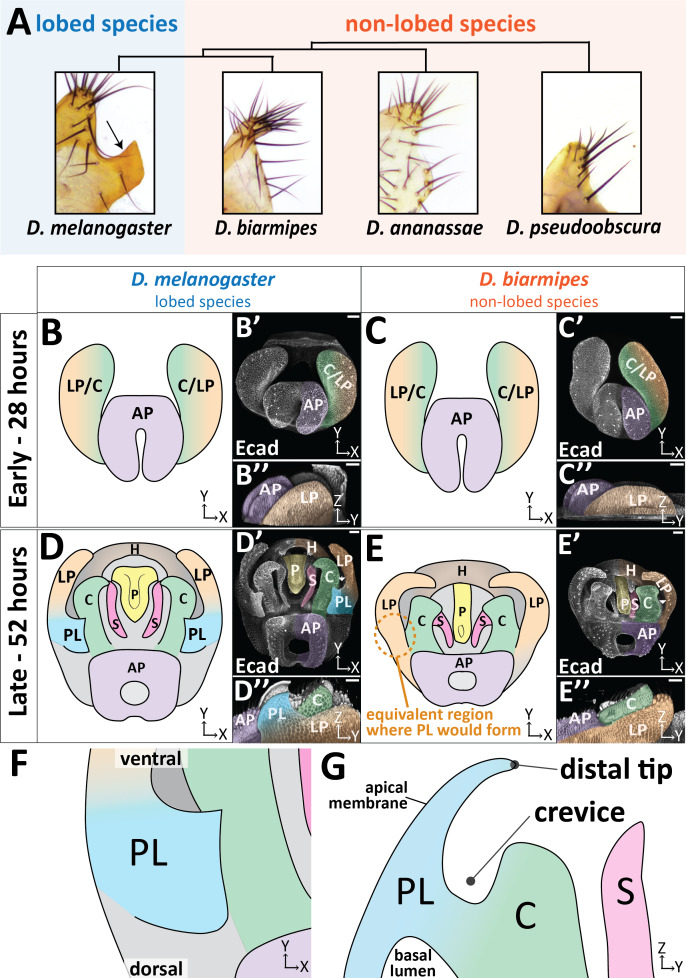
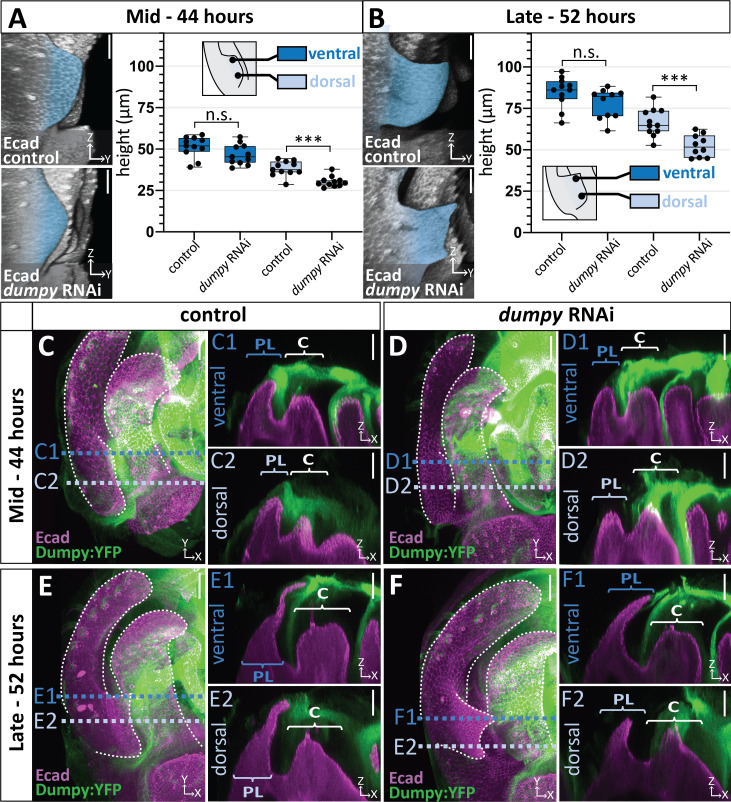
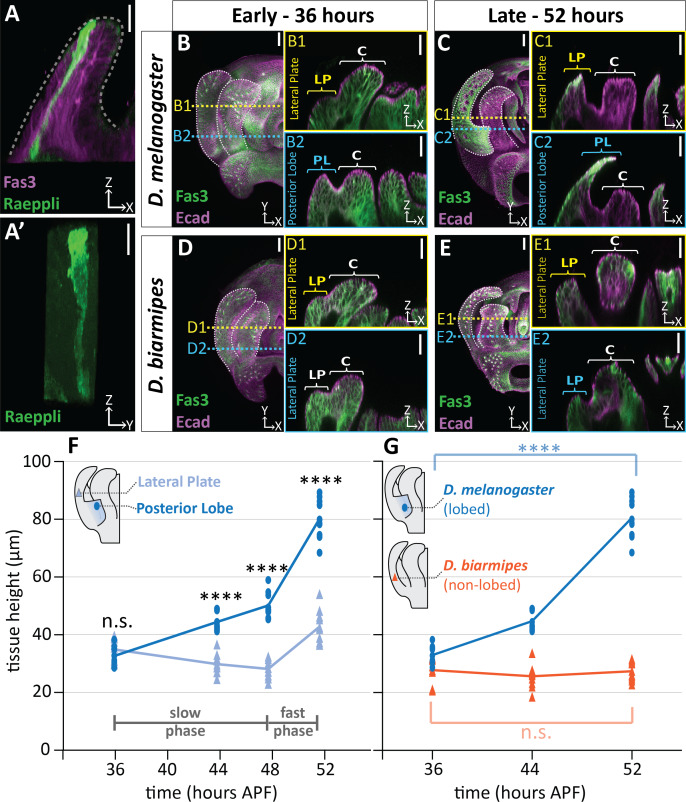
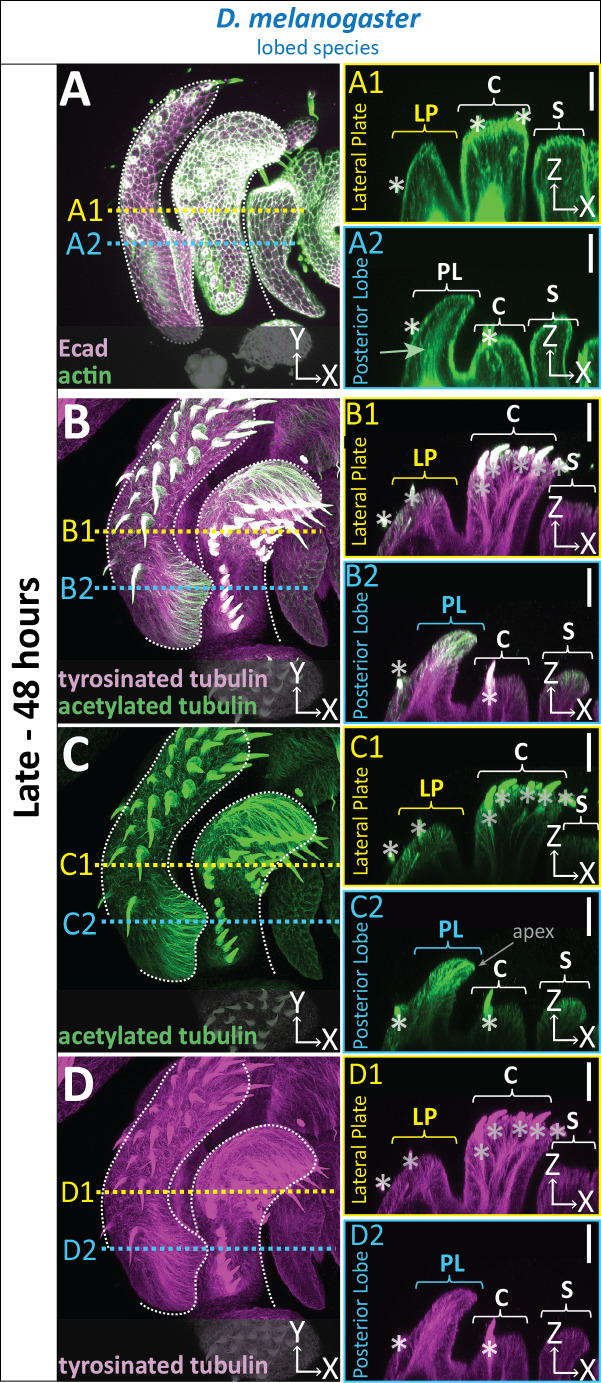
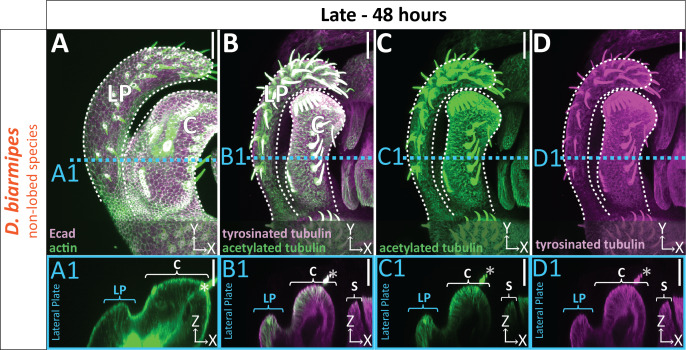
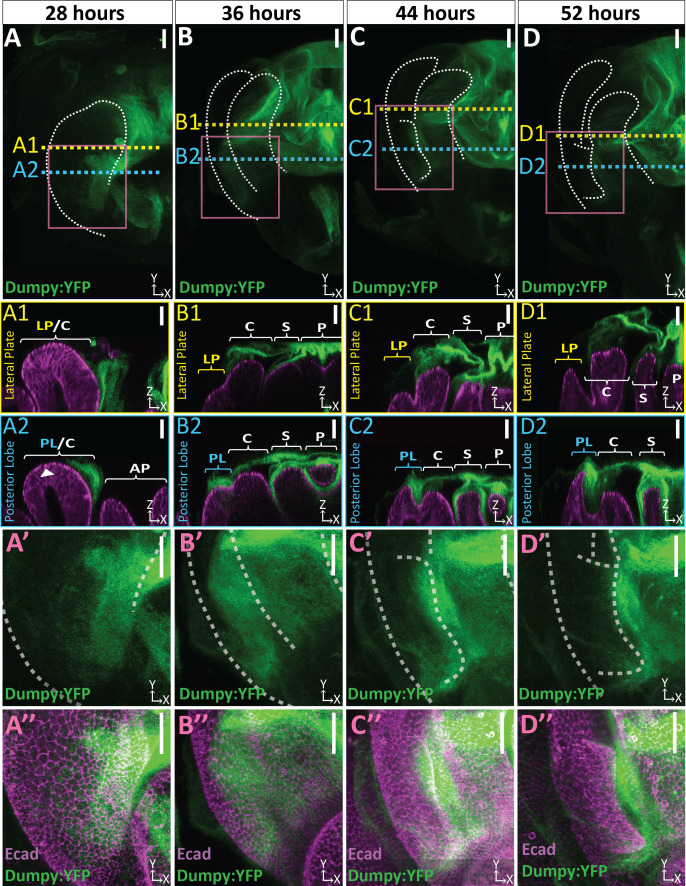
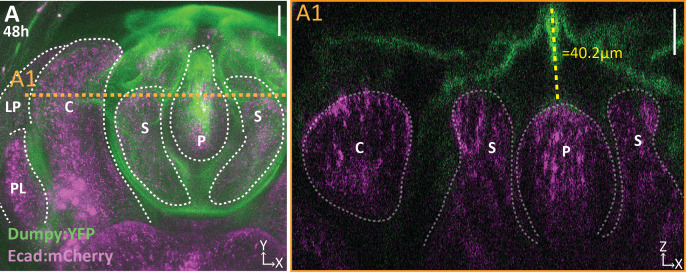
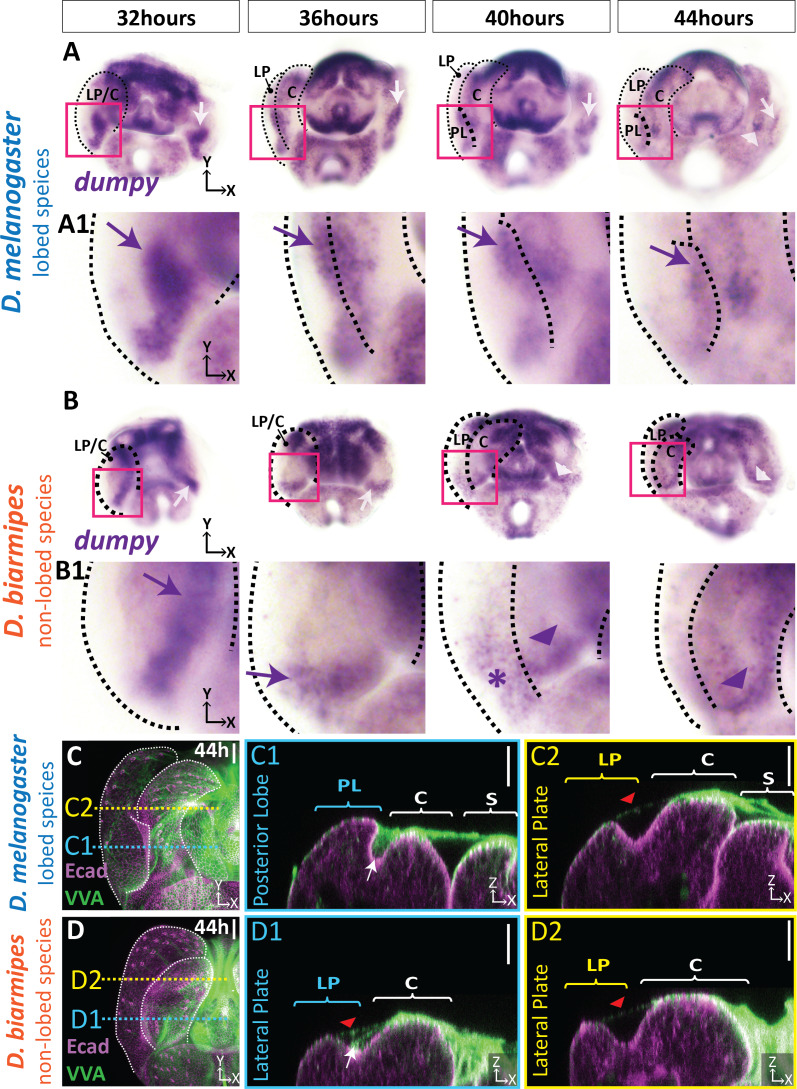
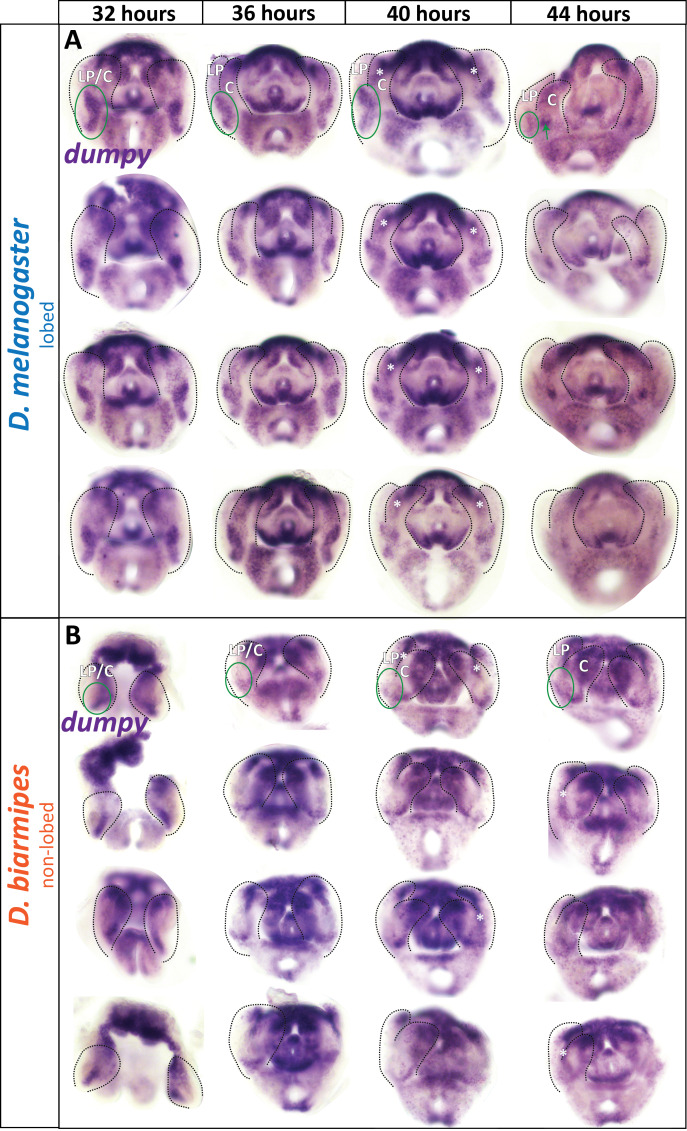
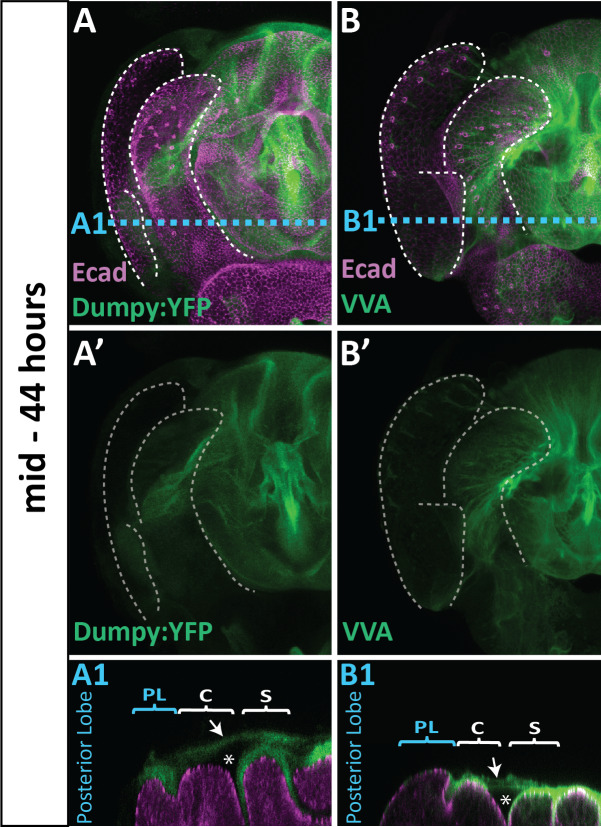
One of the fundamental gaps in our knowledge of how novel anatomical structures evolve is understanding the origins of the morphogenetic processes that form these features. Here, we traced the cellular development of a recently evolved morphological novelty, the posterior lobe of . We found that this genital outgrowth forms through extreme increases in epithelial cell height. By examining the apical extracellular matrix (aECM), we also uncovered a vast matrix associated with the developing genitalia of lobed and non-lobed species. Expression of the aECM protein Dumpy is spatially expanded in lobe-forming species, connecting the posterior lobe to the ancestrally derived aECM network. Further analysis demonstrated that Dumpy attachments are necessary for cell height increases during posterior lobe development. We propose that the aECM presents a rich reservoir for generating morphological novelty and highlights a yet unseen role for aECM in regulating extreme cell height.
我们对新解剖结构如何进化的认识存在一个基本的差距,即理解形成这些特征的形态发生过程的起源。在这里,我们追踪了最近进化的形态新颖性—— 的后叶的细胞发育。我们发现,这种生殖器的生长是通过上皮细胞高度的极度增加而形成的。通过检查顶端细胞外基质 (aECM),我们还发现了一个与有叶和无叶物种生殖器发育相关的巨大基质。在形成叶的物种中,aECM 蛋白 Dumpy 的表达在空间上扩展,将后叶与祖先衍生的 aECM 网络连接起来。进一步的分析表明,在后部叶发育过程中,Dumpy 附着对于细胞高度的增加是必需的。我们提出,aECM 为产生形态新颖性提供了丰富的储备,并突出了 aECM 在调节极端细胞高度方面尚未被发现的作用。