• 文献检索
  • 文档翻译
  • 深度研究
  • 学术资讯
  • Suppr Zotero 插件Zotero 插件
  • 邀请有礼
  • 套餐&价格
  • 历史记录
应用&插件
Suppr Zotero 插件Zotero 插件浏览器插件Mac 客户端Windows 客户端微信小程序
定价
高级版会员购买积分包购买API积分包
服务
文献检索文档翻译深度研究API 文档MCP 服务
关于我们
关于 Suppr公司介绍联系我们用户协议隐私条款
关注我们

Suppr 超能文献

核心技术专利:CN118964589B侵权必究
粤ICP备2023148730 号-1Suppr @ 2026

文献检索

告别复杂PubMed语法,用中文像聊天一样搜索,搜遍4000万医学文献。AI智能推荐,让科研检索更轻松。

立即免费搜索

文件翻译

保留排版,准确专业,支持PDF/Word/PPT等文件格式,支持 12+语言互译。

免费翻译文档

深度研究

AI帮你快速写综述,25分钟生成高质量综述,智能提取关键信息,辅助科研写作。

立即免费体验

基于诱导多能干细胞 (iPSC) 的神经退行性疾病模型用于表型重现和药物筛选。

Induced Pluripotent Stem Cell (iPSC)-Based Neurodegenerative Disease Models for Phenotype Recapitulation and Drug Screening.

机构信息

Bioinnovation Center, Buddhist Tzu Chi Medical Foundation, Hualien 970, Taiwan.

Department of Medical Research, Hualien Tzu Chi Hospital, Hualien 970, Taiwan.

出版信息

Molecules. 2020 Apr 24;25(8):2000. doi: 10.3390/molecules25082000.

DOI:10.3390/molecules25082000
PMID:32344649
原文链接:https://pmc.ncbi.nlm.nih.gov/articles/PMC7221979/
Abstract

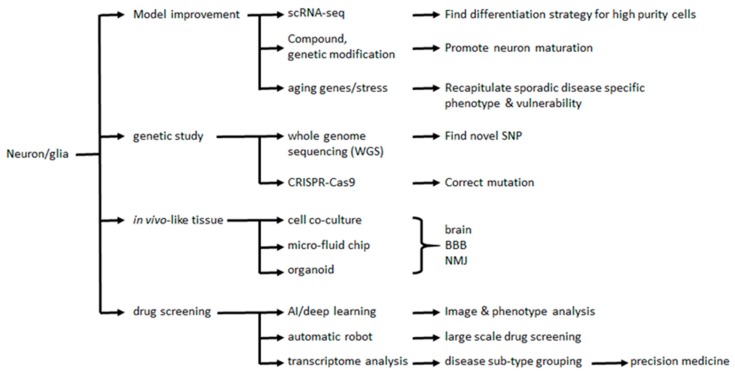
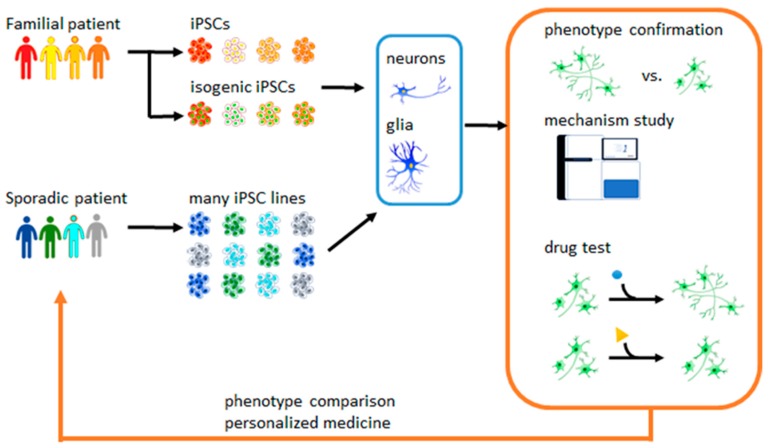
Neurodegenerative diseases represent a significant unmet medical need in our aging society. There are no effective treatments for most of these diseases, and we know comparatively little regarding pathogenic mechanisms. Among the challenges faced by those involved in developing therapeutic drugs for neurodegenerative diseases, the syndromes are often complex, and small animal models do not fully recapitulate the unique features of the human nervous system. Human induced pluripotent stem cells (iPSCs) are a novel technology that ideally would permit us to generate neuronal cells from individual patients, thereby eliminating the problem of species-specificity inherent when using animal models. Specific phenotypes of iPSC-derived cells may permit researchers to identify sub-types and to distinguish among unique clusters and groups. Recently, iPSCs were used for drug screening and testing for neurologic disorders including Alzheimer's disease (AD), amyotrophic lateral sclerosis (ALS), spinocerebellar atrophy (SCA), and Zika virus infection. However, there remain many challenges still ahead, including how one might effectively recapitulate sporadic disease phenotypes and the selection of ideal phenotypes and for large-scale drug screening. Fortunately, quite a few novel strategies have been developed that might be combined with an iPSC-based model to solve these challenges, including organoid technology, single-cell RNA sequencing, genome editing, and deep learning artificial intelligence. Here, we will review current applications and potential future directions for iPSC-based neurodegenerative disease models for critical drug screening.

摘要

神经退行性疾病是我们老龄化社会中未满足的重大医疗需求。大多数这些疾病没有有效的治疗方法,而且我们对发病机制的了解相对较少。在为神经退行性疾病开发治疗药物的过程中,面临的挑战之一是这些综合征通常很复杂,并且小动物模型不能完全再现人类神经系统的独特特征。人类诱导多能干细胞(iPSC)是一种新技术,它可以使我们从个体患者中生成神经元细胞,从而消除使用动物模型时固有的物种特异性问题。iPSC 衍生细胞的特定表型可以使研究人员识别亚型,并区分独特的簇和组。最近,iPSC 已被用于包括阿尔茨海默病(AD)、肌萎缩性侧索硬化症(ALS)、脊髓小脑萎缩症(SCA)和寨卡病毒感染在内的神经紊乱的药物筛选和测试。然而,仍有许多挑战摆在面前,包括如何有效地再现散发性疾病表型,以及如何选择理想的表型和进行大规模药物筛选。幸运的是,已经开发出了相当多的新策略,这些策略可能与基于 iPSC 的模型相结合,以解决这些挑战,包括类器官技术、单细胞 RNA 测序、基因组编辑和深度学习人工智能。在这里,我们将回顾基于 iPSC 的神经退行性疾病模型在关键药物筛选中的当前应用和潜在的未来方向。
https://cdn.ncbi.nlm.nih.gov/pmc/blobs/7009/7221979/efc357c858cb/molecules-25-02000-g002.jpg
https://cdn.ncbi.nlm.nih.gov/pmc/blobs/7009/7221979/42d4ece5b48d/molecules-25-02000-g001.jpg
https://cdn.ncbi.nlm.nih.gov/pmc/blobs/7009/7221979/efc357c858cb/molecules-25-02000-g002.jpg
https://cdn.ncbi.nlm.nih.gov/pmc/blobs/7009/7221979/42d4ece5b48d/molecules-25-02000-g001.jpg
https://cdn.ncbi.nlm.nih.gov/pmc/blobs/7009/7221979/efc357c858cb/molecules-25-02000-g002.jpg

相似文献

1
Induced Pluripotent Stem Cell (iPSC)-Based Neurodegenerative Disease Models for Phenotype Recapitulation and Drug Screening.基于诱导多能干细胞 (iPSC) 的神经退行性疾病模型用于表型重现和药物筛选。
Molecules. 2020 Apr 24;25(8):2000. doi: 10.3390/molecules25082000.
2
Reverse engineering human neurodegenerative disease using pluripotent stem cell technology.利用多能干细胞技术对人类神经退行性疾病进行逆向工程研究。
Brain Res. 2016 May 1;1638(Pt A):30-41. doi: 10.1016/j.brainres.2015.09.023. Epub 2015 Sep 28.
3
Advances in Patient-Specific Induced Pluripotent Stem Cells Shed Light on Drug Discovery for Amyotrophic Lateral Sclerosis.基于患者特异性诱导多能干细胞的研究进展为肌萎缩侧索硬化症的药物研发提供了新的思路。
Cell Transplant. 2018 Sep;27(9):1301-1312. doi: 10.1177/0963689718785154. Epub 2018 Jul 23.
4
Advancing drug discovery for neuropsychiatric disorders using patient-specific stem cell models.利用患者特异性干细胞模型推进神经精神疾病的药物研发。
Mol Cell Neurosci. 2016 Jun;73:104-15. doi: 10.1016/j.mcn.2016.01.011. Epub 2016 Jan 28.
5
Human pluripotent stem cell-derived models and drug screening in CNS precision medicine.人多能干细胞衍生模型与中枢神经系统精准医学中的药物筛选。
Ann N Y Acad Sci. 2020 Jul;1471(1):18-56. doi: 10.1111/nyas.14012. Epub 2019 Mar 15.
6
Advances in iPSC Technology in Neural Disease Modeling, Drug Screening, and Therapy.诱导多能干细胞技术在神经疾病建模、药物筛选和治疗中的进展。
Curr Stem Cell Res Ther. 2024;19(6):809-819. doi: 10.2174/1574888X18666230608105703.
7
Human iPSC-Based Modeling of Central Nerve System Disorders for Drug Discovery.基于人诱导多能干细胞的中枢神经系统疾病模型用于药物发现。
Int J Mol Sci. 2021 Jan 26;22(3):1203. doi: 10.3390/ijms22031203.
8
Induced pluripotent stem cells-based disease modeling, drug screening, clinical trials, and reverse translational research for amyotrophic lateral sclerosis.基于诱导多能干细胞的肌萎缩侧索硬化症疾病建模、药物筛选、临床试验和反向转化研究。
J Neurochem. 2023 Dec;167(5):603-614. doi: 10.1111/jnc.16005. Epub 2023 Nov 12.
9
Advancing Drug Discovery for Neurological Disorders Using iPSC-Derived Neural Organoids.利用 iPSC 衍生的神经类器官推进神经紊乱药物研发。
Int J Mol Sci. 2021 Mar 6;22(5):2659. doi: 10.3390/ijms22052659.
10
Induced Pluripotent Stem Cells and Their Applications in Amyotrophic Lateral Sclerosis.诱导多能干细胞及其在肌萎缩侧索硬化症中的应用。
Cells. 2023 Mar 22;12(6):971. doi: 10.3390/cells12060971.

引用本文的文献

1
Current Development of iPSC-Based Modeling in Neurodegenerative Diseases.基于诱导多能干细胞的神经退行性疾病建模的当前进展
Int J Mol Sci. 2025 Apr 16;26(8):3774. doi: 10.3390/ijms26083774.
2
Current Applications of Human Pluripotent Stem Cells in Neuroscience Research and Cell Transplantation Therapy for Neurological Disorders.人多能干细胞在神经科学研究及神经系统疾病细胞移植治疗中的当前应用
Stem Cell Rev Rep. 2025 Apr 5. doi: 10.1007/s12015-025-10851-6.
3
Modeling Sporadic Progressive Supranuclear Palsy in 3D Midbrain Organoids: Recapitulating Disease Features for In Vitro Diagnosis and Drug Discovery.

本文引用的文献

1
GSKIP-Mediated Anchoring Increases Phosphorylation of Tau by PKA but Not by GSK3beta via cAMP/PKA/GSKIP/GSK3/Tau Axis Signaling in Cerebrospinal Fluid and iPS Cells in Alzheimer Disease.在阿尔茨海默病的脑脊液和诱导多能干细胞中,GSKIP介导的锚定通过cAMP/PKA/GSKIP/GSK3/Tau轴信号通路增加蛋白激酶A对Tau的磷酸化,但不增加糖原合成酶激酶3β对Tau的磷酸化。
J Clin Med. 2019 Oct 21;8(10):1751. doi: 10.3390/jcm8101751.
2
Engineering of human brain organoids with a functional vascular-like system.人类脑类器官与功能性类血管系统的构建。
Nat Methods. 2019 Nov;16(11):1169-1175. doi: 10.1038/s41592-019-0586-5. Epub 2019 Oct 7.
3
Modeling Alzheimer's disease with iPSC-derived brain cells.
在3D中脑类器官中模拟散发性进行性核上性麻痹:重现疾病特征以用于体外诊断和药物发现
Ann Neurol. 2025 May;97(5):845-859. doi: 10.1002/ana.27172. Epub 2025 Jan 28.
4
Regenerating Locus Coeruleus-Norepinephrine (LC-NE) Function: A Novel Approach for Neurodegenerative Diseases.恢复蓝斑-去甲肾上腺素(LC-NE)功能:一种治疗神经退行性疾病的新方法。
Cell Prolif. 2025 Jun;58(6):e13807. doi: 10.1111/cpr.13807. Epub 2025 Jan 28.
5
From Serendipity to Precision: Integrating AI, Multi-Omics, and Human-Specific Models for Personalized Neuropsychiatric Care.从意外发现到精准医疗:整合人工智能、多组学和人类特异性模型以实现个性化神经精神疾病护理。
Biomedicines. 2025 Jan 12;13(1):167. doi: 10.3390/biomedicines13010167.
6
Abnormal synaptic architecture in iPSC-derived neurons from a multi-generational family with genetic Creutzfeldt-Jakob disease.多代遗传 Creutzfeldt-Jakob 病患者的 iPSC 衍生神经元中异常的突触结构。
Stem Cell Reports. 2024 Oct 8;19(10):1474-1488. doi: 10.1016/j.stemcr.2024.08.010. Epub 2024 Sep 26.
7
A comprehensive review of iPS cell line-based disease modelling of the polyglutamine spinocerebellar ataxias 2 and 3: a focus on the research outcomes.基于诱导多能干细胞系的多聚谷氨酰胺脊髓小脑共济失调2型和3型疾病建模的综合综述:聚焦研究成果
Ann Med Surg (Lond). 2024 Mar 19;86(6):3487-3498. doi: 10.1097/MS9.0000000000001984. eCollection 2024 Jun.
8
Human post-mortem organotypic brain slice cultures: a tool to study pathomechanisms and test therapies.人类死后器官型脑切片培养:研究发病机制和测试治疗方法的工具。
Acta Neuropathol Commun. 2024 May 31;12(1):83. doi: 10.1186/s40478-024-01784-1.
9
Induced Pluripotent Stem Cells and Organoids in Advancing Neuropathology Research and Therapies.诱导多能干细胞和类器官在推进神经病理学研究和治疗中的应用。
Cells. 2024 Apr 25;13(9):745. doi: 10.3390/cells13090745.
10
Promoting Alzheimer's disease research and therapy with stem cell technology.用干细胞技术推动阿尔茨海默病的研究和治疗。
Stem Cell Res Ther. 2024 May 7;15(1):136. doi: 10.1186/s13287-024-03737-w.
利用 iPSC 衍生脑细胞进行阿尔茨海默病建模。
Mol Psychiatry. 2020 Jan;25(1):148-167. doi: 10.1038/s41380-019-0468-3. Epub 2019 Aug 7.
4
Extracellular Pgk1 enhances neurite outgrowth of motoneurons through Nogo66/NgR-independent targeting of NogoA.细胞外 Pgk1 通过非典型 Nogo 受体(NgR)非依赖性靶向 NogoA 增强运动神经元的轴突生长。
Elife. 2019 Jul 30;8:e49175. doi: 10.7554/eLife.49175.
5
Human iPSC-Derived Blood-Brain Barrier Chips Enable Disease Modeling and Personalized Medicine Applications.人诱导多能干细胞衍生的血脑屏障芯片可用于疾病建模和个性化药物应用。
Cell Stem Cell. 2019 Jun 6;24(6):995-1005.e6. doi: 10.1016/j.stem.2019.05.011.
6
Specification of positional identity in forebrain organoids.前脑类器官中位置身份的规范。
Nat Biotechnol. 2019 Apr;37(4):436-444. doi: 10.1038/s41587-019-0085-3. Epub 2019 Apr 1.
7
Derivation of enteric neuron lineages from human pluripotent stem cells.人多能干细胞衍生肠神经元谱系。
Nat Protoc. 2019 Apr;14(4):1261-1279. doi: 10.1038/s41596-019-0141-y. Epub 2019 Mar 25.
8
Cerebral organoids at the air-liquid interface generate diverse nerve tracts with functional output.在气液界面生成的类器官可生成具有功能输出的多种神经束。
Nat Neurosci. 2019 Apr;22(4):669-679. doi: 10.1038/s41593-019-0350-2. Epub 2019 Mar 18.
9
NFIA is a gliogenic switch enabling rapid derivation of functional human astrocytes from pluripotent stem cells.NFIA 是一种神经胶质发生开关,能够使多能干细胞快速分化为功能性人星形胶质细胞。
Nat Biotechnol. 2019 Mar;37(3):267-275. doi: 10.1038/s41587-019-0035-0. Epub 2019 Feb 25.
10
Concise Review: Modeling Neurodegenerative Diseases with Human Pluripotent Stem Cell-Derived Microglia.简明综述:用人多能干细胞衍生的小胶质细胞建立神经退行性疾病模型。
Stem Cells. 2019 Jun;37(6):724-730. doi: 10.1002/stem.2995. Epub 2019 Mar 10.