School of Pharmaceutical Sciences, Shenzhen Campus of Sun Yat-Sen University, Shenzhen, 518107, China.
School of Pharmaceutical Sciences, Dali University, Dali, 671000, China.
Stem Cell Res Ther. 2024 May 7;15(1):136. doi: 10.1186/s13287-024-03737-w.
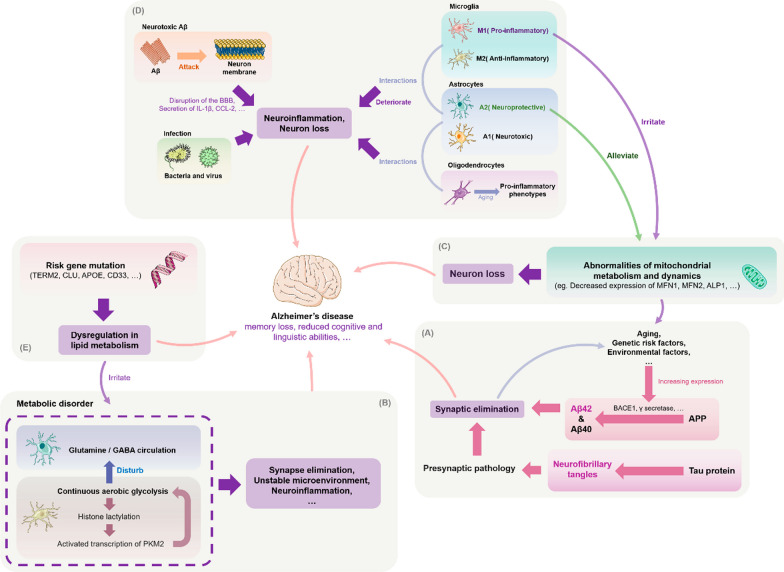
Alzheimer's disease (AD) is a prevalent form of dementia leading to memory loss, reduced cognitive and linguistic abilities, and decreased self-care. Current AD treatments aim to relieve symptoms and slow disease progression, but a cure is elusive due to limited understanding of the underlying disease mechanisms.
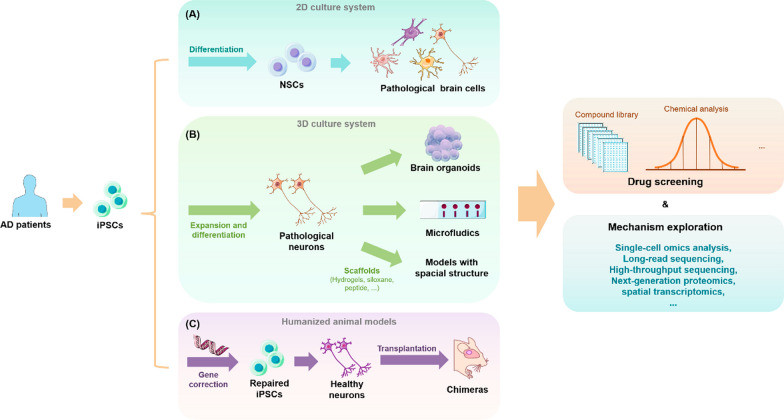
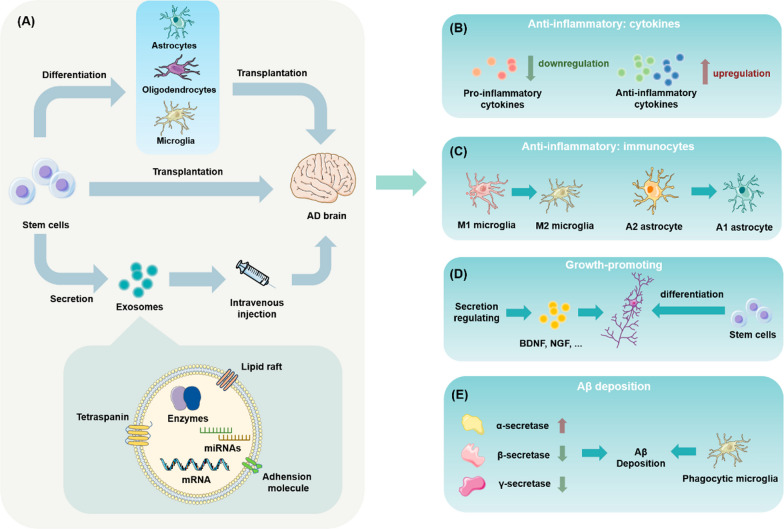
Stem cell technology has the potential to revolutionize AD research. With the ability to self-renew and differentiate into various cell types, stem cells are valuable tools for disease modeling, drug screening, and cell therapy. Recent advances have broadened our understanding beyond the deposition of amyloidβ (Aβ) or tau proteins in AD to encompass risk genes, immune system disorders, and neuron-glia mis-communication, relying heavily on stem cell-derived disease models. These stem cell-based models (e.g., organoids and microfluidic chips) simulate in vivo pathological processes with extraordinary spatial and temporal resolution. Stem cell technologies have the potential to alleviate AD pathology through various pathways, including immunomodulation, replacement of damaged neurons, and neurotrophic support. In recent years, transplantation of glial cells like oligodendrocytes and the infusion of exosomes have become hot research topics.
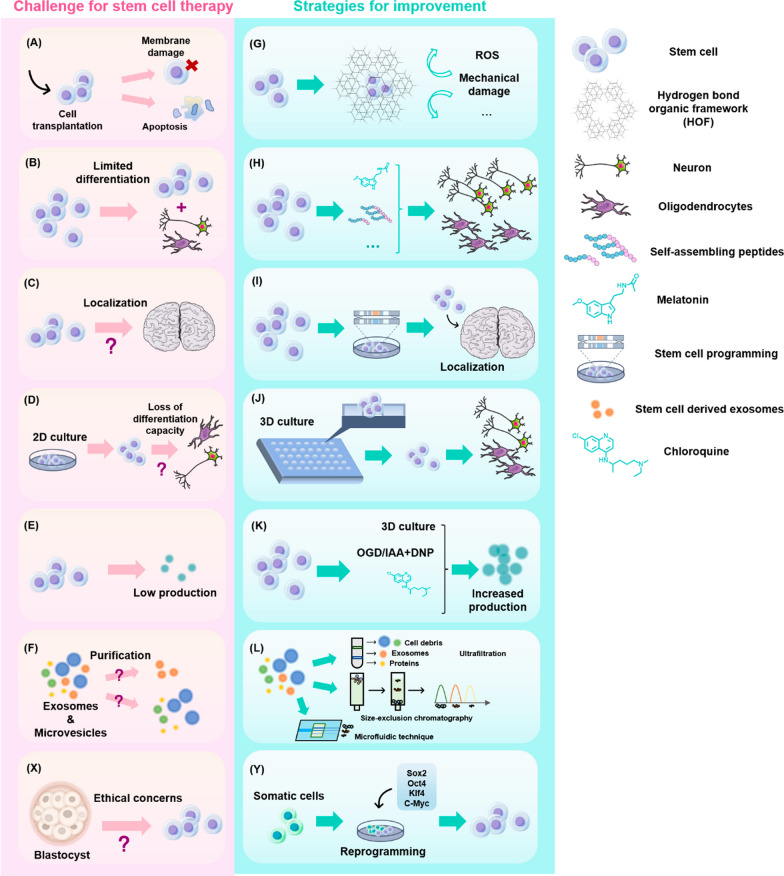
Although stem cell-based models and therapies for AD face several challenges, such as extended culture time and low differentiation efficiency, they still show considerable potential for AD treatment and are likely to become preferred tools for AD research.
阿尔茨海默病(AD)是一种常见的痴呆症,导致记忆丧失、认知和语言能力下降以及自我护理能力下降。目前的 AD 治疗方法旨在缓解症状和减缓疾病进展,但由于对潜在疾病机制的理解有限,治愈方法仍难以捉摸。
干细胞技术有潜力彻底改变 AD 研究。干细胞具有自我更新和分化为多种细胞类型的能力,是疾病建模、药物筛选和细胞治疗的有价值工具。最近的进展拓宽了我们的理解,超越了 AD 中淀粉样β(Aβ)或 tau 蛋白的沉积,包括风险基因、免疫系统紊乱和神经元-胶质细胞通讯障碍,严重依赖于基于干细胞的疾病模型。这些基于干细胞的模型(例如类器官和微流控芯片)以非凡的时空分辨率模拟体内病理过程。干细胞技术通过多种途径缓解 AD 病理学,包括免疫调节、受损神经元的替代和神经营养支持。近年来,少突胶质细胞等神经胶质细胞的移植和外泌体的输注已成为热门研究课题。
尽管 AD 的基于干细胞的模型和疗法面临一些挑战,例如延长培养时间和低分化效率,但它们仍显示出对 AD 治疗的相当大的潜力,并且可能成为 AD 研究的首选工具。