Comprehensive Cancer Center Munich, Technische Universität München, 81675 Munich, Germany.
Department of Gastroenterology, The First Affiliated Hospital of Nanchang University, Nanchang 330006, China.
Cells. 2020 Apr 24;9(4):1063. doi: 10.3390/cells9041063.
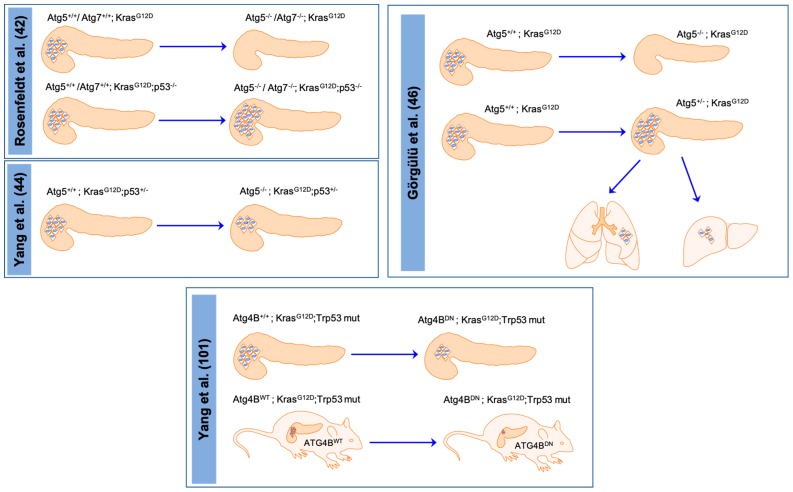
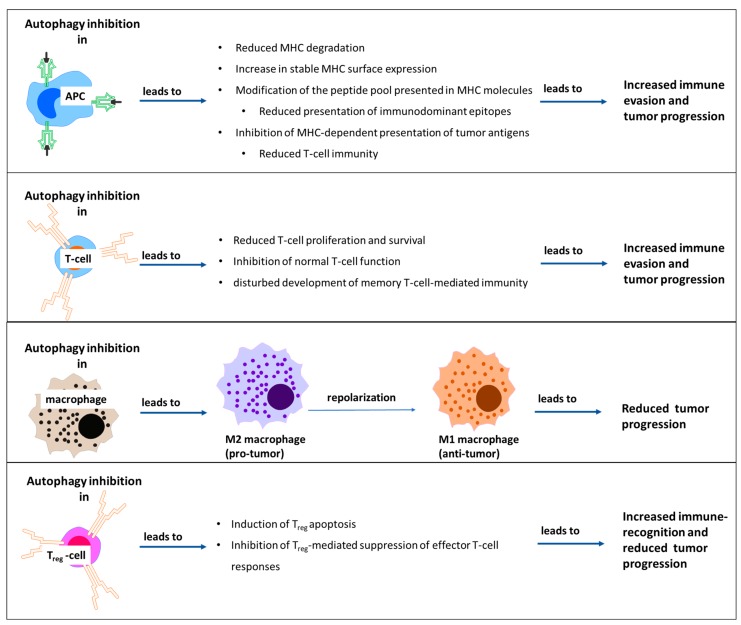
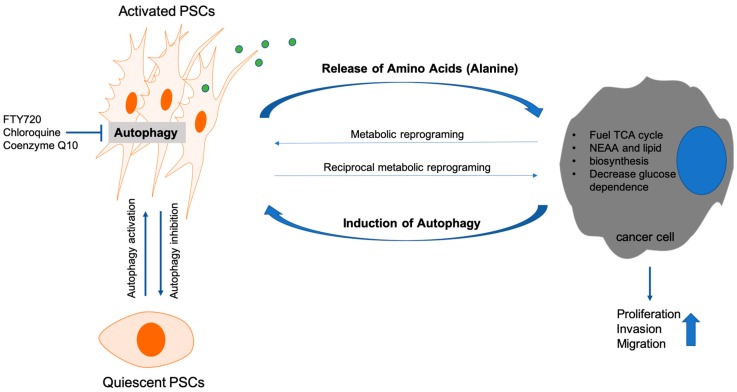
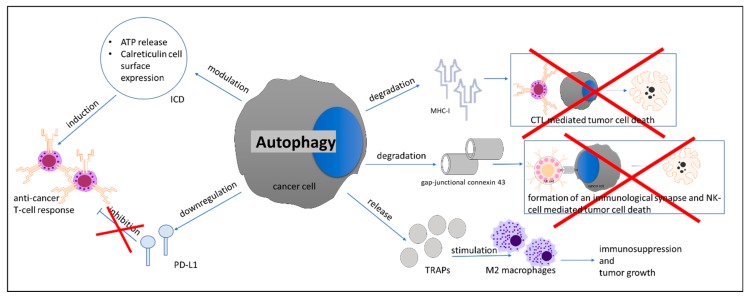
Pancreatic cancer is one of the deadliest cancer types urgently requiring effective therapeutic strategies. Autophagy occurs in several compartments of pancreatic cancer tissue including cancer cells, cancer associated fibroblasts, and immune cells where it can be subjected to a multitude of stimulatory and inhibitory signals fine-tuning its activity. Therefore, the effects of autophagy on pancreatic carcinogenesis and progression differ in a stage and context dependent manner. In the initiation stage autophagy hinders development of preneoplastic lesions; in the progression stage however, autophagy promotes tumor growth. This double-edged action of autophagy makes it a hard therapeutic target. Indeed, autophagy inhibitors have not yet shown survival improvements in clinical trials, indicating a need for better evaluation of existing results and smarter targeting techniques. Clearly, the role of autophagy in pancreatic cancer is complex and many aspects have to be considered when moving from the bench to the bedside.
胰腺癌是最致命的癌症类型之一,迫切需要有效的治疗策略。自噬发生在胰腺癌组织的几个隔室中,包括癌细胞、癌相关成纤维细胞和免疫细胞,在这些隔室中,它可以受到多种刺激和抑制信号的精细调节,从而调节其活性。因此,自噬对胰腺癌发生和进展的影响在阶段和背景上有所不同。在起始阶段,自噬会阻碍癌前病变的发展;然而,在进展阶段,自噬会促进肿瘤生长。自噬的这种双刃剑作用使其成为一个难以治疗的靶点。事实上,自噬抑制剂在临床试验中尚未显示出生存改善,这表明需要更好地评估现有结果和更智能的靶向技术。显然,自噬在胰腺癌中的作用是复杂的,当从实验室转移到临床时,许多方面都需要考虑。