Matsui Kentaro, Komada Yoko, Nishimura Katsuji, Kuriyama Kenichi, Inoue Yuichi
Japan Somnology Center, Neuropsychiatric Research Institute, Tokyo 1510053, Japan.
Department of Psychiatry, Tokyo Women's Medical University, Tokyo 1628666, Japan.
J Clin Med. 2020 Apr 24;9(4):1243. doi: 10.3390/jcm9041243.
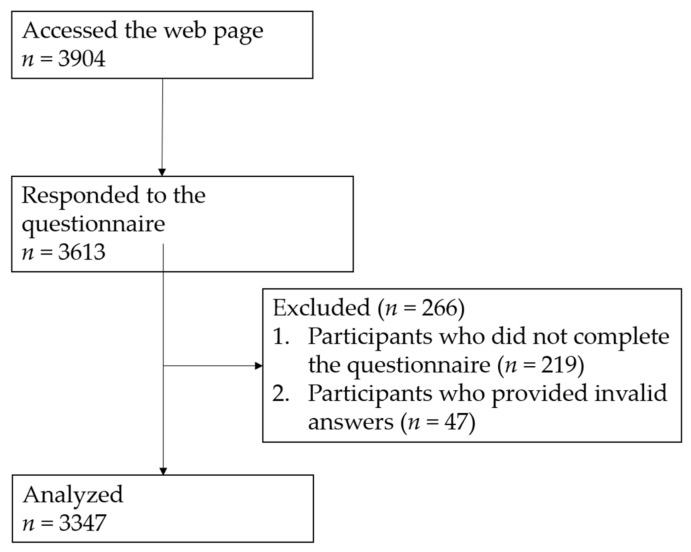
Nocturnal (night) eating syndrome and sleep-related eating disorder have common characteristics, but are considered to differ in their level of consciousness during eating behavior and recallability. To date, there have been no large population-based studies determining their similarities and differences. We conducted a cross-sectional web-based survey for Japanese young adults aged 19-25 years to identify factors associated with nocturnal eating behavior and sleep-related eating disorder-like behavior using Munich Parasomnia Screening and logistic regression. Of the 3347 participants, 160 (4.8%) reported experiencing nocturnal eating behavior and 73 (2.2%) reported experiencing sleep-related eating disorder-like behavior. Smoking ( < 0.05), use of hypnotic medications ( < 0.01), and previous and/or current sleepwalking ( < 0.001) were associated with both nocturnal eating behavior and sleep-related eating disorder-like behavior. A delayed sleep-wake schedule ( < 0.05) and sleep disturbance ( < 0.01) were associated with nocturnal eating behavior but not with sleep-related eating disorder-like behavior. Both nocturnal eating behavior and sleep-related eating disorder-like behavior had features consistent with eating disorders or parasomnias. Nocturnal eating behavior but not sleep-related eating disorder-like behavior was characterized by a sleep-awake phase delay, perhaps representing an underlying pathophysiology of nocturnal eating syndrome.
夜间进食综合征和睡眠相关进食障碍有共同特征,但在进食行为时的意识水平和可回忆性方面被认为有所不同。迄今为止,尚无基于大规模人群的研究来确定它们的异同。我们针对19至25岁的日本年轻人开展了一项基于网络的横断面调查,使用慕尼黑异态睡眠筛查和逻辑回归来确定与夜间进食行为及类似睡眠相关进食障碍行为相关的因素。在3347名参与者中,160人(4.8%)报告有夜间进食行为,73人(2.2%)报告有类似睡眠相关进食障碍的行为。吸烟(<0.05)、使用催眠药物(<0.01)以及既往和/或当前的梦游(<0.001)与夜间进食行为和类似睡眠相关进食障碍的行为均有关联。延迟的睡眠-觉醒时间表(<0.05)和睡眠障碍(<0.01)与夜间进食行为有关,但与类似睡眠相关进食障碍的行为无关。夜间进食行为和类似睡眠相关进食障碍的行为均具有与进食障碍或异态睡眠一致的特征。夜间进食行为而非类似睡眠相关进食障碍的行为以睡眠-觉醒相位延迟为特征,这可能代表了夜间进食综合征的潜在病理生理学。