Laboratory of Animal Nutrition, Department of Nutrition, Genetics and Ethology, Faculty of Veterinary Medicine, Ghent University, Heidestraat 19, 9820, Merelbeke, Belgium.
Department of Equine Sciences and Department of Farm Animal Health, Faculty of Veterinary Medicine, Utrecht University, P.O. Box 80.151, 3508 TD, Utrecht, the Netherlands.
BMC Vet Res. 2020 Apr 28;16(1):121. doi: 10.1186/s12917-020-02332-4.
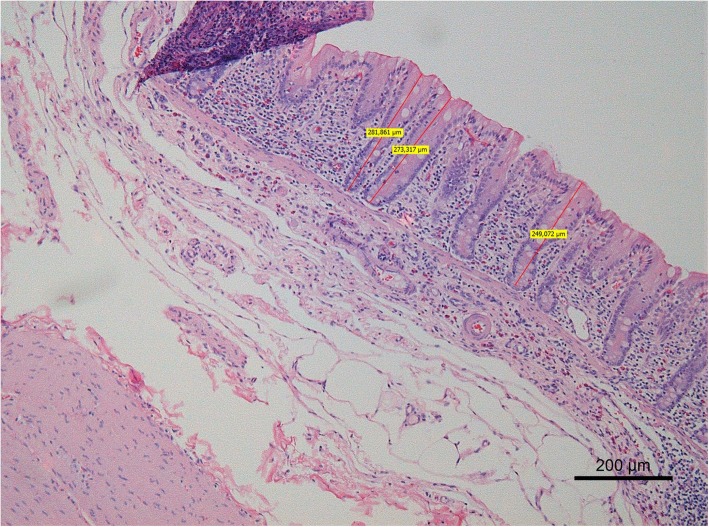
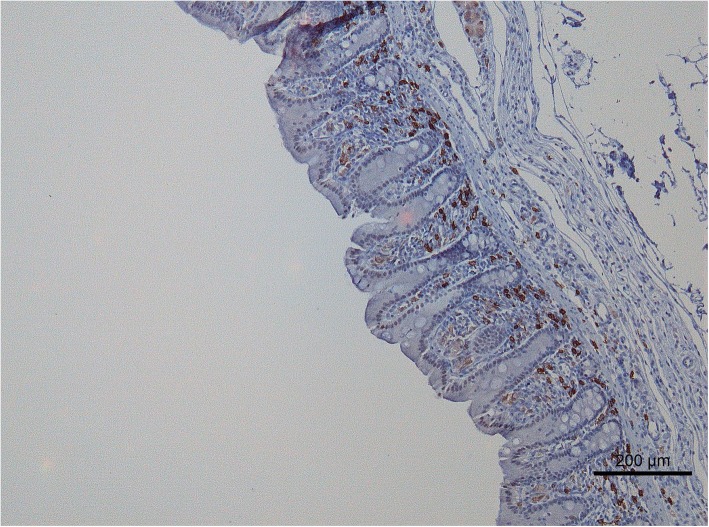
As colic and intestinal disorders are a major concern in horses, the aim of the present study was to investigate the effect of dietary supplementation of butyrate, known to have a diverse array of beneficial effects on intestinal health. The effect of micro-encapsulated sodium butyrate supplementation on gut histology and immunohistochemistry parameters was studied in 14 healthy warmblood horses destined for slaughter in two separate periods. Horses were fed a low fiber - high starch diet, designed to induce subsequent starch overflow in the large intestine, aiming to create a mild challenge for large intestinal health. Treatment included supplementation with either micro-encapsulated sodium butyrate (Excential Butycoat®, Orffa, Werkendam, the Netherlands) or placebo (containing only coating material). The horses were fed for 20 consecutive days at a dosage of 0.4 g/kg BW (body weight). At day 21, the horses were slaughtered and intestinal samples were collected for determination of gut pH, villus length, crypt depth and area % of CD3+ and CD20+ cells.
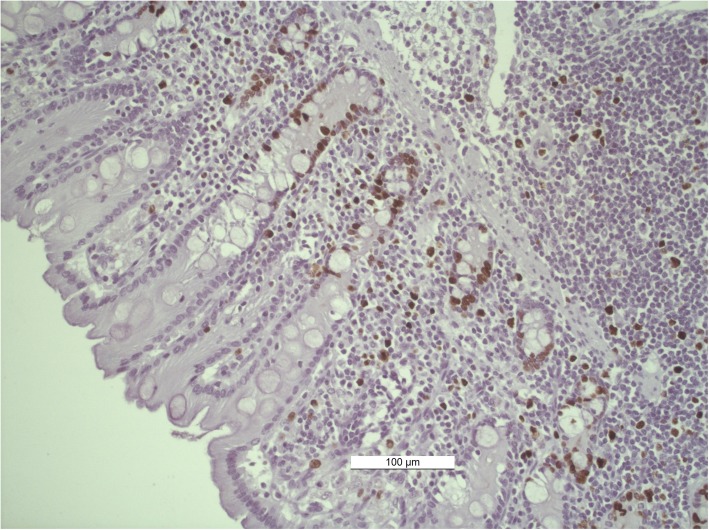
Horses on the butyrate supplemented diet had significantly reduced crypt depths in the right dorsal colon compared to placebo-fed horses (P < 0.001). However, a treatment x period interaction (P = 0.002) was discovered regarding this parameter, which could not be explained by the authors. Further investigation into the number of KI67+ cells in the RDC crypts did not reveal any significant differences between treatments (P = 0.650), indicating that the reduction in crypt depth in butyrate-fed horses could not be explained by a significant difference in cellular proliferation. Intestinal pH, villus length and expression of intestinal CD3+ and CD20+ cells were not significantly affected by treatment at any intestinal level.
Our data indicate that supplementation of micro-encapsulated sodium butyrate to the equine diet did not influence gut histology (with the exception of a decrease found in the crypts of the RDC) or immunohistochemistry parameters in healthy horses. Further research is warranted to investigate the impact of butyrate supplementation in horses with intestinal disease.
由于绞痛和肠道紊乱是马的主要关注点,本研究旨在研究丁酸的饮食补充对肠道健康的多种有益影响。在两个不同时期,对 14 匹健康的温血马进行了微囊化的丁酸钠补充对肠道组织学和免疫组织化学参数的影响的研究。这些马被喂食低纤维-高淀粉饮食,旨在诱导大肠随后的淀粉溢出,旨在为大肠健康创造一个温和的挑战。治疗包括补充微囊化的丁酸钠(Excential Butycoat®,Orffa,Werkendam,荷兰)或安慰剂(仅含涂层材料)。这些马连续 20 天每天喂食 0.4g/kg BW(体重)。第 21 天,这些马被屠宰,收集肠道样本以确定肠道 pH 值、绒毛长度、隐窝深度和 CD3+和 CD20+细胞的面积%。
与安慰剂组相比,丁酸钠补充组的右背结肠隐窝深度显著降低(P<0.001)。然而,作者发现该参数存在治疗与时期的交互作用(P=0.002),这无法解释。对 RDC 隐窝中 KI67+细胞数量的进一步研究表明,两种处理方法之间没有显著差异(P=0.650),这表明丁酸钠喂养的马的隐窝深度降低不能用细胞增殖的显著差异来解释。在任何肠道水平,治疗都没有显著影响肠道 pH 值、绒毛长度以及肠道 CD3+和 CD20+细胞的表达。
我们的数据表明,在健康马中,微囊化的丁酸钠补充到马的饮食中不会影响肠道组织学(除了 RDC 的隐窝减少)或免疫组织化学参数。需要进一步研究以调查丁酸补充对患有肠道疾病的马的影响。