Gebert Nadja, Cheng Chia-Wei, Kirkpatrick Joanna M, Di Fraia Domenico, Yun Jina, Schädel Patrick, Pace Simona, Garside George B, Werz Oliver, Rudolph K Lenhard, Jasper Henri, Yilmaz Ömer H, Ori Alessandro
Leibniz Institute on Aging - Fritz Lipmann Institute (FLI), Jena, Germany.
Koch Institute for Integrative Cancer Research at MIT, Cambridge, MA 02139, USA.
Cell Rep. 2020 Apr 28;31(4):107565. doi: 10.1016/j.celrep.2020.107565.
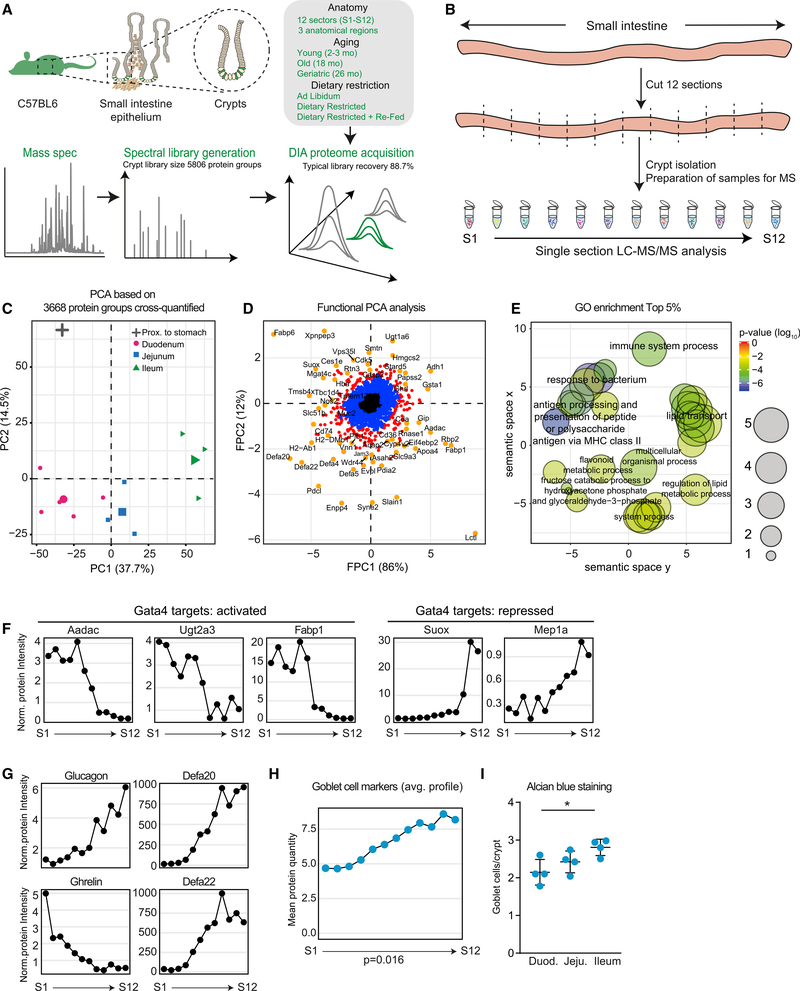
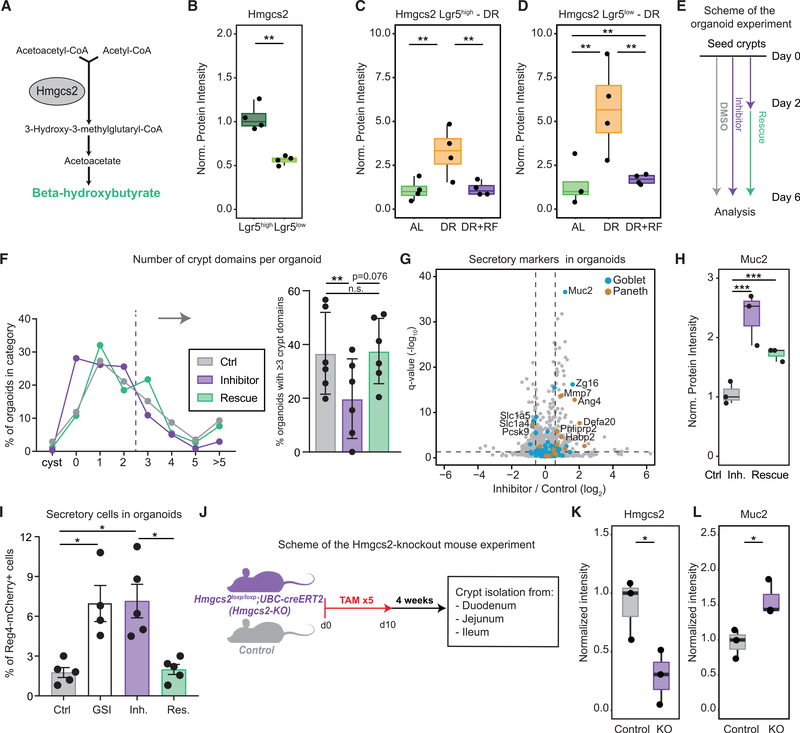
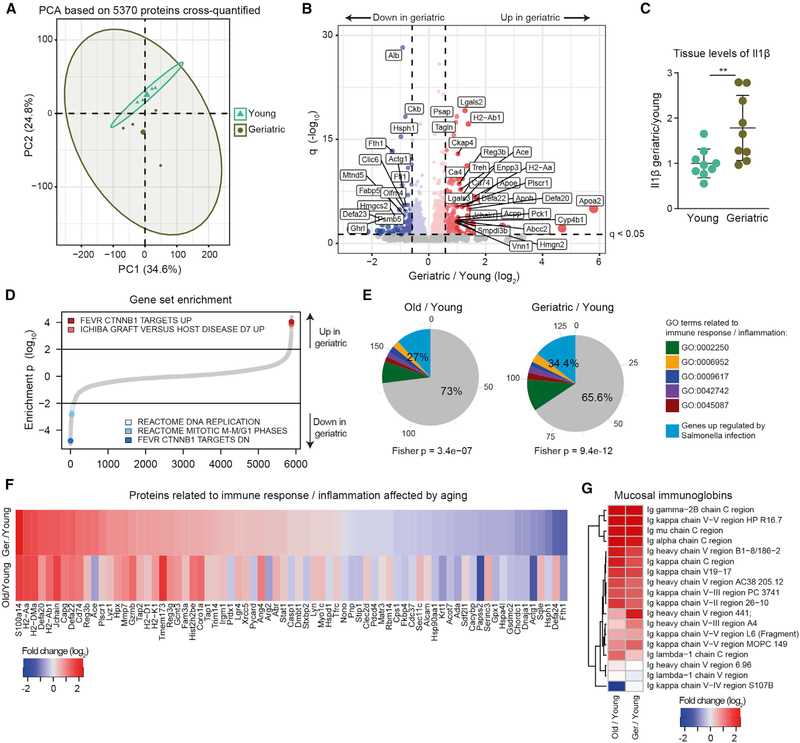
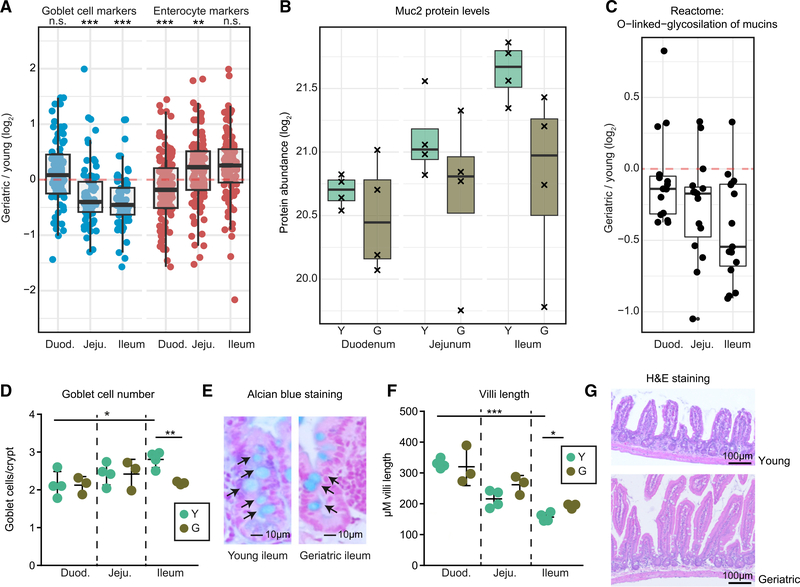
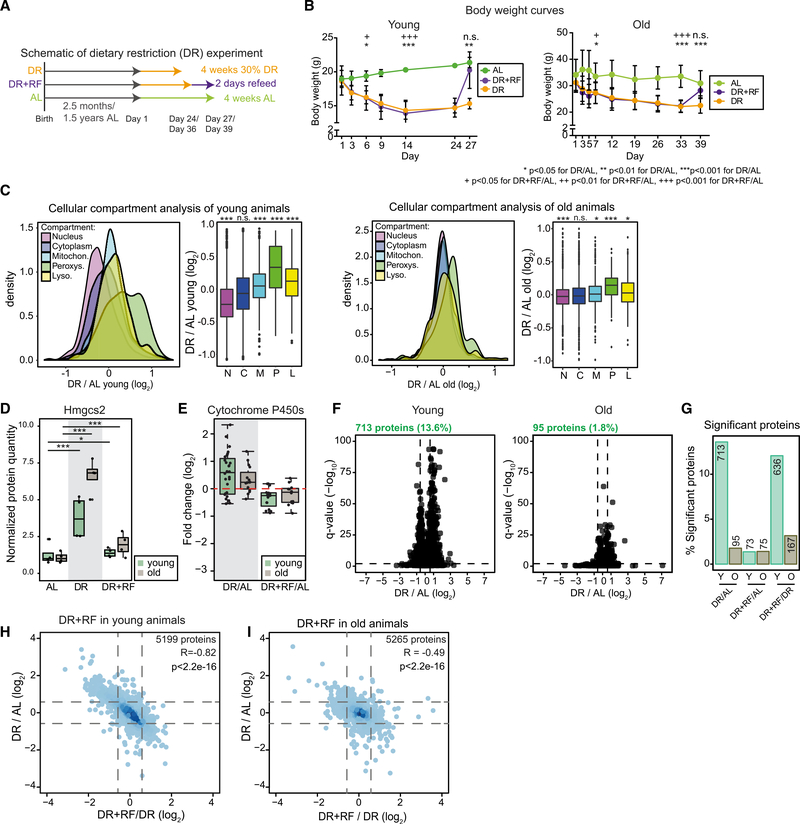
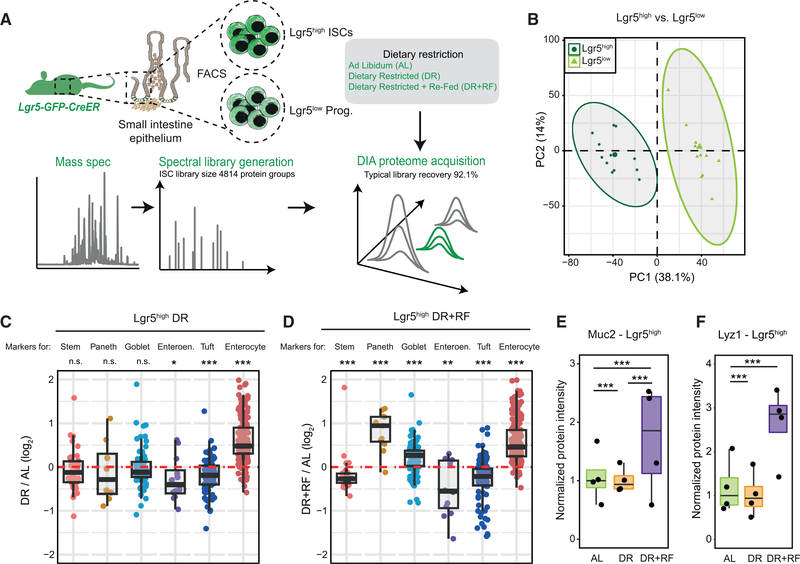
The small intestine is responsible for nutrient absorption and one of the most important interfaces between the environment and the body. During aging, changes of the epithelium lead to food malabsorption and reduced barrier function, thus increasing disease risk. The drivers of these alterations remain poorly understood. Here, we compare the proteomes of intestinal crypts from mice across different anatomical regions and ages. We find that aging alters epithelial immunity, metabolism, and cell proliferation and is accompanied by region-dependent skewing in the cellular composition of the epithelium. Of note, short-term dietary restriction followed by refeeding partially restores the epithelium by promoting stem cell differentiation toward the secretory lineage. We identify Hmgcs2 (3-hydroxy-3-methylglutaryl-coenzyme A [CoA] synthetase 2), the rate-limiting enzyme for ketogenesis, as a modulator of stem cell differentiation that responds to dietary changes, and we provide an atlas of region- and age-dependent proteome changes of the small intestine.
小肠负责营养吸收,是环境与身体之间最重要的界面之一。在衰老过程中,上皮细胞的变化会导致食物吸收不良和屏障功能降低,从而增加患病风险。这些改变的驱动因素仍知之甚少。在这里,我们比较了来自不同解剖区域和年龄的小鼠小肠隐窝的蛋白质组。我们发现衰老会改变上皮免疫、代谢和细胞增殖,并伴随着上皮细胞组成的区域依赖性偏差。值得注意的是,短期饮食限制后再喂养通过促进干细胞向分泌谱系分化来部分恢复上皮细胞。我们确定酮体生成的限速酶Hmgcs2(3-羟基-3-甲基戊二酰辅酶A [CoA] 合成酶2)是一种响应饮食变化的干细胞分化调节剂,并提供了小肠区域和年龄依赖性蛋白质组变化图谱。