Universidad Autónoma de Nuevo León, UANL. Facultad de Ciencias Químicas. Av. Universidad s/n. CD. Universitaria, 66455, San Nicolás de los Garza, NL, México.
Centro de Investigación en Biotecnología y Nanotecnología, Facultad de Ciencias Químicas, Universidad Autónoma de Nuevo León. Parque de Investigación e Innovación Tecnológica, Km. 10 autopista al Aeropuerto Internacional Mariano Escobedo, 66629, Apodaca, Nuevo León, México.
Sci Rep. 2020 Apr 29;10(1):7281. doi: 10.1038/s41598-020-64127-9.
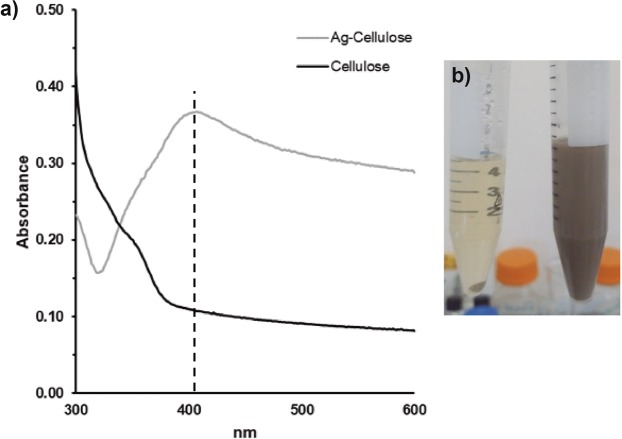
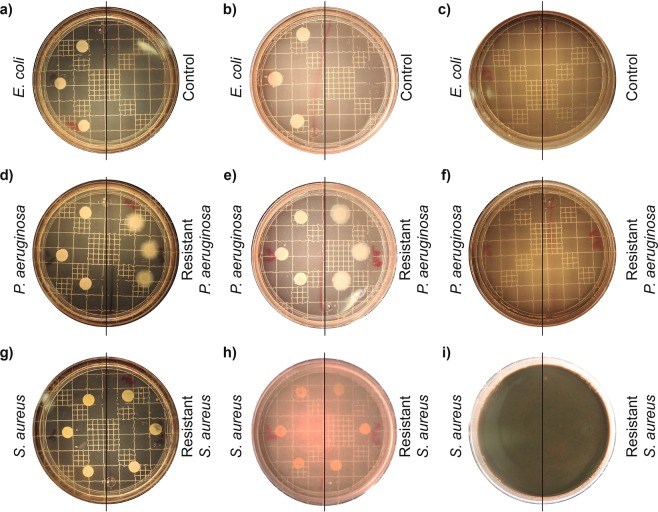
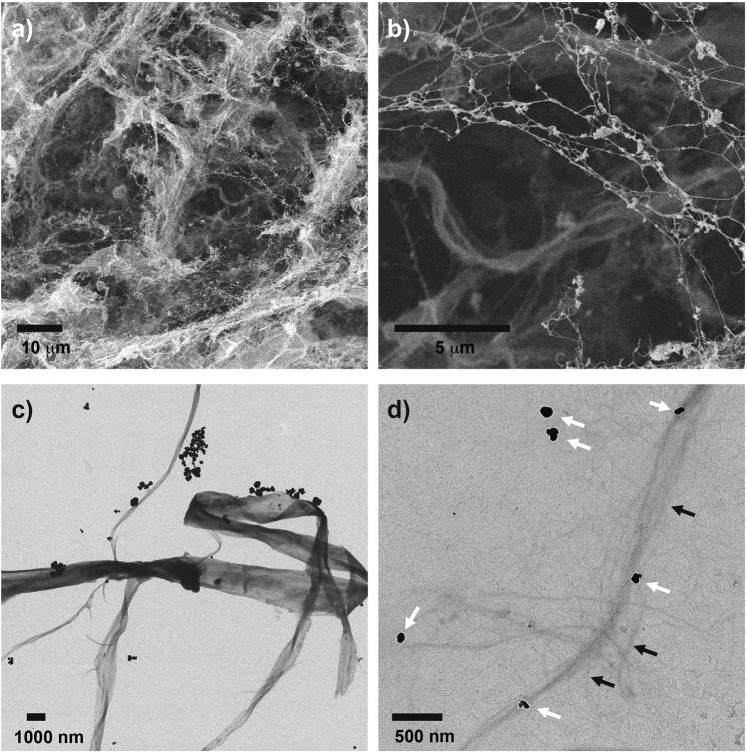
Antibiotic Microbial Resistance (AMR) is a major global challenge as it constitutes a severe threat to global public health if not addressed. To fight against AMR bacteria, new antimicrobial agents are continually needed, and their efficacy must be tested. Historically, many transition metals have been employed, but their cytotoxicity is an issue and hence must be reduced, typically by combination with organic polymers. Cellulose of natural origin, especially those derived from unavoidable residues in the food supply chain, appears to be a good capping agent for the green synthesis of silver nanoparticles. Herein, we describe a green synthesis method to produce a novel biocomposite, using ascorbic acid as reducing agent and microfibrillated cellulose as a capping agent and demonstrate this material to be an efficient antimicrobial agent. Silver nanoparticles were obtained in the cellulose matrix with an average size of 140 nm and with antimicrobial activity against both sensitive and resistant Gram positive (using 1500 ppm) as well as sensitive and resistant Gram negative (using 125 ppm) bacteria. Also, an inverted disk-diffusion methodology was applied to overcome the low-solubility of cellulose compounds. This novel silver nanoparticle-cellulose biocomposite synthesized by a green methodology shows the potential to be applied in the future development of biomedical instruments and therapeutics.
抗生素微生物耐药性(AMR)是一个全球性的主要挑战,如果不加以解决,它将对全球公共卫生构成严重威胁。为了对抗 AMR 细菌,我们需要不断开发新的抗菌剂,并对其疗效进行测试。在历史上,许多过渡金属已被用于抗菌剂,但它们的细胞毒性是一个问题,因此必须加以降低,通常是与有机聚合物结合。天然来源的纤维素,特别是那些来自食品供应链中不可避免的残留物的纤维素,似乎是绿色合成银纳米粒子的良好封端剂。在此,我们描述了一种使用抗坏血酸作为还原剂和微纤化纤维素作为封端剂的绿色合成方法,来制备一种新型的生物复合材料,并证明该材料具有有效的抗菌活性。在纤维素基质中获得了平均尺寸为 140nm 的银纳米粒子,对敏感和耐药的革兰氏阳性菌(使用 1500ppm)以及敏感和耐药的革兰氏阴性菌(使用 125ppm)都具有抗菌活性。此外,还应用了一种倒置的圆盘扩散方法来克服纤维素化合物的低溶解度问题。这种通过绿色方法合成的新型银纳米粒子-纤维素生物复合材料具有应用于未来生物医学仪器和治疗的潜力。