Department of Pharmaceutical Sciences, University of Tennessee Health Science Center, 881 Madison Ave, Memphis, TN 38163, USA.
Plough Center for Sterile Drug Delivery Solutions, University of Tennessee Health Science Center, 208 South Dudley Street, Memphis, TN 38163, USA.
Viruses. 2020 Apr 26;12(5):486. doi: 10.3390/v12050486.
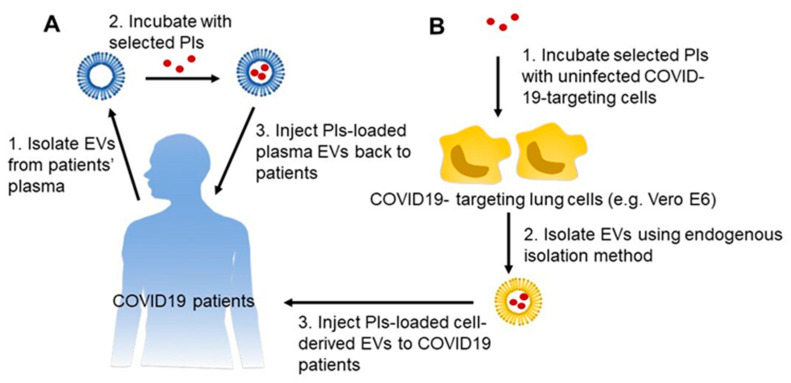
In January 2020, Chinese health agencies reported an outbreak of a novel coronavirus-2 (CoV-2) which can lead to severe acute respiratory syndrome (SARS). The virus, which belongs to the coronavirus family (SARS-CoV-2), was named coronavirus disease 2019 (COVID-19) and declared a pandemic by the World Health Organization (WHO). Full-length genome sequences of SARS-CoV-2 showed 79.6% sequence identity to SARS-CoV, with 96% identity to a bat coronavirus at the whole-genome level. COVID-19 has caused over 133,000 deaths and there are over 2 million total confirmed cases as of April 15th, 2020. Current treatment plans are still under investigation due to a lack of understanding of COVID-19. One potential mechanism to slow disease progression is the use of antiviral drugs to either block the entry of the virus or interfere with viral replication and maturation. Currently, antiviral drugs, including chloroquine/hydroxychloroquine, remdesivir, and lopinavir/ritonavir, have shown effective inhibition of SARS-CoV-2 in vitro. Due to the high dose needed and narrow therapeutic window, many patients are experiencing severe side effects with the above drugs. Hence, repurposing these drugs with a proper formulation is needed to improve the safety and efficacy for COVID-19 treatment. Extracellular vesicles (EVs) are a family of natural carriers in the human body. They play a critical role in cell-to-cell communications. EVs can be used as unique drug carriers to deliver protease inhibitors to treat COVID-19. EVs may provide targeted delivery of protease inhibitors, with fewer systemic side effects. More importantly, EVs are eligible for major aseptic processing and can be upscaled for mass production. Currently, the FDA is facilitating applications to treat COVID-19, which provides a very good chance to use EVs to contribute in this combat.
2020 年 1 月,中国卫生机构报告了一种新型冠状病毒-2(CoV-2)的爆发,这种病毒可导致严重急性呼吸系统综合症(SARS)。该病毒属于冠状病毒科(SARS-CoV-2),被命名为 2019 年冠状病毒病(COVID-19),并被世界卫生组织(WHO)宣布为大流行。SARS-CoV-2 的全长基因组序列与 SARS-CoV 具有 79.6%的序列同一性,与整个基因组水平的蝙蝠冠状病毒具有 96%的同一性。截至 2020 年 4 月 15 日,COVID-19 已导致超过 133000 人死亡,总确诊病例超过 200 万例。由于对 COVID-19 的了解不足,目前的治疗方案仍在研究中。一种减缓疾病进展的潜在机制是使用抗病毒药物来阻止病毒进入或干扰病毒复制和成熟。目前,抗病毒药物,包括氯喹/羟氯喹、瑞德西韦和洛匹那韦/利托那韦,已在体外显示对 SARS-CoV-2 的有效抑制作用。由于需要高剂量和狭窄的治疗窗口,许多患者在使用上述药物时会出现严重的副作用。因此,需要对这些药物进行适当的配方改造,以提高 COVID-19 治疗的安全性和疗效。细胞外囊泡(EVs)是人体内天然载体的一个家族。它们在细胞间通讯中起着至关重要的作用。EVs 可作为独特的药物载体,将蛋白酶抑制剂递送至体内以治疗 COVID-19。EVs 可以提供靶向的蛋白酶抑制剂递送,减少全身副作用。更重要的是,EVs 符合主要的无菌处理要求,可以扩大规模进行大规模生产。目前,FDA 正在促进 COVID-19 治疗的应用,这为使用 EVs 为这场战斗做出贡献提供了很好的机会。