Columbia Stem Cell Initiative, Columbia University, New York, NY, 10032, USA.
Department of Rehabilitation and Regenerative Medicine, Vagelos College of Physicians and Surgeons, Columbia University, New York, NY, 10032, USA.
Nat Commun. 2020 May 1;11(1):2141. doi: 10.1038/s41467-020-16030-0.
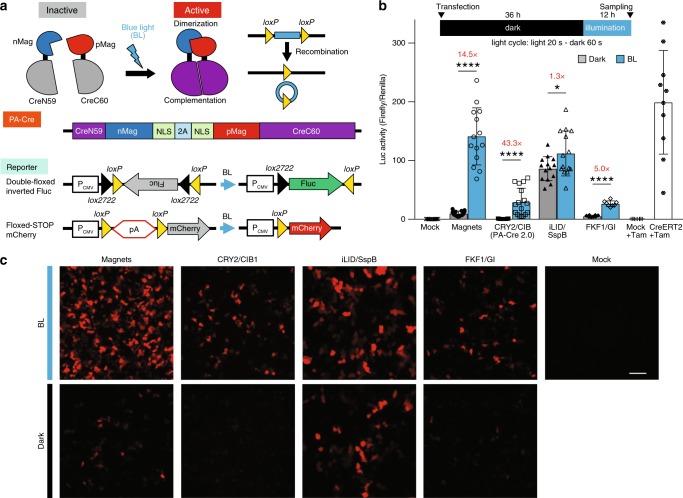
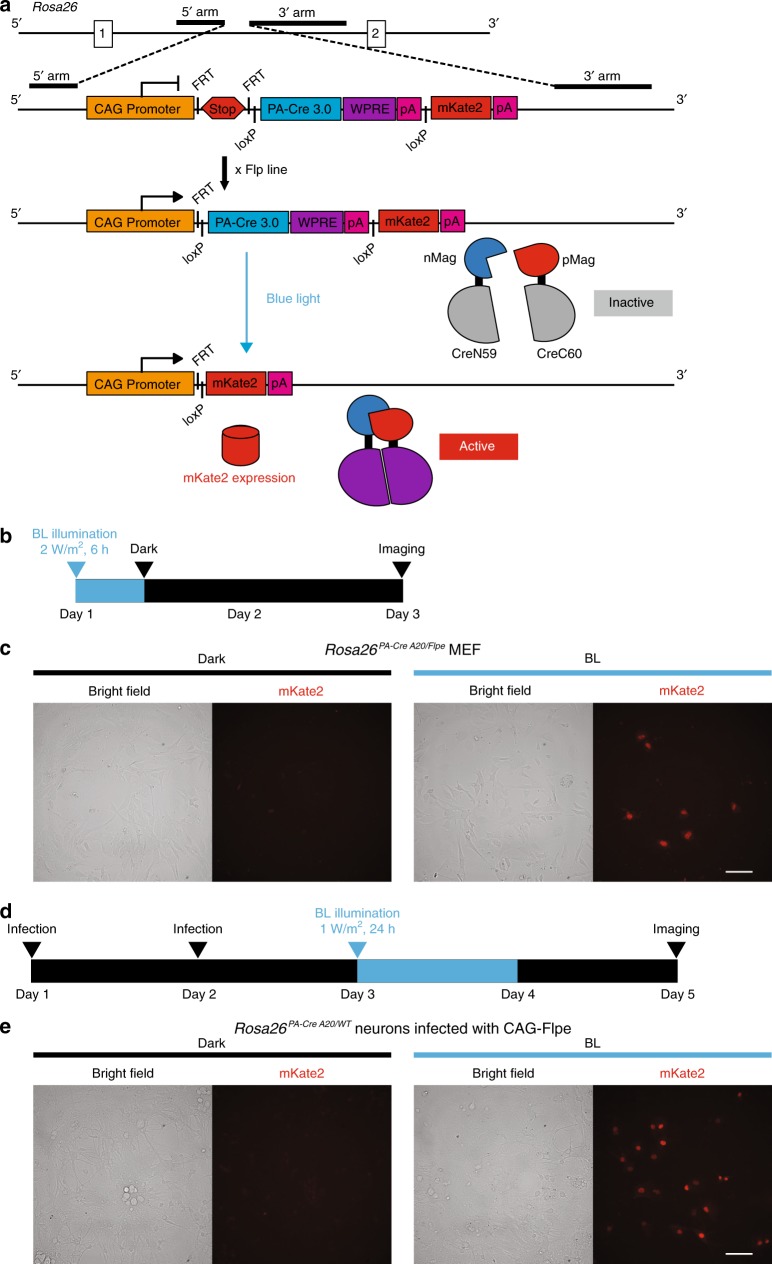
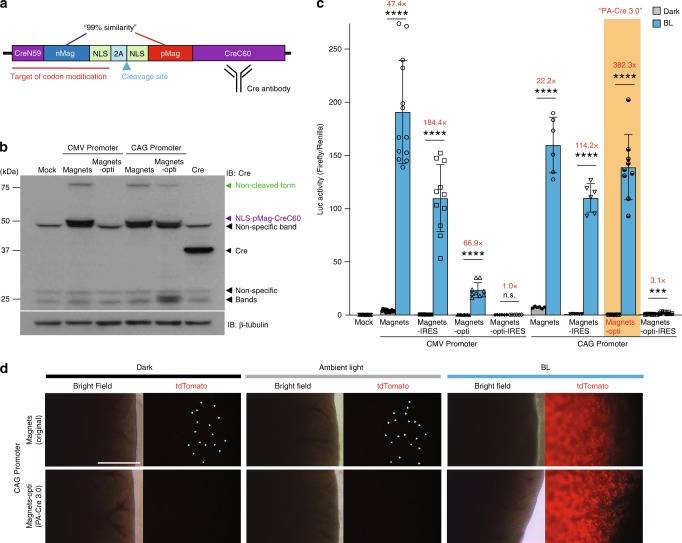
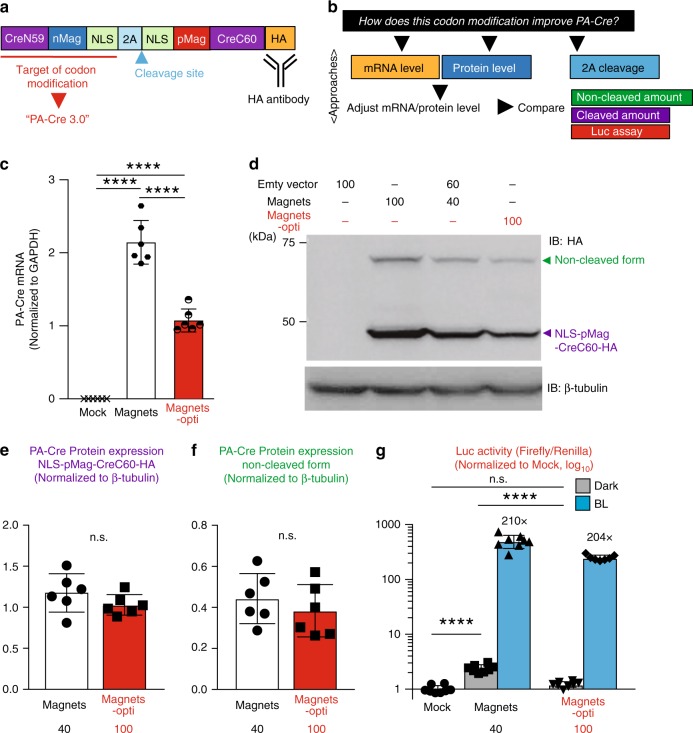
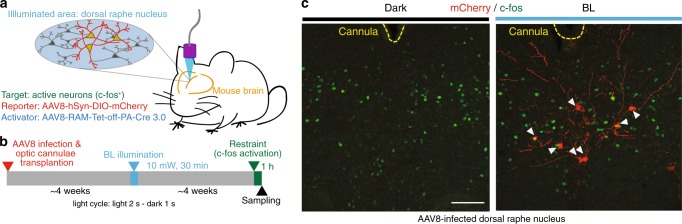
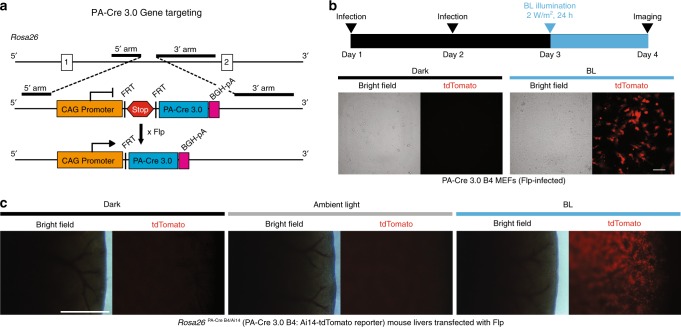
Optogenetic genome engineering tools enable spatiotemporal control of gene expression and provide new insight into biological function. Here, we report the new version of genetically encoded photoactivatable (PA) Cre recombinase, PA-Cre 3.0. To improve PA-Cre technology, we compare light-dimerization tools and optimize for mammalian expression using a CAG promoter, Magnets, and 2A self-cleaving peptide. To prevent background recombination caused by the high sequence similarity in the dimerization domains, we modify the codons for mouse gene targeting and viral production. Overall, these modifications significantly reduce dark leak activity and improve blue-light induction developing our new version, PA-Cre 3.0. As a resource, we have generated and validated AAV-PA-Cre 3.0 as well as two mouse lines that can conditionally express PA-Cre 3.0. Together these new tools will facilitate further biological and biomedical research.
光遗传学基因组工程工具可实现基因表达的时空控制,并为深入了解生物功能提供新的视角。在此,我们报告了经过改良的基因编码光激活(PA)Cre 重组酶,即 PA-Cre 3.0。为了改进 PA-Cre 技术,我们比较了光二聚化工具,并使用 CAG 启动子、Magnet 和 2A 自切割肽进行了优化,以实现哺乳动物表达。为了防止由于二聚化结构域的高度序列相似性而导致的背景重组,我们修改了用于基因靶向和病毒生产的密码子。总的来说,这些修改显著降低了暗泄漏活性,并提高了蓝光诱导效率,从而开发出我们的新版本 PA-Cre 3.0。作为一种资源,我们已经生成并验证了可条件性表达 PA-Cre 3.0 的 AAV-PA-Cre 3.0 以及两种小鼠品系。这些新工具将有助于进一步开展生物学和生物医学研究。