Koch Institute for Integrative Cancer Research, Massachusetts Institute of Technology, Cambridge, MA, USA; Harvard-MIT Division of Health Sciences and Technology, Institute for Medical Engineering and Science, Massachusetts Institute of Technology, Cambridge, MA, USA; Harvard Graduate Program in Biophysics, Harvard University, Boston, MA, USA.
Koch Institute for Integrative Cancer Research, Massachusetts Institute of Technology, Cambridge, MA, USA; Harvard-MIT Division of Health Sciences and Technology, Institute for Medical Engineering and Science, Massachusetts Institute of Technology, Cambridge, MA, USA; Department of Electrical Engineering and Computer Science, Massachusetts Institute of Technology, Cambridge, MA, USA; Department of Medicine, Brigham and Women's Hospital, Harvard Medical School, Boston, MA, USA; Broad Institute of Massachusetts Institute of Technology and Harvard, Cambridge, MA, USA; Wyss Institute at Harvard, Cambridge, MA, USA; Howard Hughes Medical Institute, Cambridge, MA, USA.
Trends Mol Med. 2020 May;26(5):450-468. doi: 10.1016/j.molmed.2020.01.013. Epub 2020 Apr 5.
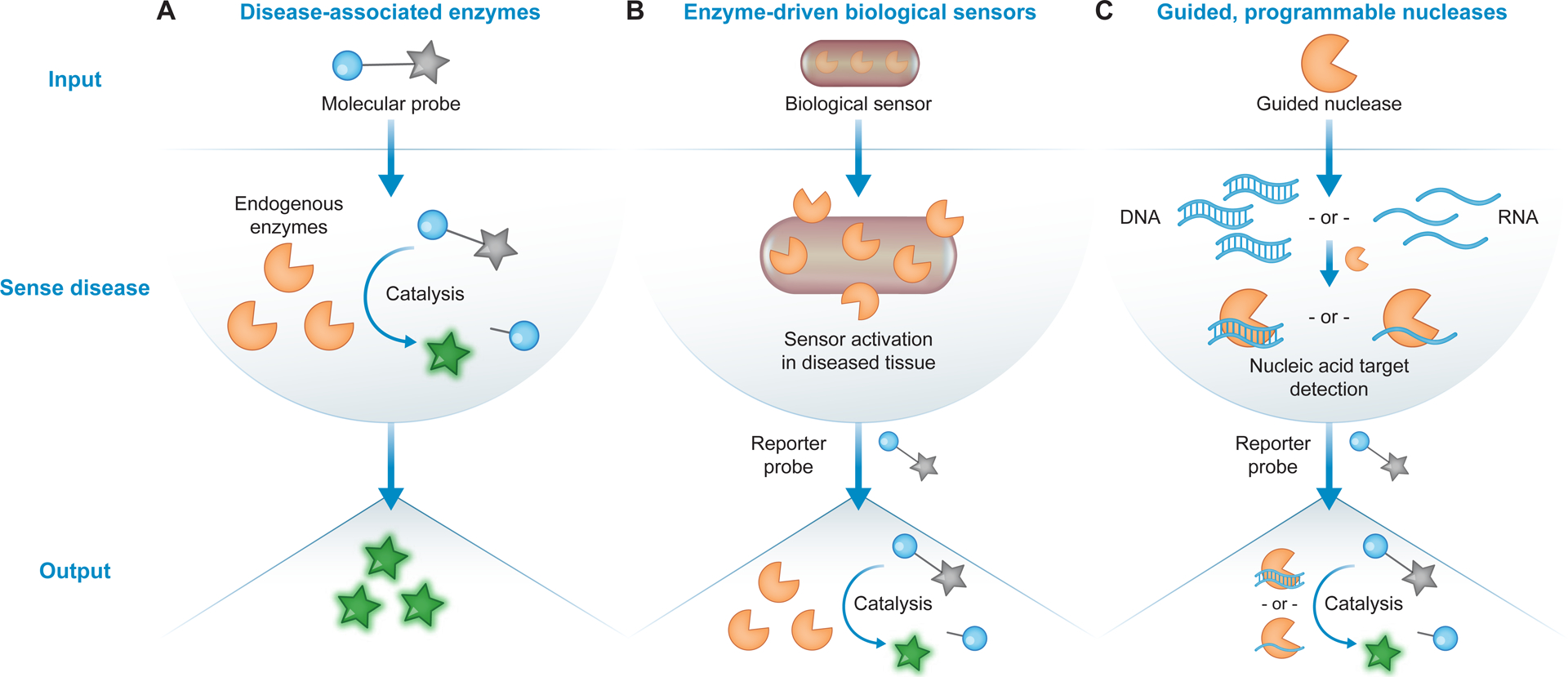
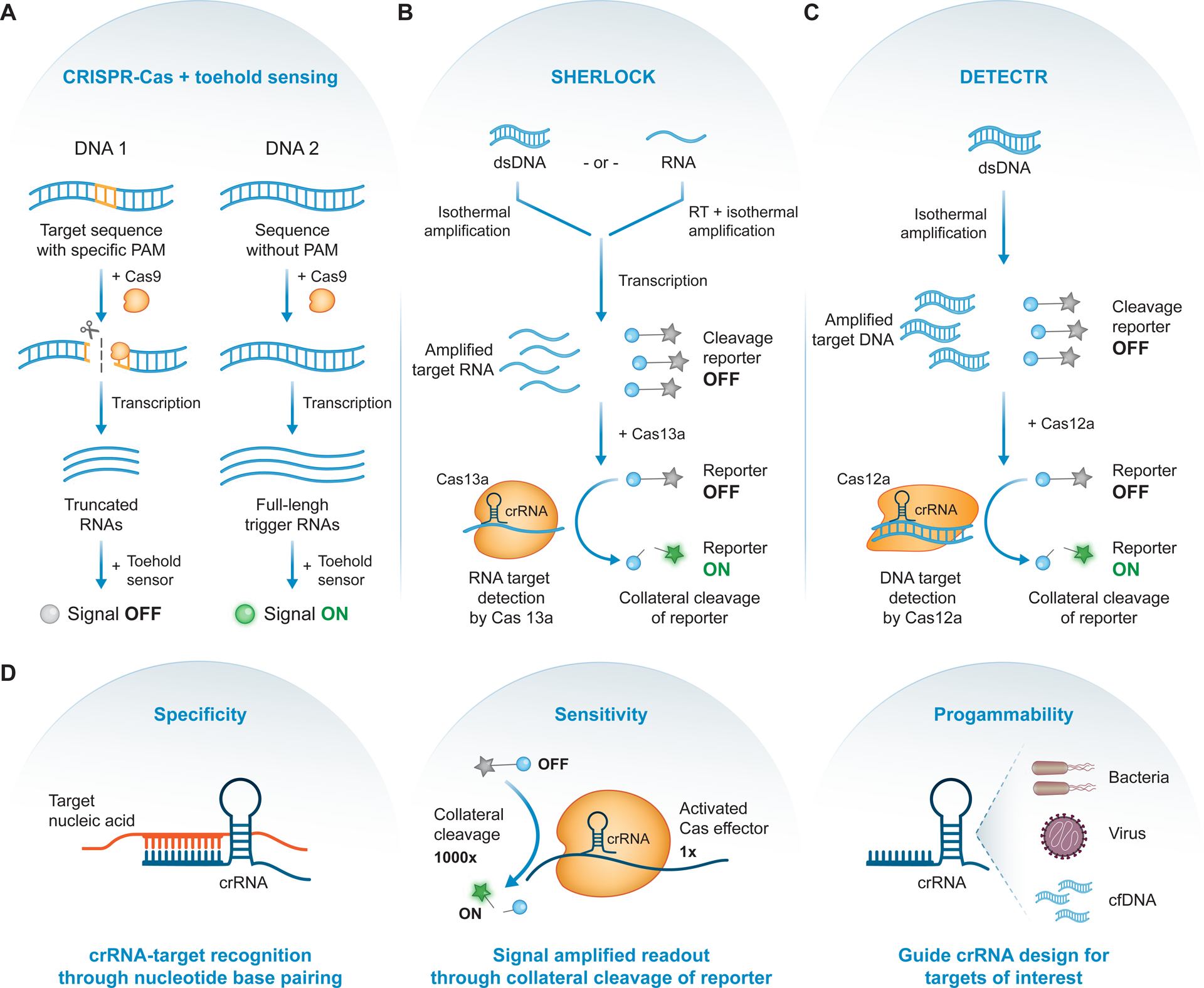
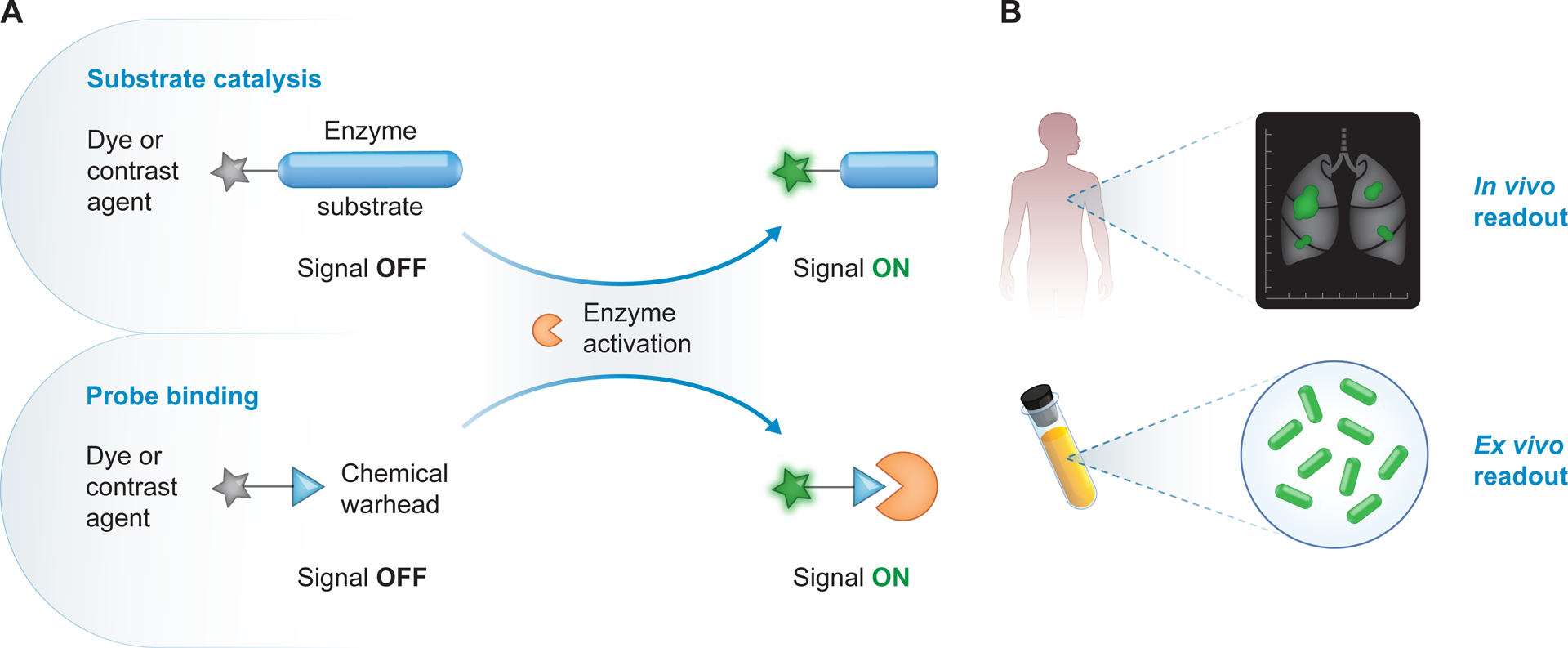
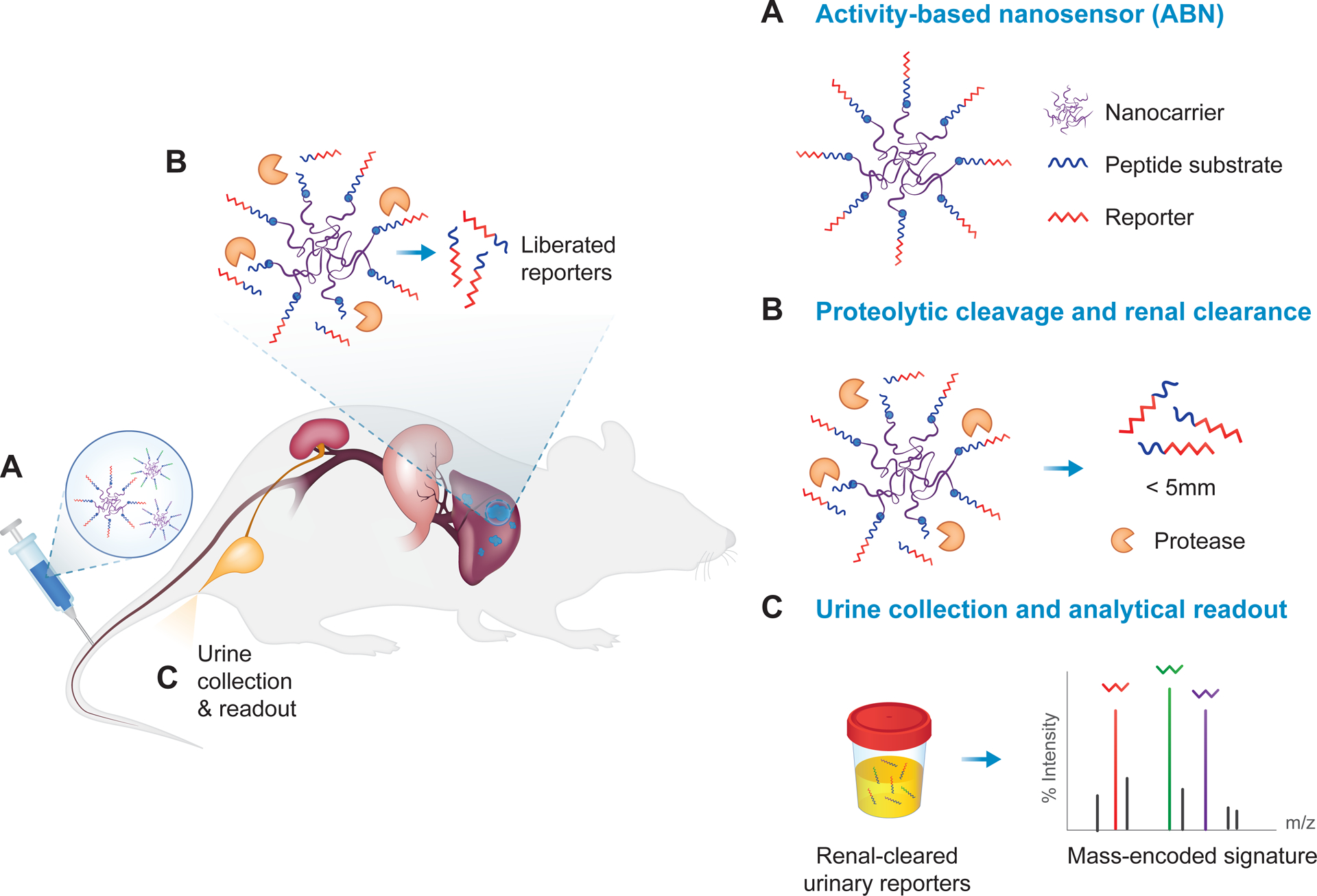
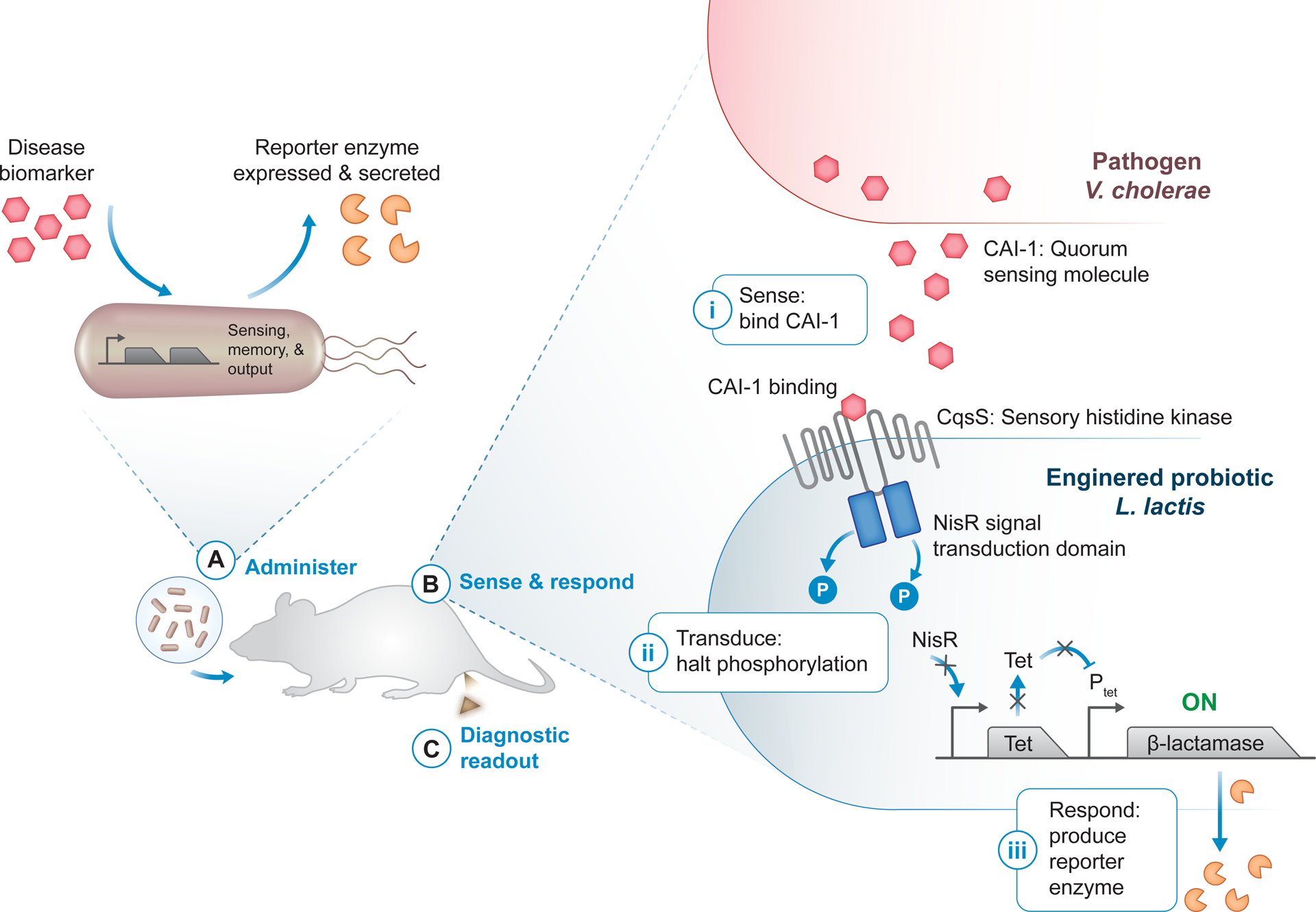
Diagnostics to accurately detect disease and monitor therapeutic response are essential for effective clinical management. Bioengineering, chemical biology, molecular biology, and computer science tools are converging to guide the design of diagnostics that leverage enzymatic activity to measure or produce biomarkers of disease. We review recent advances in the development of these 'activity-based diagnostics' (ABDx) and their application in infectious and noncommunicable diseases. We highlight efforts towards both molecular probes that respond to disease-specific catalytic activity to produce a diagnostic readout, as well as diagnostics that use enzymes as an engineered component of their sense-and-respond cascade. These technologies exemplify how integrating techniques from multiple disciplines with preclinical validation has enabled ABDx that may realize the goals of precision medicine.
诊断技术对于准确检测疾病和监测治疗反应至关重要,这是有效临床管理的基础。生物工程、化学生物学、分子生物学和计算机科学工具正在融合,以指导诊断设计,利用酶活性来测量或产生疾病的生物标志物。我们综述了这些“基于活性的诊断(ABDx)”的最新进展及其在传染病和非传染性疾病中的应用。我们强调了既要开发针对疾病特异性催化活性产生诊断读数的分子探针,也要开发利用酶作为其感应-响应级联工程组件的诊断方法。这些技术体现了如何将多个学科的技术与临床前验证相结合,从而实现精准医学的目标。