Department of Pediatrics, National Jewish Health, Denver, Colo.
Federal Systems Division, Inc, Chapel Hill, NC.
J Allergy Clin Immunol. 2020 Dec;146(6):1367-1378. doi: 10.1016/j.jaci.2020.04.022. Epub 2020 Apr 28.
Atopic dermatitis (AD) and food allergy (FA) are associated with skin barrier dysfunction.
Skin biomarkers are needed for skin barrier interventions studies.
In this study, skin tape strip (STS) samples were collected from nonlesional skin of 62 children in AD FA+, AD FA-, and nonatopic groups for mass spectrometry proteomic analysis. transepidermal water loss and allergic sensitization were assessed. STS proteomic analysis results were validated in an independent cohort of 41 adults with AD with and without FA versus nonatopic controls.
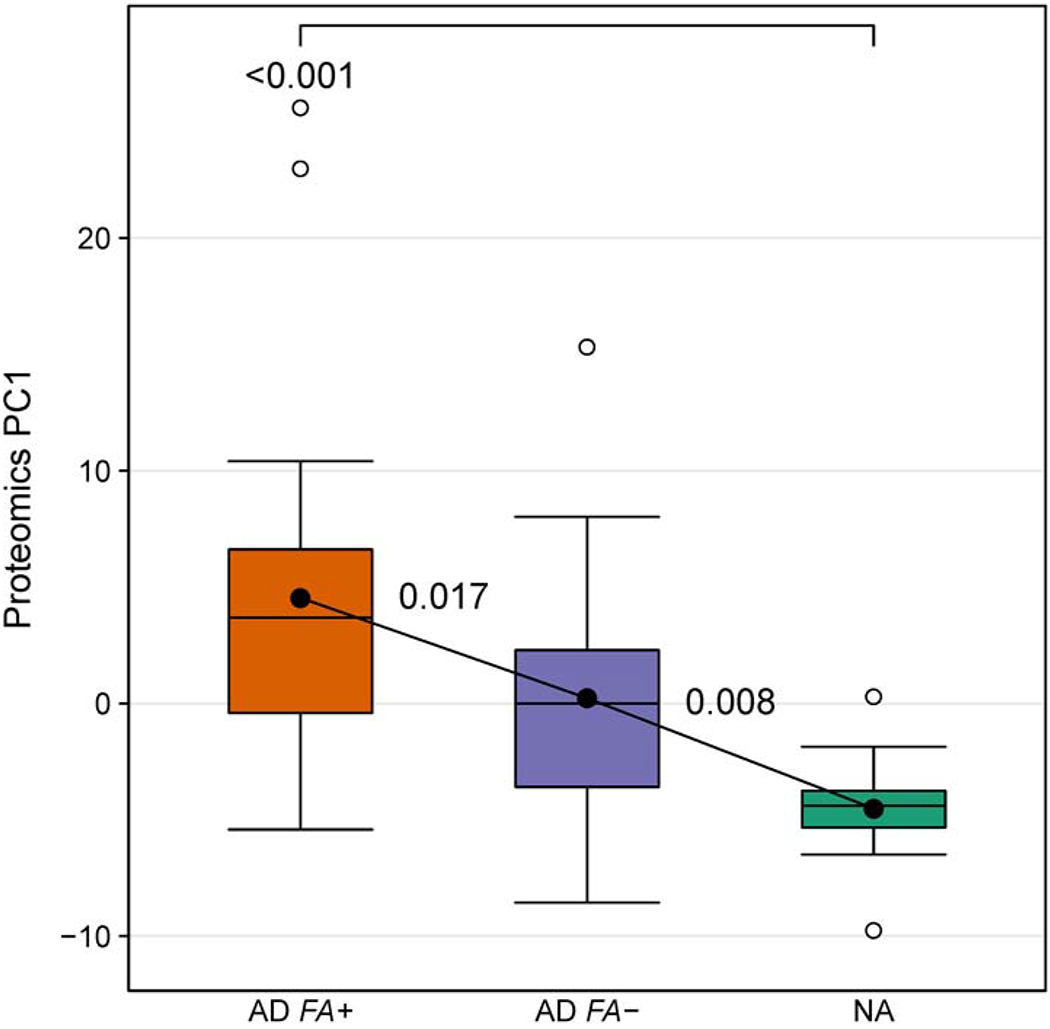
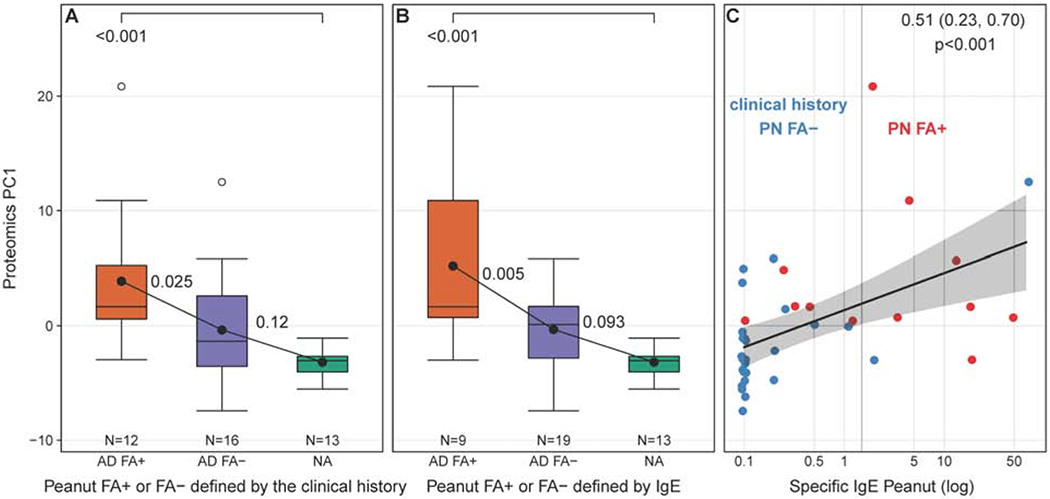
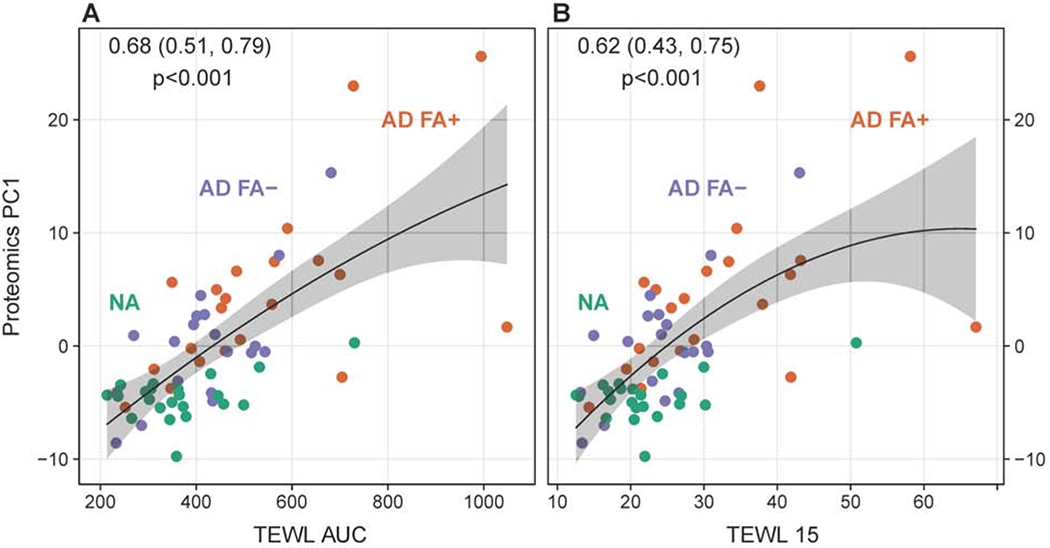
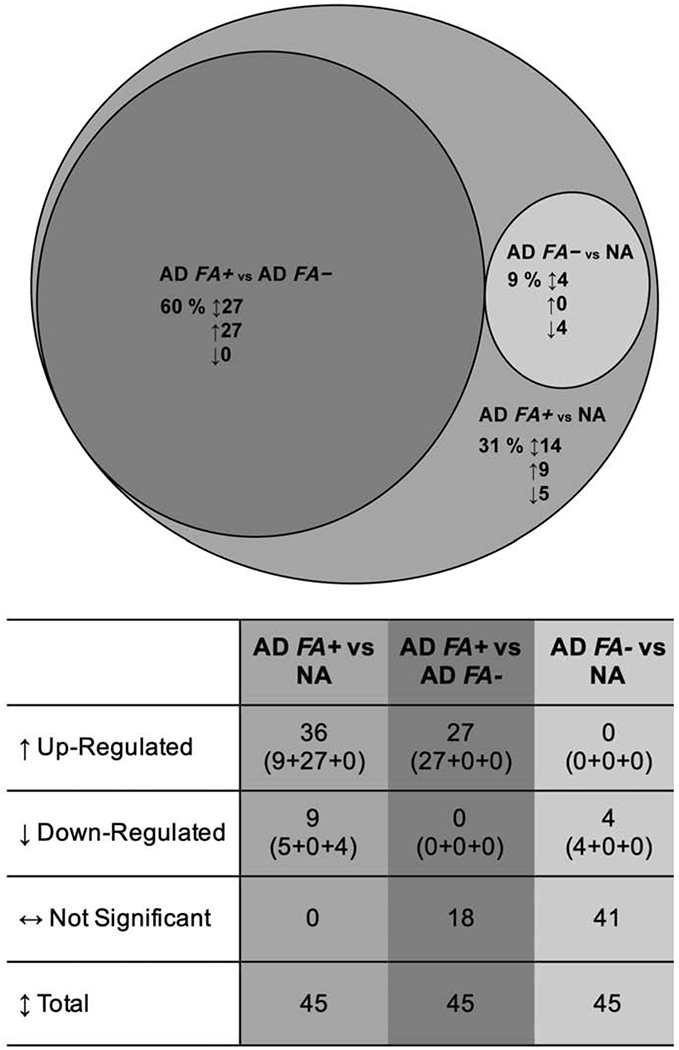
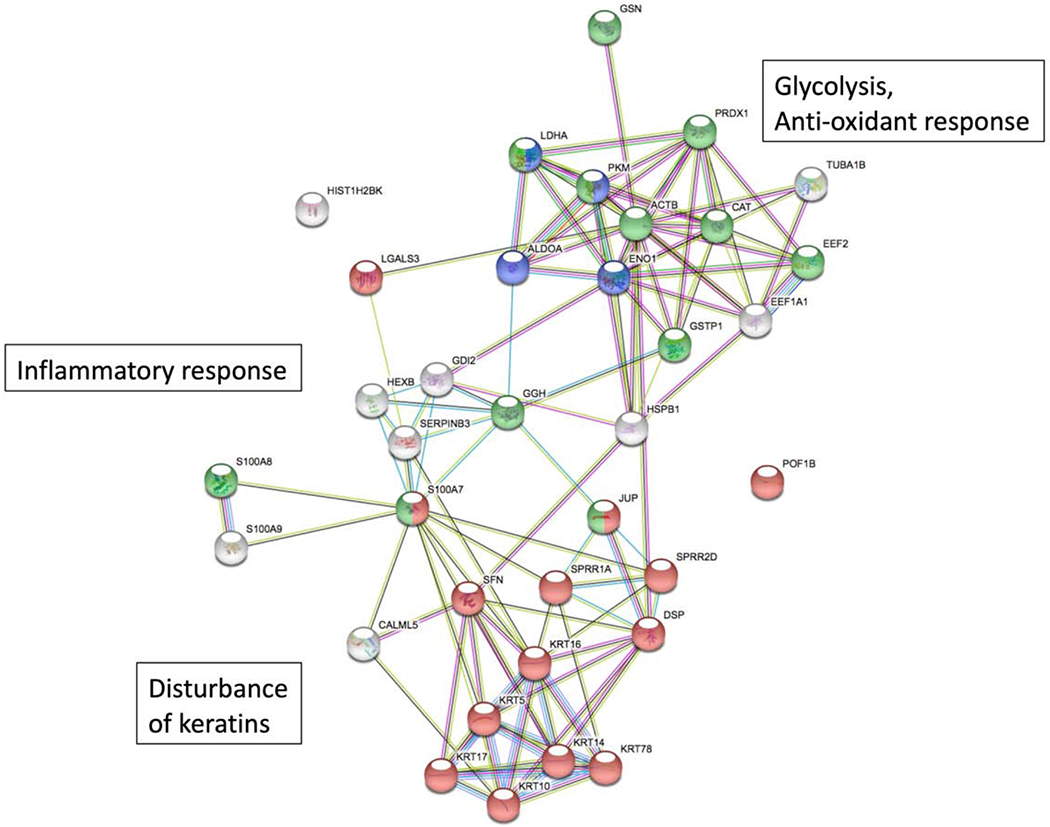
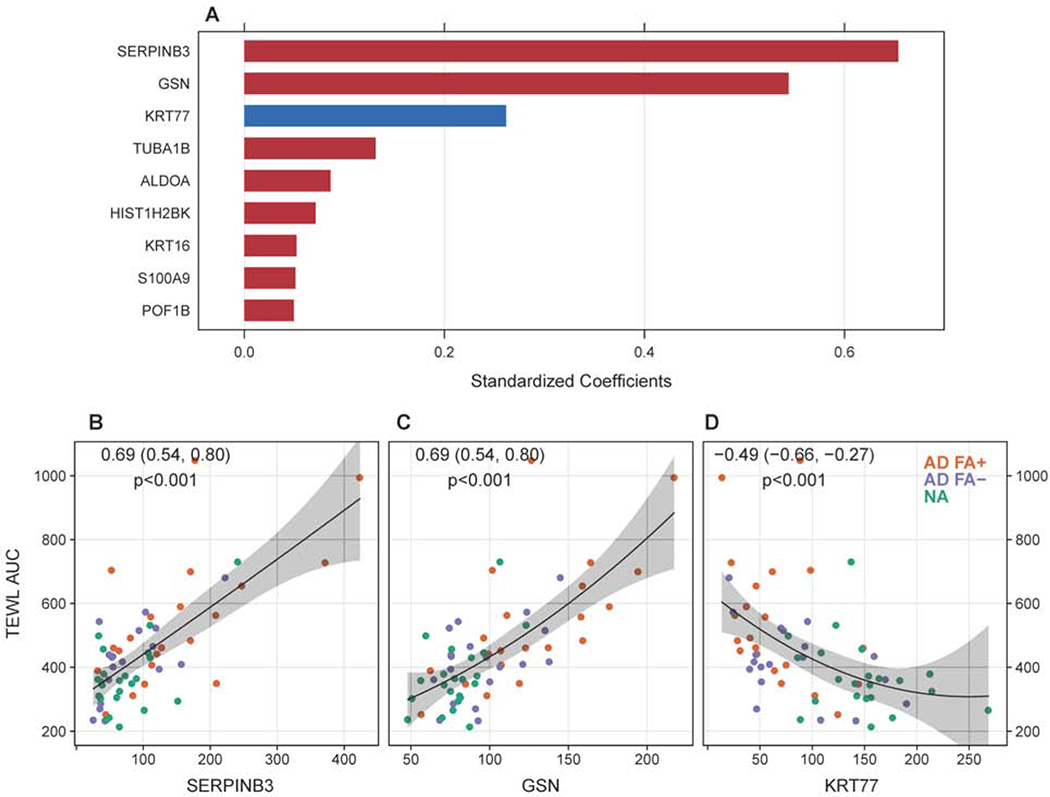
A group of 45 proteins was identified as a principal component 1 (PC1) with the highest expression in AD FA+ STSs. This novel set of STS proteins was highly correlative to skin transepidermal water loss and allergic sensitization. PC1 proteins included keratin intermediate filaments; proteins associated with inflammatory responses (S100 proteins, alarmins, protease inhibitors); and glycolysis and antioxidant defense enzymes. Analysis of PC1 proteins expression in an independent adult AD cohort validated differential expression of STS PC1 proteins in the skin of adult patients with AD with the history of clinical reactions to peanut.
STS analysis of nonlesional skin of AD children identified a cluster of proteins with the highest expression in AD FA+ children. The differential expression of STS PC1 proteins was confirmed in a replicate cohort of adult AD patients with FA to peanut, suggesting a unique STS proteomic endotype for AD FA+ that persists into adulthood. Collectively, PC1 proteins are associated with abnormalities in skin barrier integrity and may increase the risk of epicutaneous sensitization to food allergens.
特应性皮炎(AD)和食物过敏(FA)与皮肤屏障功能障碍有关。
皮肤屏障干预研究需要皮肤生物标志物。
本研究从 AD FA+、AD FA-和非特应性组的 62 名儿童的非病变皮肤采集皮肤胶带条(STS)样本,进行质谱蛋白质组分析。评估经皮水分丢失和过敏致敏情况。STS 蛋白质组分析结果在一个由 41 名成人 AD 患者(有或无 FA)和非特应性对照组组成的独立队列中进行了验证。
确定了一组 45 种蛋白质作为主成分 1(PC1),其在 AD FA+ STS 中的表达最高。这组新的 STS 蛋白质与皮肤经皮水分丢失和过敏致敏高度相关。PC1 蛋白包括角蛋白中间丝;与炎症反应相关的蛋白(S100 蛋白、警报素、蛋白酶抑制剂);以及糖酵解和抗氧化防御酶。在一个独立的成人 AD 队列中对 PC1 蛋白的表达进行分析,验证了 STS PC1 蛋白在有花生临床反应史的成人 AD 患者皮肤中的差异表达。
AD 儿童非病变皮肤的 STS 分析确定了一组在 AD FA+儿童中表达最高的蛋白质。在有花生 FA 的成人 AD 患者的重复队列中,STS PC1 蛋白的差异表达得到了证实,这表明 AD FA+具有独特的 STS 蛋白质组表型,在成年后仍然存在。总体而言,PC1 蛋白与皮肤屏障完整性异常有关,可能增加对食物过敏原的经皮致敏风险。