Institute of Botany, Christian-Albrechts-University of Kiel, Olshausenstraße 40, 24098 Kiel, Germany.
Centre of Photosynthetic and Biochemical Studies, Faculty of Biochemical Science and Pharmacy, National University of Rosario (CEFOBI/UNR-CONICET), Rosario, Argentina.
Philos Trans R Soc Lond B Biol Sci. 2020 Jun 22;375(1801):20190397. doi: 10.1098/rstb.2019.0397. Epub 2020 May 4.
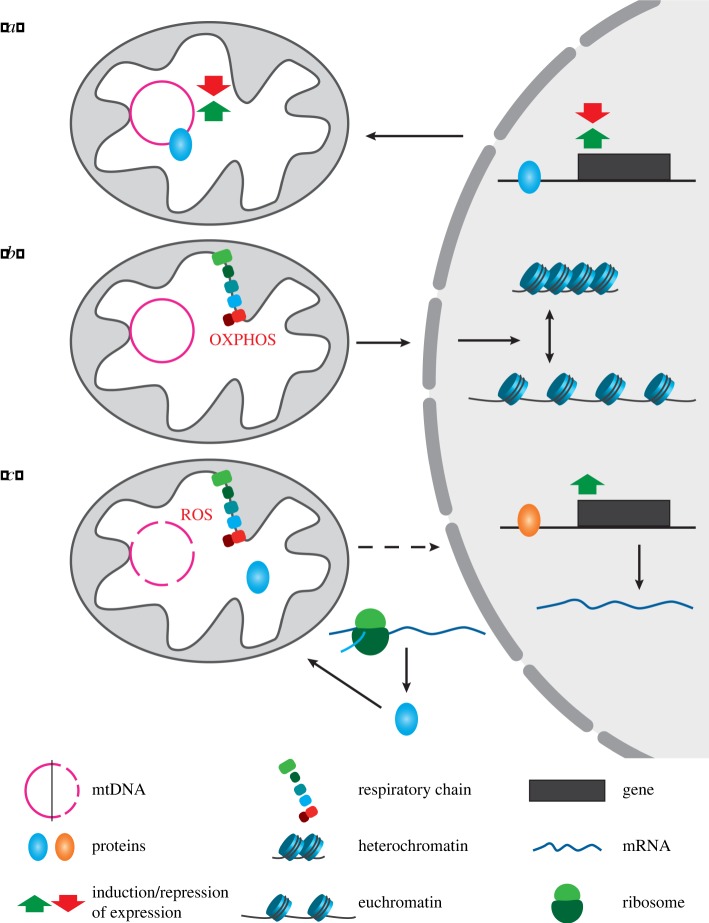
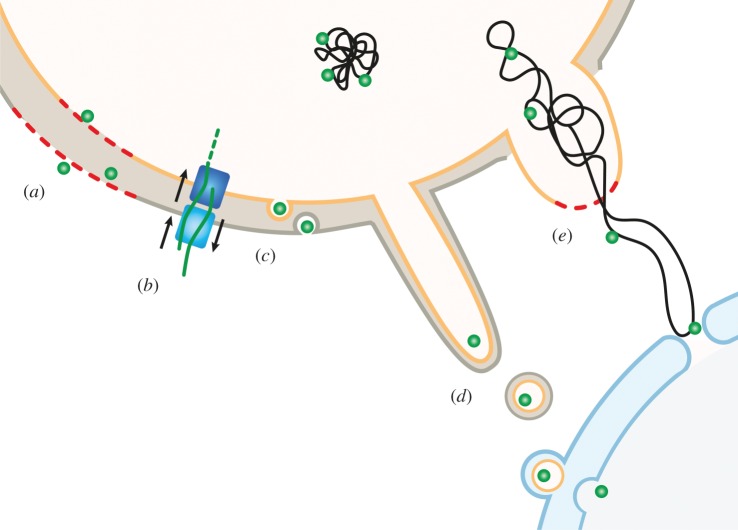
An increasing number of eukaryotic proteins have been shown to have a dual localization in the DNA-containing organelles, mitochondria and plastids, and/or the nucleus. Regulation of dual targeting and relocation of proteins from organelles to the nucleus offer the most direct means for communication between organelles as well as organelles and nucleus. Most of the mitochondrial proteins of animals have functions in DNA repair and gene expression by modelling of nucleoid architecture and/or chromatin. In plants, such proteins can affect replication and early development. Most plastid proteins with a confirmed or predicted second location in the nucleus are associated with the prokaryotic core RNA polymerase and are required for chloroplast development and light responses. Few plastid-nucleus-located proteins are involved in pathogen defence and cell cycle control. For three proteins, it has been clearly shown that they are first targeted to the organelle and then relocated to the nucleus, i.e. the nucleoid-associated proteins HEMERA and Whirly1 and the stroma-located defence protein NRIP1. Relocation to the nucleus can be experimentally demonstrated by plastid transformation leading to the synthesis of proteins with a tag that enables their detection in the nucleus or by fusions with fluoroproteins in different experimental set-ups. This article is part of the theme issue 'Retrograde signalling from endosymbiotic organelles'.
越来越多的真核蛋白被证明具有在含有 DNA 的细胞器线粒体和质体和/或细胞核中的双重定位。蛋白质从细胞器到细胞核的双重靶向和重定位的调节为细胞器以及细胞器和细胞核之间的通讯提供了最直接的手段。动物的大多数线粒体蛋白通过核小体结构和/或染色质的建模在 DNA 修复和基因表达中具有功能。在植物中,此类蛋白质可以影响复制和早期发育。大多数在细胞核中具有确认或预测的第二个位置的质体蛋白与原核核心 RNA 聚合酶相关,并且是质体发育和光反应所必需的。很少有质体-核定位蛋白参与病原体防御和细胞周期控制。对于三种蛋白质,已经清楚地表明它们首先被靶向细胞器,然后再重新定位到细胞核,即核相关蛋白 HEMERA 和 Whirly1 以及基质定位防御蛋白 NRIP1。通过质体转化导致合成带有标签的蛋白质来在细胞核中检测到它们,或者通过与不同实验设置中的荧光蛋白融合,可以在实验上证明向细胞核的重定位。本文是主题为“内共生细胞器的逆行信号”的一部分。