Department of Molecular Medicine and Medical Biotechnology, University of Naples Federico II, 80131 Naples, Italy.
Institute of Experimental Endocrinology and Oncology "G. Salvatore", National Research Council, 80131 Naples, Italy.
Int J Mol Sci. 2020 Apr 29;21(9):3134. doi: 10.3390/ijms21093134.
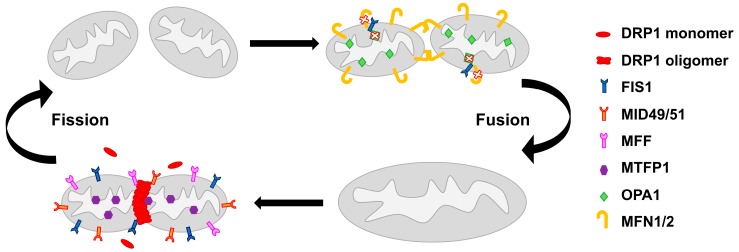
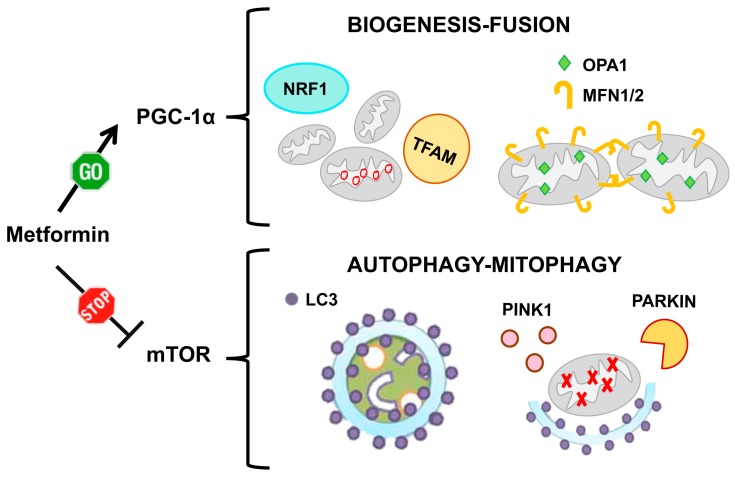
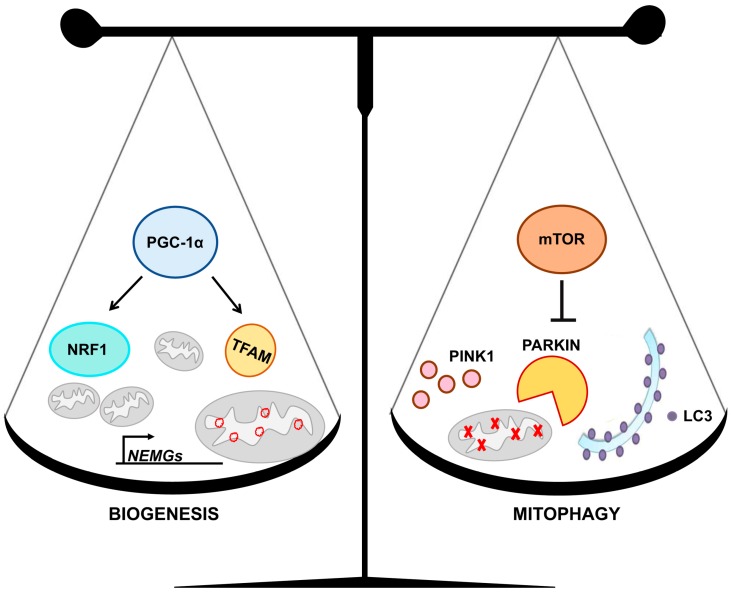
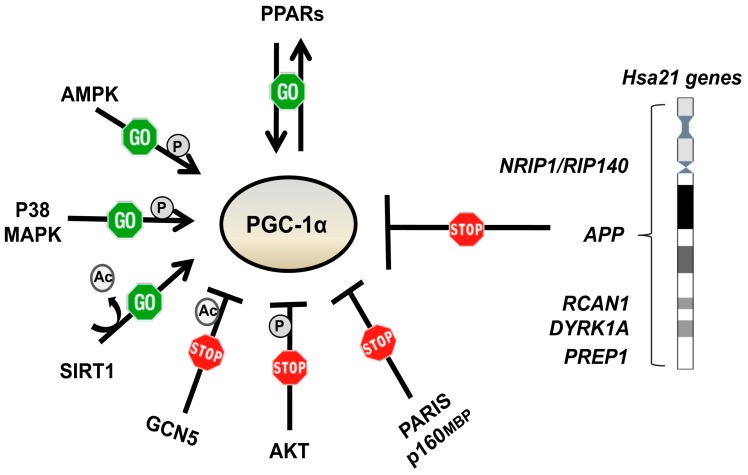
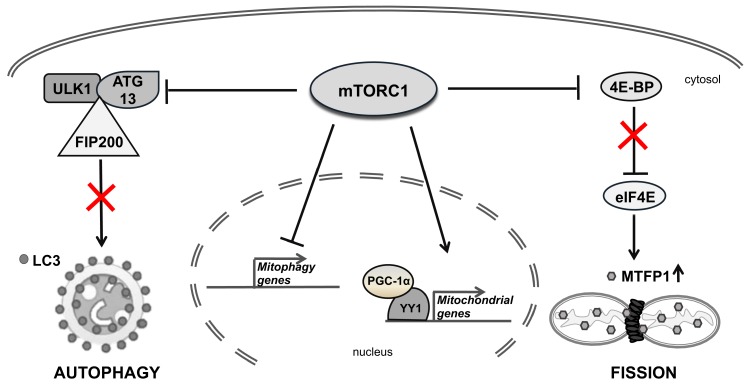
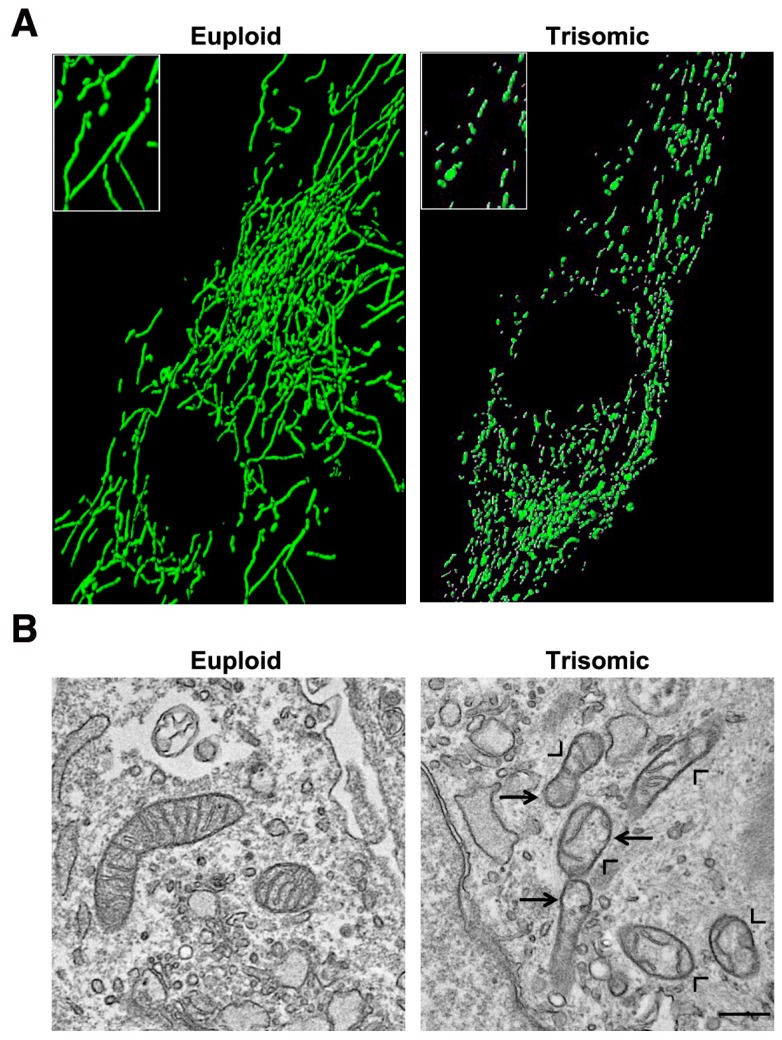
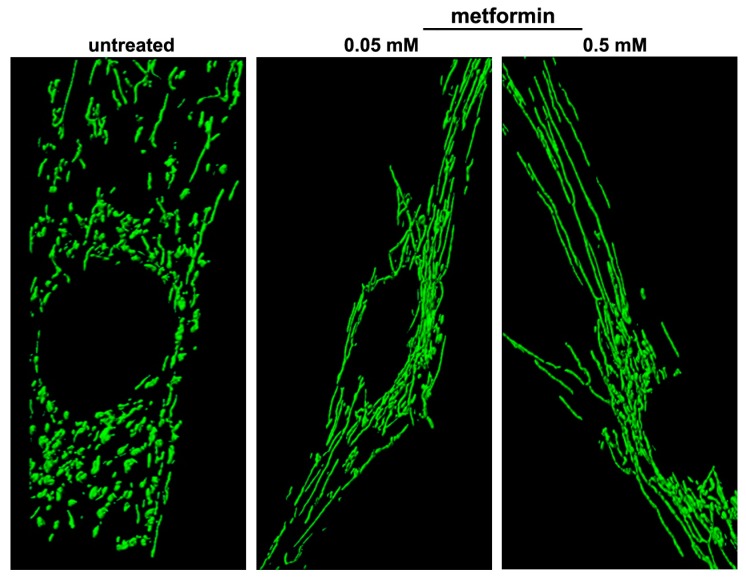
Mitochondria are organelles that mainly control energy conversion in the cell. In addition, they also participate in many relevant activities, such as the regulation of apoptosis and calcium levels, and other metabolic tasks, all closely linked to cell viability. Functionality of mitochondria appears to depend upon their network architecture that may dynamically pass from an interconnected structure with long tubular units, to a fragmented one with short separate fragments. A decline in mitochondrial quality, which presents itself as an altered structural organization and a function of mitochondria, has been observed in Down syndrome (DS), as well as in aging and in age-related pathologies. This review provides a basic overview of mitochondrial dynamics, from fission/fusion mechanisms to mitochondrial homeostasis. Molecular mechanisms determining the disruption of the mitochondrial phenotype in DS and aging are discussed. The impaired activity of the transcriptional co-activator PGC-1α/PPARGC1A and the hyperactivation of the mammalian target of rapamycin (mTOR) kinase are emerging as molecular underlying causes of these mitochondrial alterations. It is, therefore, likely that either stimulating the PGC-1α activity or inhibiting mTOR signaling could reverse mitochondrial dysfunction. Evidence is summarized suggesting that drugs targeting either these pathways or other factors affecting the mitochondrial network may represent therapeutic approaches to improve and/or prevent the effects of altered mitochondrial function. Overall, from all these studies it emerges that the implementation of such strategies may exert protective effects in DS and age-related diseases.
线粒体是主要控制细胞内能量转换的细胞器。此外,它们还参与许多相关的活动,如细胞凋亡和钙水平的调节,以及其他代谢任务,所有这些都与细胞活力密切相关。线粒体的功能似乎取决于它们的网络架构,这种架构可能从具有长管状单元的相互连接的结构动态转变为具有短而独立片段的碎片化结构。在唐氏综合征(DS)、衰老和与年龄相关的病理中,观察到线粒体质量下降,表现为线粒体结构组织改变和功能下降。本综述提供了线粒体动力学的基本概述,包括裂变/融合机制和线粒体动态平衡。讨论了决定 DS 和衰老中线粒体表型破坏的分子机制。转录共激活因子 PGC-1α/PPARGC1A 的活性受损和哺乳动物雷帕霉素靶蛋白(mTOR)激酶的过度激活,作为这些线粒体改变的潜在分子原因。因此,刺激 PGC-1α 活性或抑制 mTOR 信号传导可能逆转线粒体功能障碍。总结了表明靶向这些途径或其他影响线粒体网络的因素的药物可能代表改善和/或预防改变的线粒体功能影响的治疗方法的证据。总的来说,从所有这些研究中可以看出,实施这些策略可能会对 DS 和与年龄相关的疾病产生保护作用。