Maza Marcos Andrés, Martínez Juan Manuel, Cebrián Guillermo, Sánchez-Gimeno Ana Cristina, Camargo Alejandra, Álvarez Ignacio, Raso Javier
Departamento de Ciencias Enológicas y Agroalimentarias, Facultad de Ciencias Agrarias, Universidad Nacional de Cuyo, M5528AHB, Mendoza, Argentina.
Tecnología de los Alimentos, Facultad de Veterinaria, Instituto Agroalimentario de Aragón-IA2, (Universidad de Zaragoza-CITA), c/Miguel Servet, 177, 50013, Zaragoza, Spain.
Foods. 2020 Apr 30;9(5):542. doi: 10.3390/foods9050542.
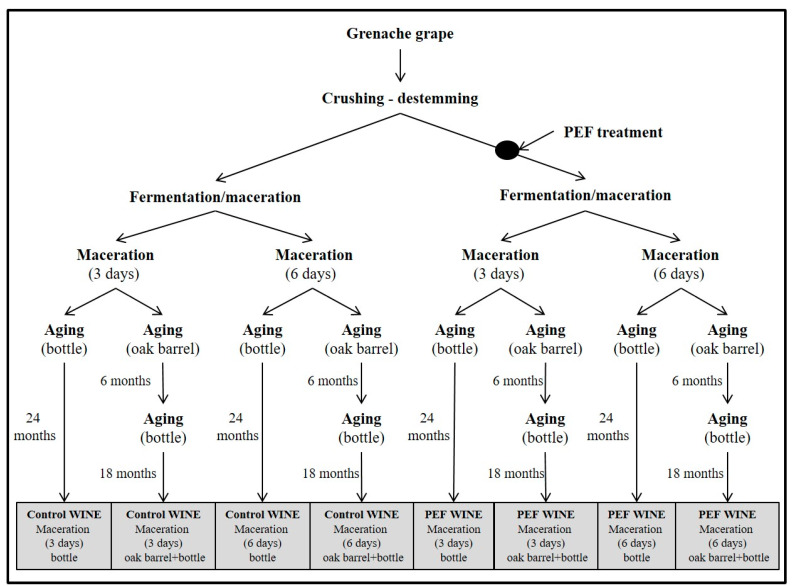
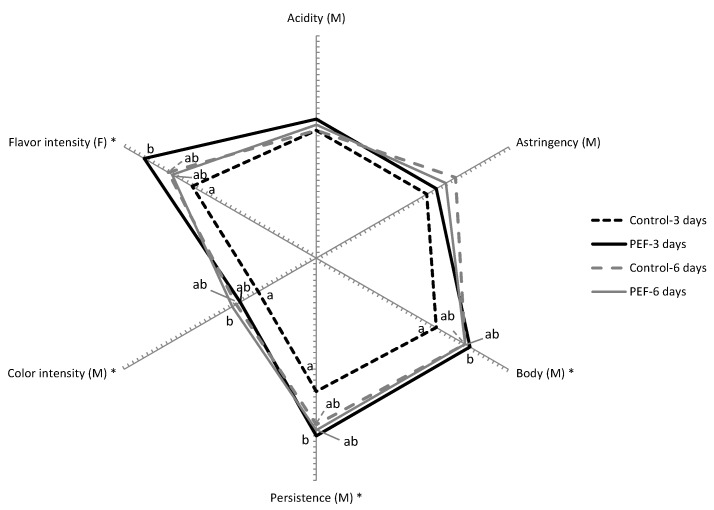
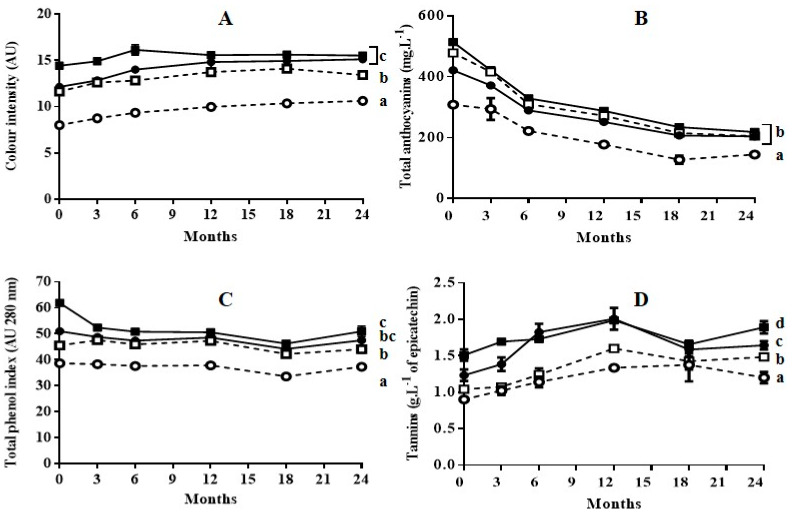
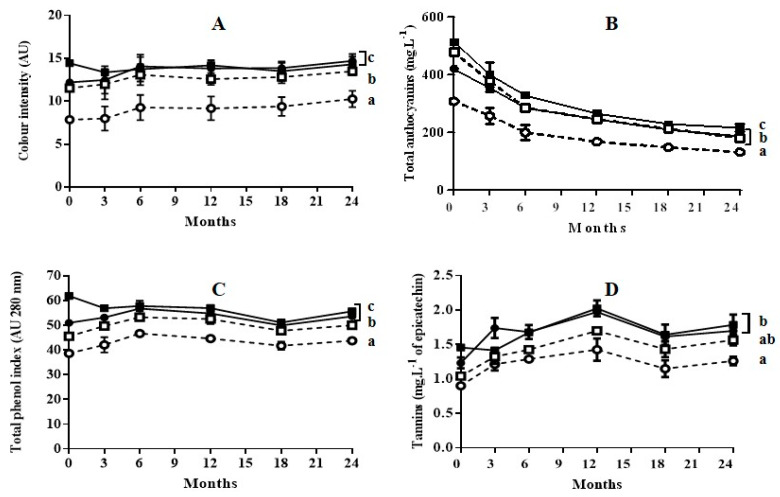
The evolution of polyphenolic compounds and sensory properties of wines obtained from grapes, either untreated or treated with pulsed electric fields (PEF), in the course of bottle aging, as well as during oak aging followed by bottle aging, were compared. Immediately prior to aging in bottles or in barrels, enological parameters that depend on phenolic extraction during skin maceration were higher when grapes had been treated with PEF. In terms of color intensity, phenolic families, and individual phenols, the wine obtained with grapes treated by PEF followed an evolution similar to untreated control wine in the course of aging. Sensory analysis revealed that the application of a PEF treatment resulted in wines that are sensorially different: panelists preferred wines obtained from grapes treated with PEF. Physicochemical and sensory analyses showed that grapes treated with PEF are suitable for obtaining wines that require aging in bottles or in oak barrels.
比较了未处理或经脉冲电场(PEF)处理的葡萄所酿葡萄酒在瓶陈过程中以及橡木桶陈酿后再瓶陈时多酚类化合物的演变和感官特性。在瓶中或桶中陈酿之前,当葡萄经过PEF处理时,取决于皮渣浸渍过程中酚类物质提取的酿酒参数更高。就颜色强度、酚类家族和单个酚类而言,经PEF处理的葡萄所酿葡萄酒在陈酿过程中的演变与未处理的对照葡萄酒相似。感官分析表明,PEF处理使葡萄酒在感官上有所不同:小组成员更喜欢经PEF处理的葡萄所酿葡萄酒。物理化学和感官分析表明,经PEF处理的葡萄适合酿造需要在瓶中或橡木桶中陈酿的葡萄酒。