Guo Jian, Ke Congming, Wu Yaping, Kang Junyong
Department of Physics, OSED, Fujian Provincial Key Laboratory of Semiconductor Materials and Applications, Jiujiang Research Insititute, Xiamen University, Xiamen, 361005, People's Republic of China.
Nanoscale Res Lett. 2020 May 4;15(1):97. doi: 10.1186/s11671-020-03330-z.
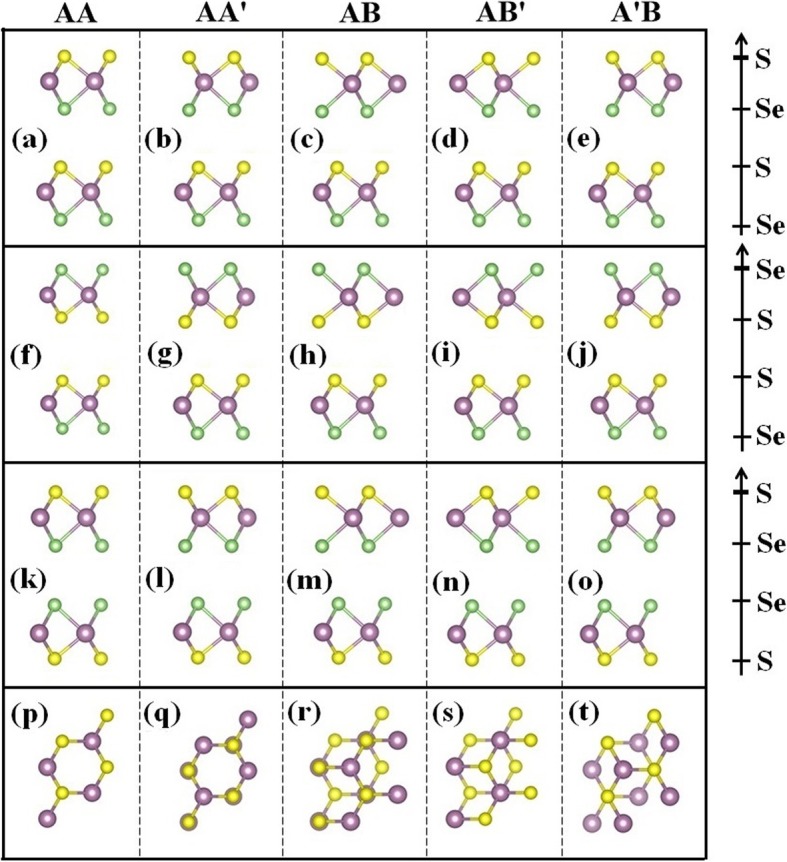
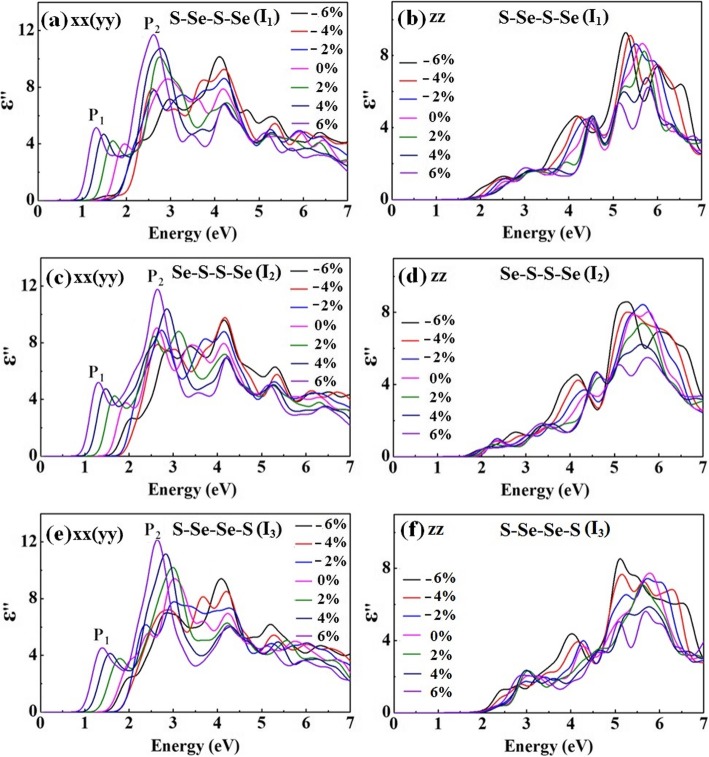
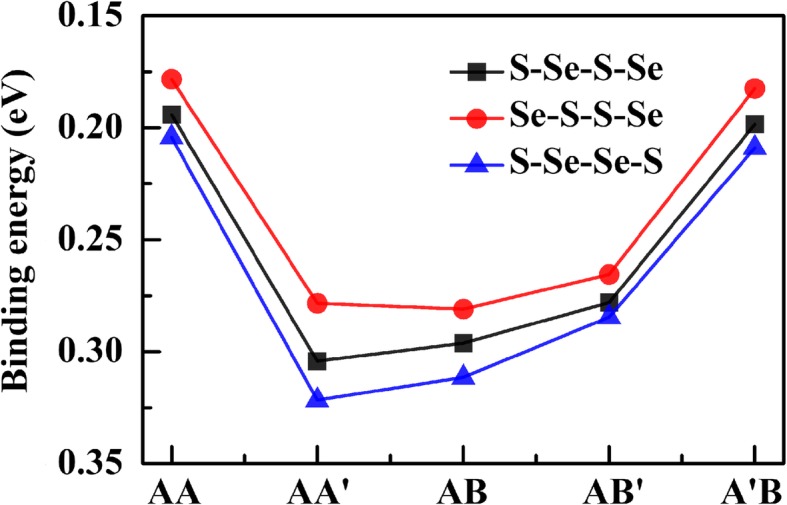
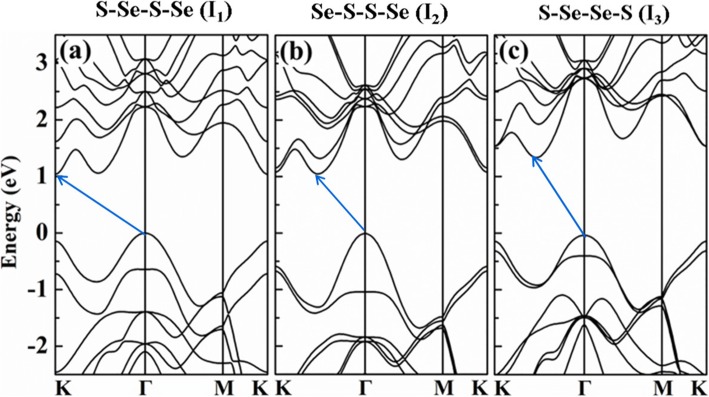
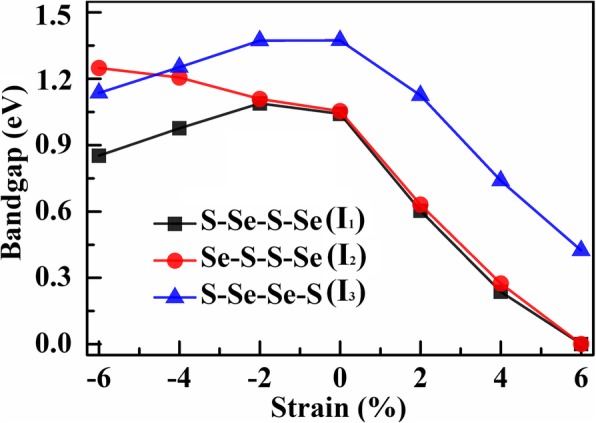
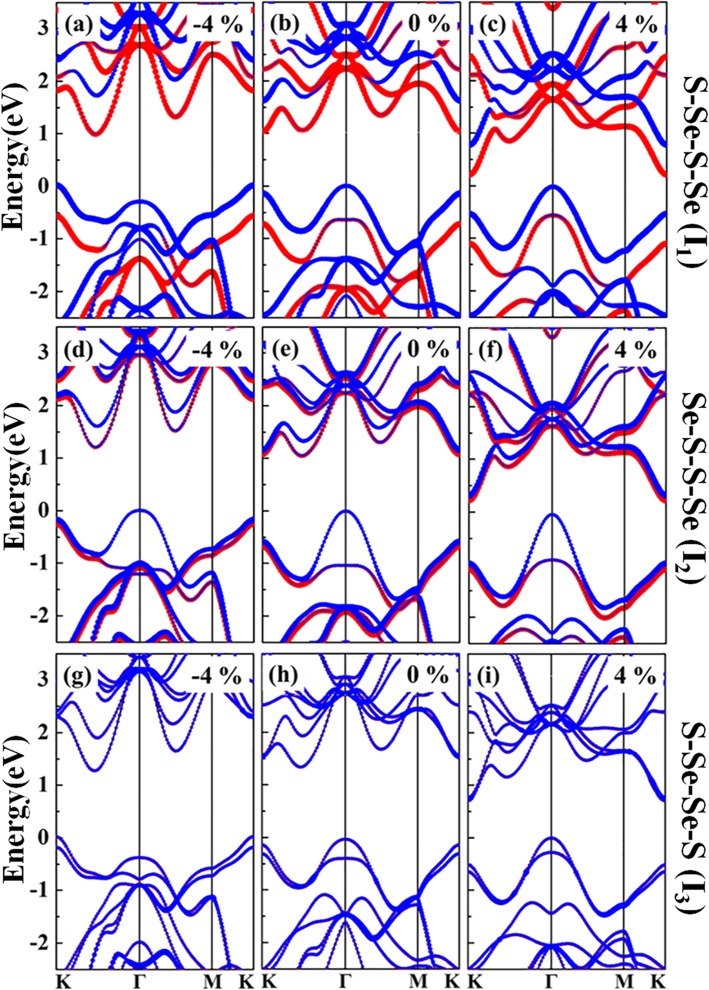
Controllable optical properties are important for optoelectronic applications. Based on the unique properties and potential applications of two-dimensional Janus WSSe, we systematically investigate the strain-modulated electronic and optical properties of WSSe bilayer through the first-principle calculations. The preferred stacking configurations and chalcogen orders are determined by the binding energies. The bandgap of all the stable structures are found sensitive to the external stress and could be tailored from semiconductor to metallicity under appropriate compressive strains. Atomic orbital projected energy bands reveal a positive correlation between the degeneracy and the structural symmetry, which explains the bandgap evolutions. Dipole transition preference is tuned by the biaxial strain. A controllable transformation between anisotropic and isotropic optical properties is achieved under an around - 6%~- 4% critical strain. The strain controllable electronic and optical properties of the WSSe bilayer may open up an important path for exploring next-generation optoelectronic applications.
可控光学性质对于光电子应用很重要。基于二维Janus WSSe的独特性质和潜在应用,我们通过第一性原理计算系统地研究了WSSe双层的应变调制电子和光学性质。优选的堆叠构型和硫族元素序由结合能确定。发现所有稳定结构的带隙对外加应力敏感,并且在适当的压缩应变下可以从半导体调整为金属性。原子轨道投影能带揭示了简并度与结构对称性之间的正相关,这解释了带隙的演变。偶极跃迁偏好由双轴应变调节。在约-6%~-4%的临界应变下实现了各向异性和各向同性光学性质之间的可控转变。WSSe双层的应变可控电子和光学性质可能为探索下一代光电子应用开辟一条重要途径。