Smith Shanna J, Li Caroline M, Lingeman Robert G, Hickey Robert J, Liu Yilun, Malkas Linda H, Raoof Mustafa
Department of Molecular and Cellular Biology, Beckman Research Institute at City of Hope, Duarte, CA 91010, USA.
Department of Molecular Pharmacology, Beckman Research Institute, City of Hope, Duarte, CA 91010, USA.
Mol Ther Oncolytics. 2020 Apr 8;17:250-256. doi: 10.1016/j.omto.2020.03.025. eCollection 2020 Jun 26.
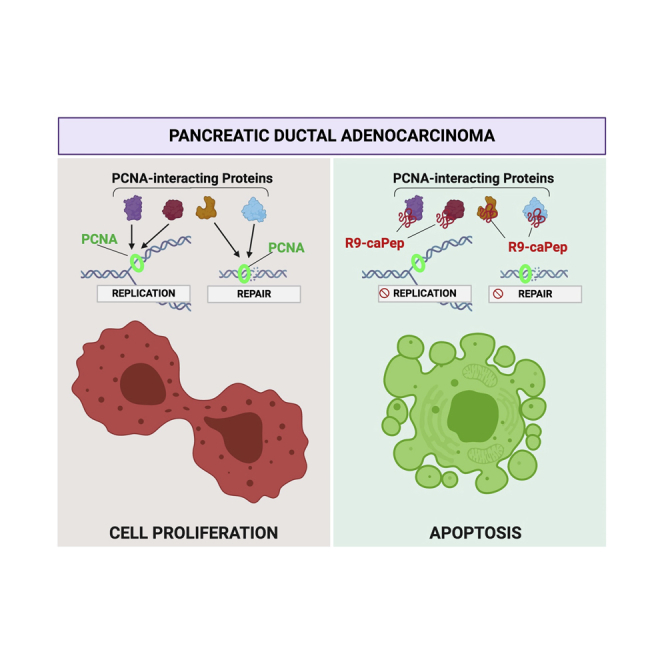
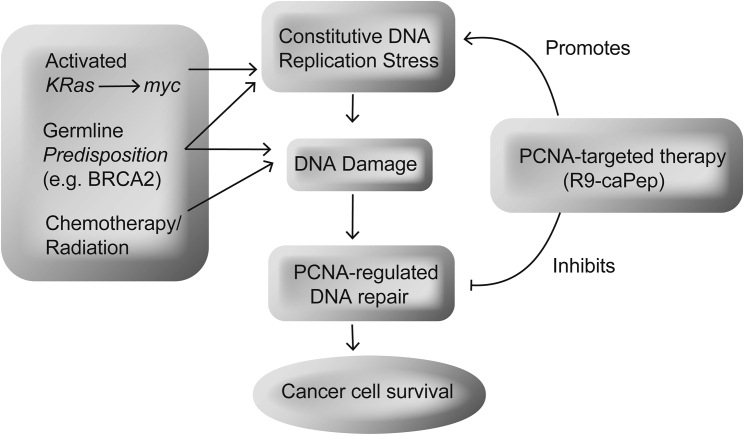
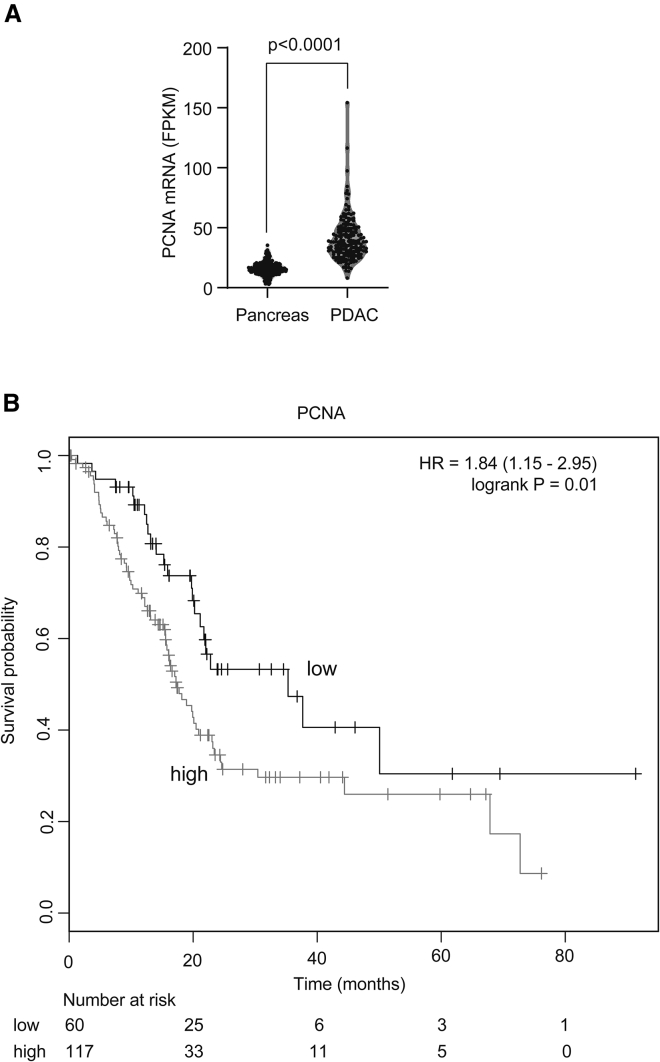
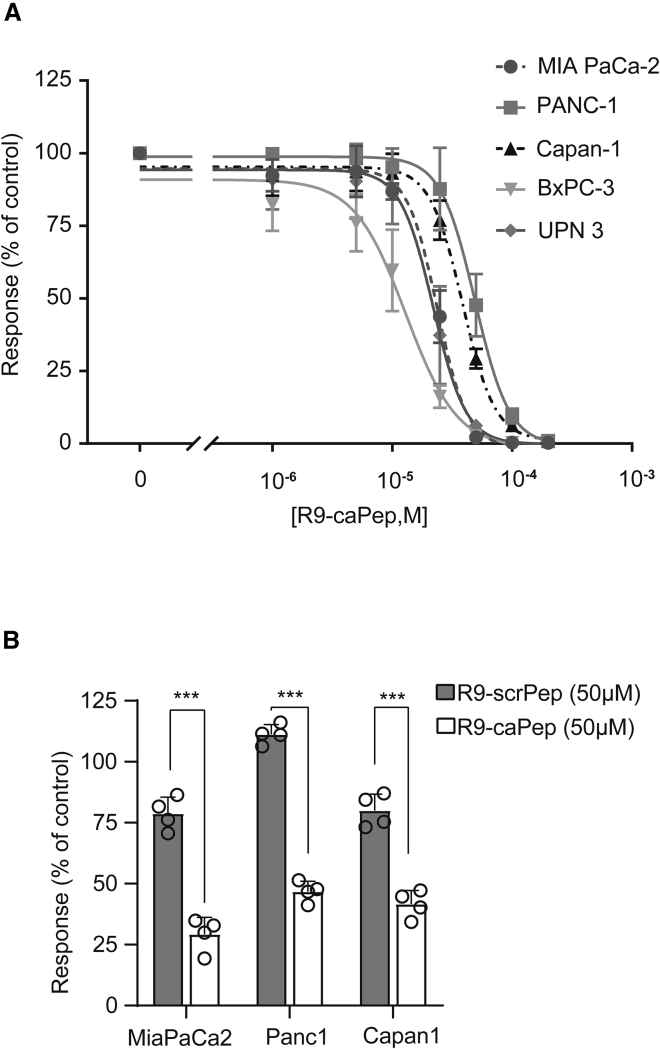
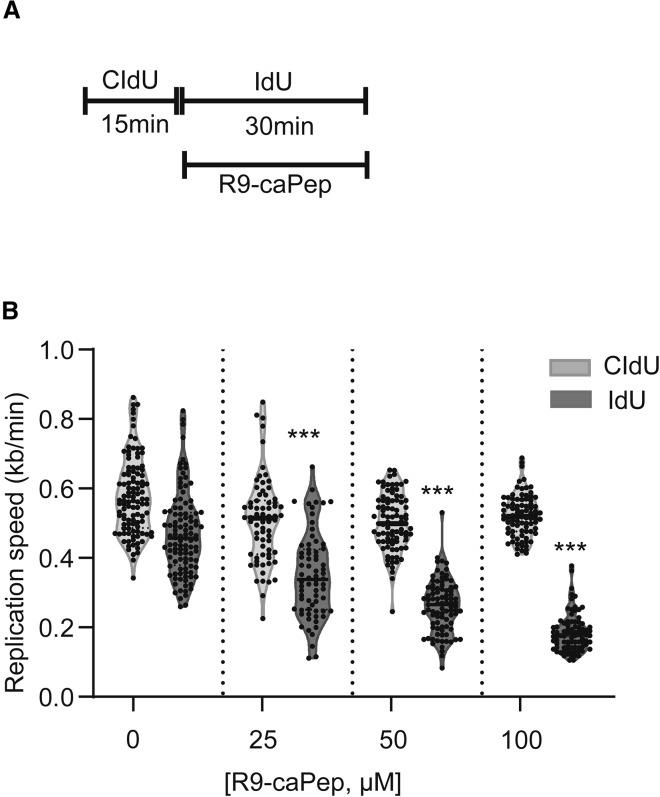
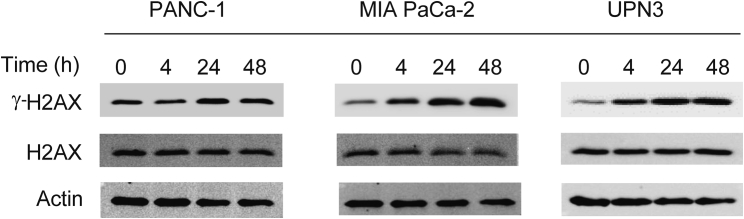
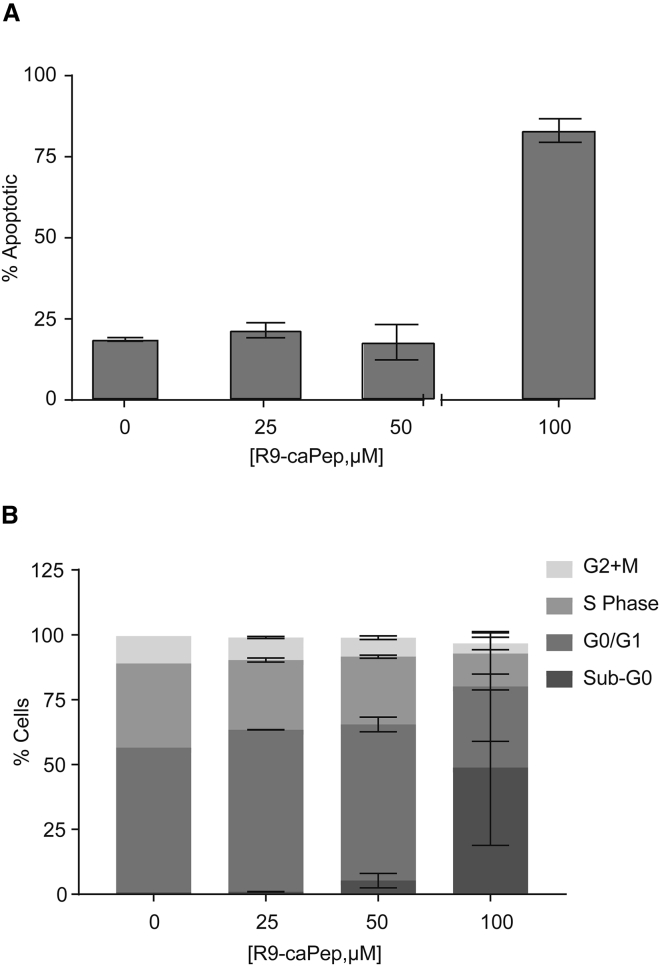
Pancreatic ductal adenocarcinoma is a particularly difficult cancer to treat due to a lack of effective screening or treatment. Pancreatic cancer cells exhibit high proliferating cell nuclear antigen (PCNA) expression, which is associated with poor prognosis. PCNA, an important nuclear DNA replication and repair protein, regulates a myriad of proteins via the interdomain connector loop. Within this region, amino acids 126-133 are critical for PCNA interactions in cancer cells. Here, we investigate the ability of a decoy cell-penetrating peptide, R9-caPeptide, that mimics the interdomain connector loop region of PCNA to disrupt PCNA-protein interactions in pancreatic cancer cells. Our data suggest that R9-caPeptide causes dose-dependent toxicity in a panel of pancreatic cancer cell lines by inhibiting DNA replication fork progression and PCNA-regulated DNA repair, ultimately causing lethal DNA damage. Overall, these studies lay the foundation for novel therapeutic strategies that target PCNA in pancreatic cancer.
由于缺乏有效的筛查或治疗方法,胰腺导管腺癌是一种特别难以治疗的癌症。胰腺癌细胞表现出高增殖细胞核抗原(PCNA)表达,这与预后不良有关。PCNA是一种重要的核DNA复制和修复蛋白,通过结构域间连接环调节多种蛋白质。在该区域内,氨基酸126 - 133对于癌细胞中PCNA的相互作用至关重要。在这里,我们研究了一种模拟PCNA结构域间连接环区域的诱饵细胞穿透肽R9-caPeptide破坏胰腺癌细胞中PCNA-蛋白质相互作用的能力。我们的数据表明,R9-caPeptide通过抑制DNA复制叉进展和PCNA调节的DNA修复,在一组胰腺癌细胞系中引起剂量依赖性毒性,最终导致致命的DNA损伤。总体而言,这些研究为针对胰腺癌中PCNA的新型治疗策略奠定了基础。