Rapado-González Óscar, Martínez-Reglero Cristina, Salgado-Barreira Ángel, Rodríguez-Fernández Almudena, Aguín-Losada Santiago, León-Mateos Luis, Muinelo-Romay Laura, López-López Rafael, Suarez-Cunqueiro María Mercedes
Department of Surgery and Medical-Surgical Specialties, Medicine and Dentistry School, Universidade de Santiago de Compostela (USC), 15782 Santiago de Compostela, Spain.
Liquid Biopsy Analysis Unit, Translational Medical Oncology (Oncomet), Health Research Institute of Santiago (IDIS), 15706 Santiago de Compostela, Spain.
J Clin Med. 2020 May 1;9(5):1305. doi: 10.3390/jcm9051305.
Human papillomavirus (HPV) infection has been recognized as an important risk factor in cancer. The purpose of this systematic review and meta-analysis was to determine the prevalence and effect size of association between salivary HPV DNA and the risk of developing oral and oropharyngeal cancer.
A systematic literature search of PubMed, EMBASE, Web of Science, LILACS, Scopus and the Cochrane Library was performed, without language restrictions or specified start date. Pooled data were analyzed by calculating odds ratios (ORs) and 95% confidence intervals (CIs). Quality assessment was performed using the Newcastle-Ottawa Scale (NOS).
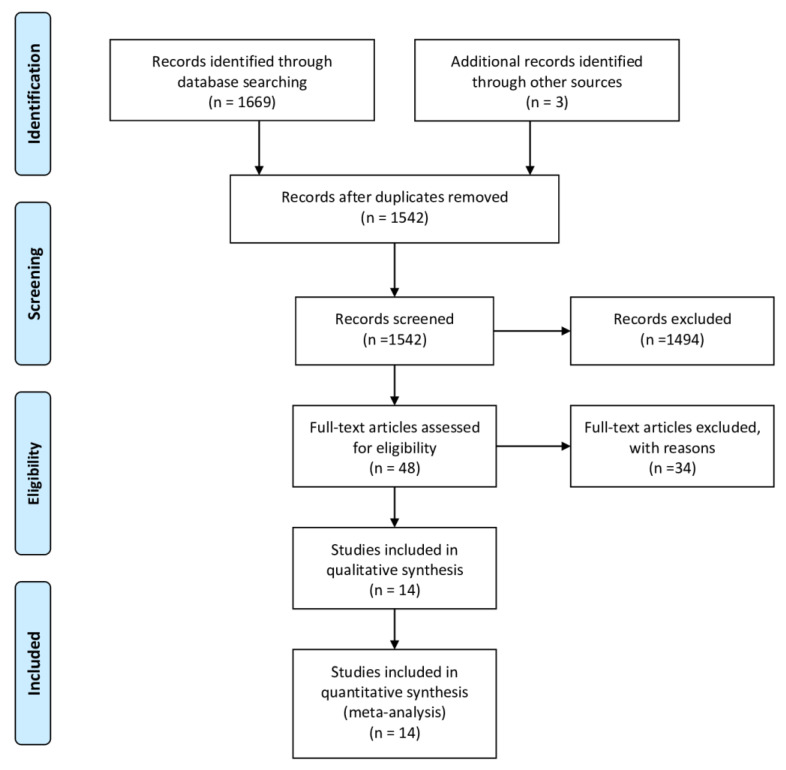
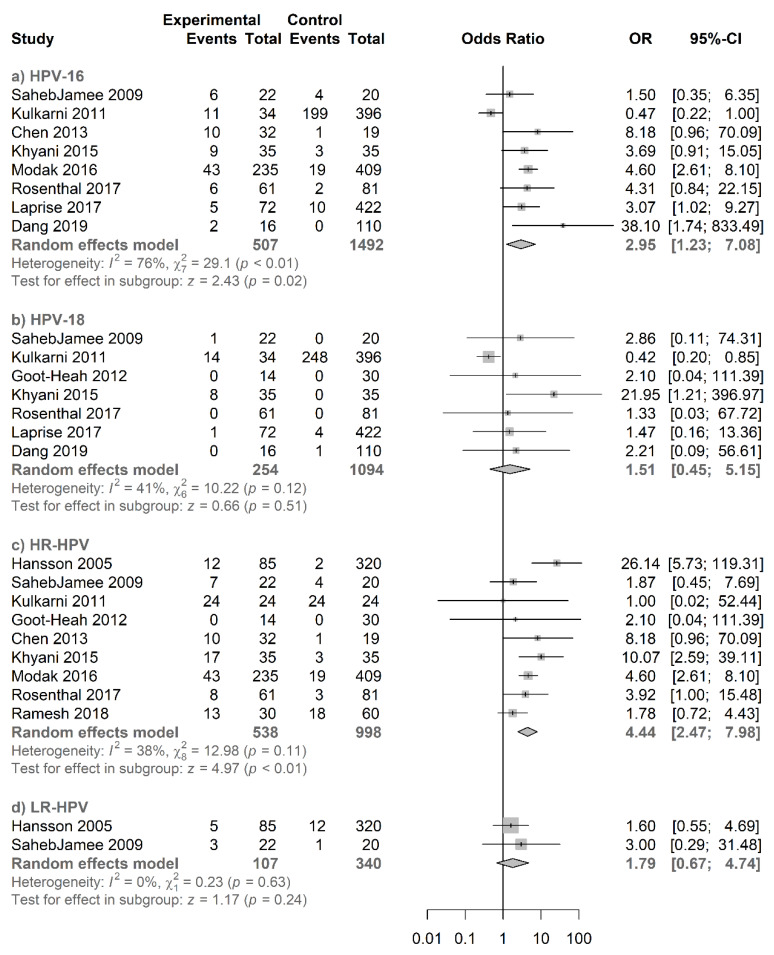
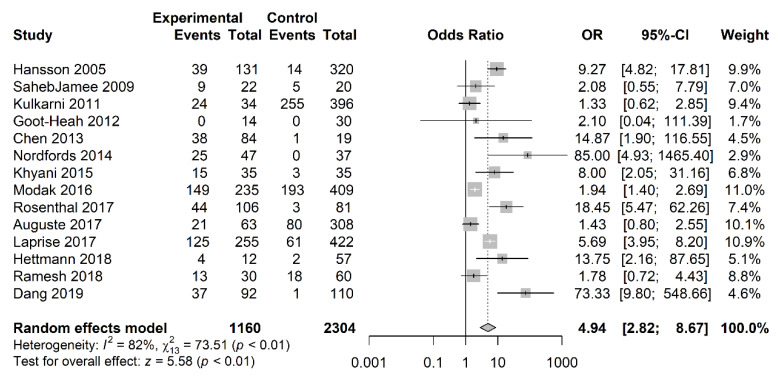
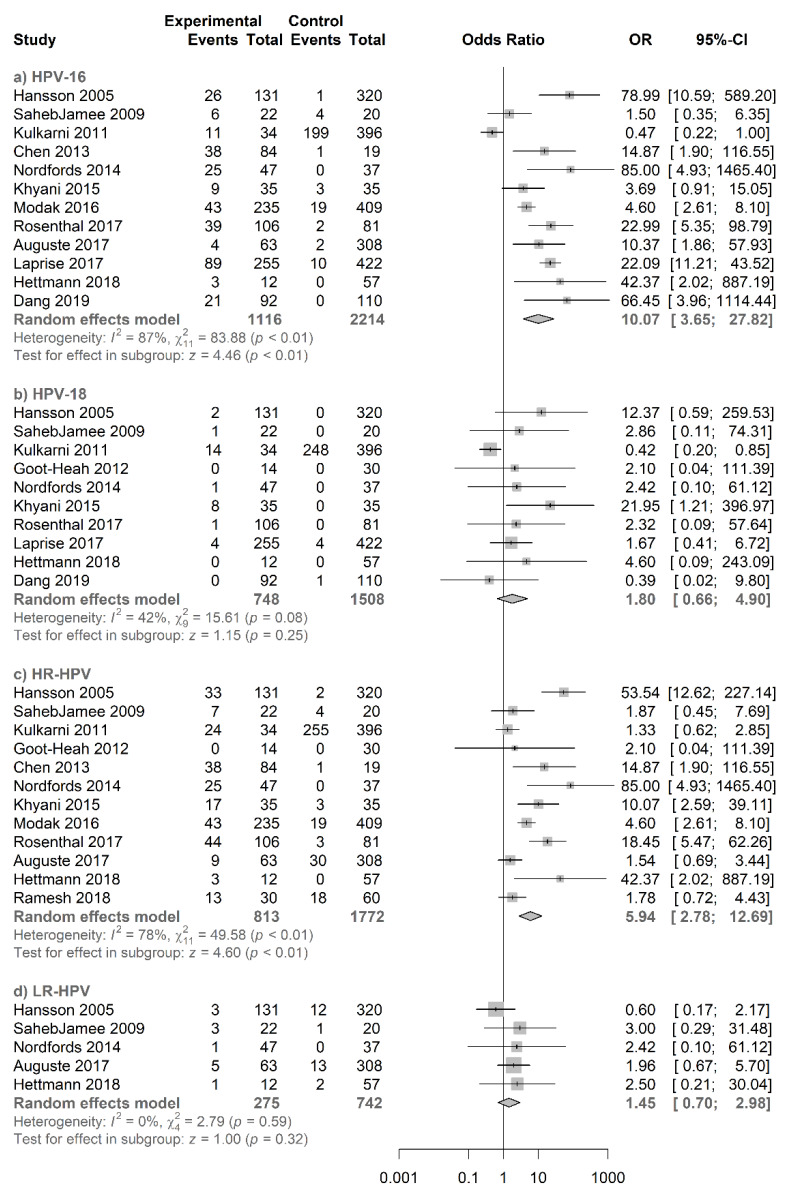
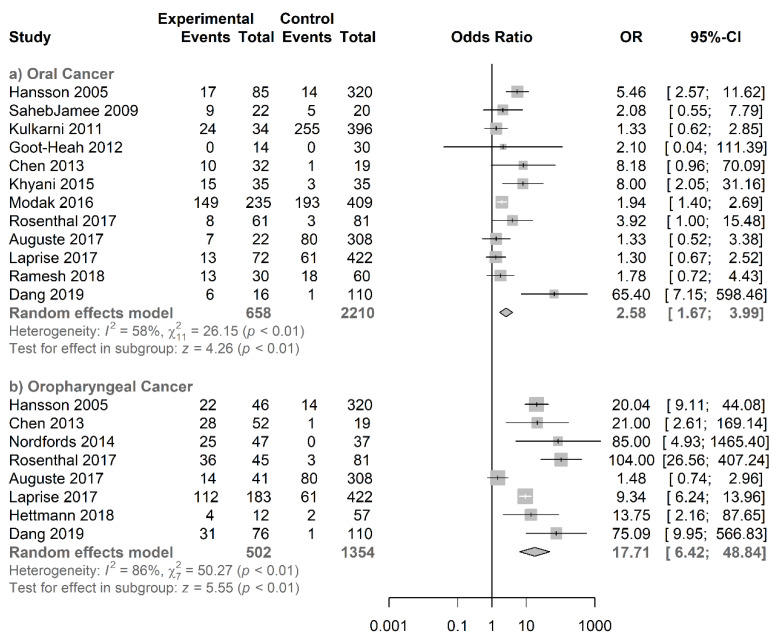
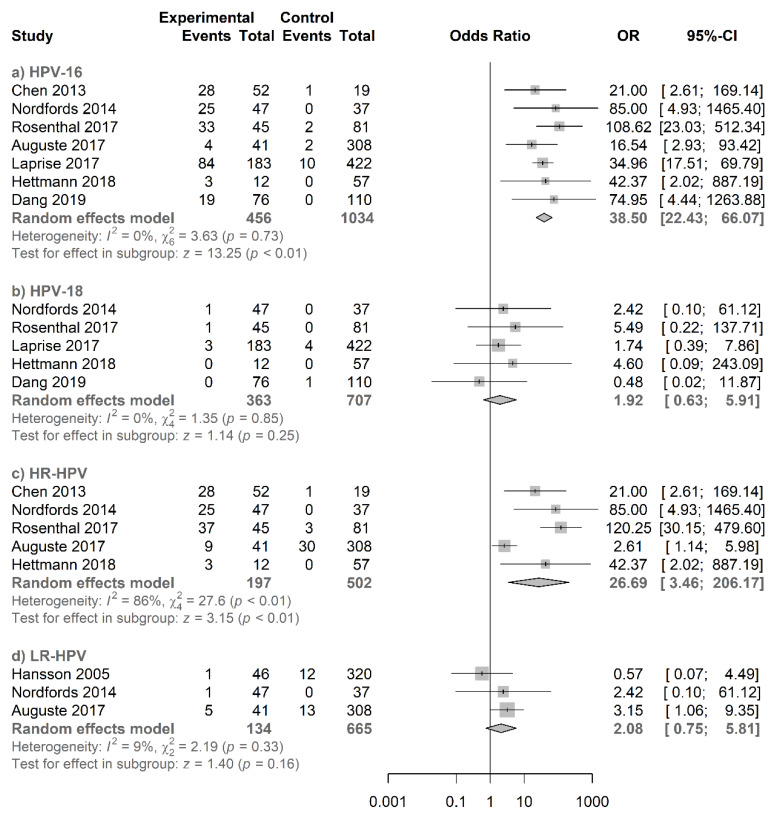
A total of 1672 studies were screened and 14 met inclusion criteria for the meta-analysis. The overall prevalence of salivary HPV DNA for oral and oropharyngeal carcinoma was 43.2%, and the prevalence of salivary HPV16 genotype was 27.5%. Pooled results showed a significant association between salivary HPV and oral and oropharyngeal cancer (OR = 4.94; 2.82-8.67), oral cancer (OR = 2.58; 1.67-3.99) and oropharyngeal cancer (OR = 17.71; 6.42-48.84). Significant associations were also found between salivary HPV16 and oral and oropharyngeal cancer (OR = 10.07; 3.65-27.82), oral cancer (OR = 2.95; 1.23-7.08) and oropharyngeal cancer (OR = 38.50; 22.43-66.07).
Our meta-analysis demonstrated the association between salivary HPV infection and the incidence of oral and oropharyngeal cancer indicating its value as a predictive indicator.
人乳头瘤病毒(HPV)感染已被公认为癌症的重要危险因素。本系统评价和荟萃分析的目的是确定唾液HPV DNA与发生口腔和口咽癌风险之间的关联患病率及效应量。
对PubMed、EMBASE、科学网、LILACS、Scopus和Cochrane图书馆进行系统文献检索,无语言限制或特定开始日期。通过计算比值比(OR)和95%置信区间(CI)对汇总数据进行分析。使用纽卡斯尔-渥太华量表(NOS)进行质量评估。
共筛选出1672项研究,14项符合荟萃分析的纳入标准。口腔和口咽癌唾液HPV DNA的总体患病率为43.2%,唾液HPV16基因型的患病率为27.5%。汇总结果显示,唾液HPV与口腔和口咽癌(OR = 4.94;2.82 - 8.67)、口腔癌(OR = 2.58;1.67 - 3.99)和口咽癌(OR = 17.71;6.42 - 48.84)之间存在显著关联。唾液HPV16与口腔和口咽癌(OR = 10.07;3.65 - 27.82)、口腔癌(OR = 2.95;1.23 - 7.08)和口咽癌(OR = 38.50;22.43 - 66.07)之间也存在显著关联。
我们的荟萃分析表明唾液HPV感染与口腔和口咽癌的发病率之间存在关联,表明其作为预测指标的价值。