Department Environment and Health, Vrije Universiteit Amsterdam, De Boelelaan 1085, 1081 HV Amsterdam, The Netherlands.
National Food Institute, Technical University of Denmark, DK-2800 Kongens Lyngby, Denmark.
Int J Mol Sci. 2020 May 1;21(9):3215. doi: 10.3390/ijms21093215.
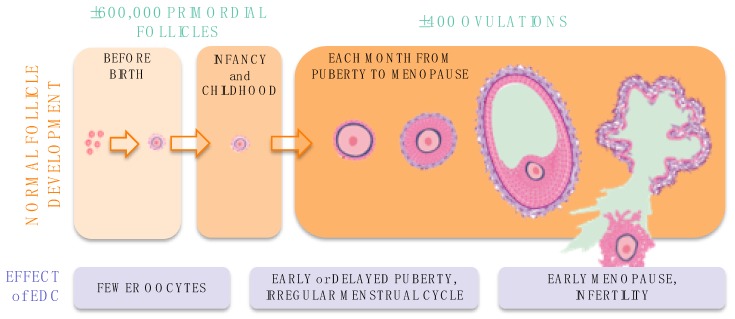
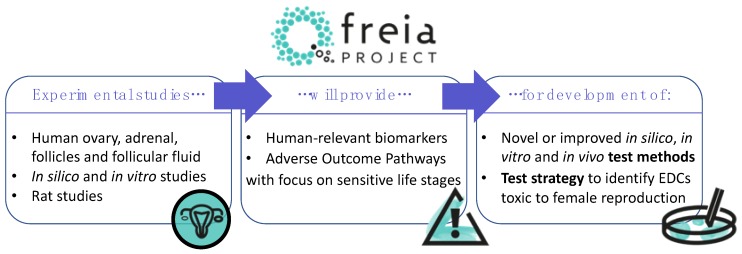
Currently available test methods are not well-suited for the identification of chemicals that disturb hormonal processes involved in female reproductive development and function. This renders women's reproductive health at increasing risk globally, which, coupled with increasing incidence rates of reproductive disorders, is of great concern. A woman's reproductive health is largely established during embryonic and fetal development and subsequently matures during puberty. The endocrine system influences development, maturation, and function of the female reproductive system, thereby making appropriate hormone levels imperative for correct functioning of reproductive processes. It is concerning that the effects of human-made chemicals on the endocrine system and female reproductive health are poorly addressed in regulatory chemical safety assessment, partly because adequate test methods are lacking. Our EU-funded project FREIA aims to address this need by increasing understanding of how endocrine disrupting chemicals (EDCs) can impact female reproductive health. We will use this information to provide better test methods that enable fit-for-purpose chemical regulation and then share our knowledge, promote a sustainable society, and improve the reproductive health of women globally.
目前可用的测试方法并不适合识别那些扰乱女性生殖发育和功能相关激素过程的化学物质。这使得女性的生殖健康在全球范围内面临越来越大的风险,再加上生殖障碍发病率的不断上升,这令人十分担忧。女性的生殖健康在很大程度上是在胚胎和胎儿发育期间建立的,随后在青春期成熟。内分泌系统会影响女性生殖系统的发育、成熟和功能,因此适当的激素水平对生殖过程的正常运作至关重要。令人担忧的是,在监管化学物质安全评估中,人为化学物质对内分泌系统和女性生殖健康的影响并没有得到充分重视,部分原因是缺乏足够的测试方法。我们的欧盟资助项目 FREIA 旨在通过增加对内分泌干扰化学物质 (EDCs) 如何影响女性生殖健康的理解来满足这一需求。我们将利用这些信息提供更好的测试方法,以实现有针对性的化学物质监管,然后分享我们的知识,促进可持续发展的社会,并改善全球女性的生殖健康。