Department of Integrative Physiology and Pathobiology, Tufts University School of Medicine, Boston Massachusetts, USA.
National Toxicology Program (NTP) Laboratory, Division of the NTP, National Institute of Environmental Health Sciences, National Institutes of Health, Department of Health and Human Services, Research Triangle Park, North Carolina, USA.
Environ Health Perspect. 2020 May;128(5):57001. doi: 10.1289/EHP6301. Epub 2020 May 20.
The Consortium Linking Academic and Regulatory Insights on Bisphenol-A (CLARITY-BPA) is a rare collaboration of guideline-compliant (core) studies and academic hypothesis-based studies to assess the effects of bisphenol A (BPA).
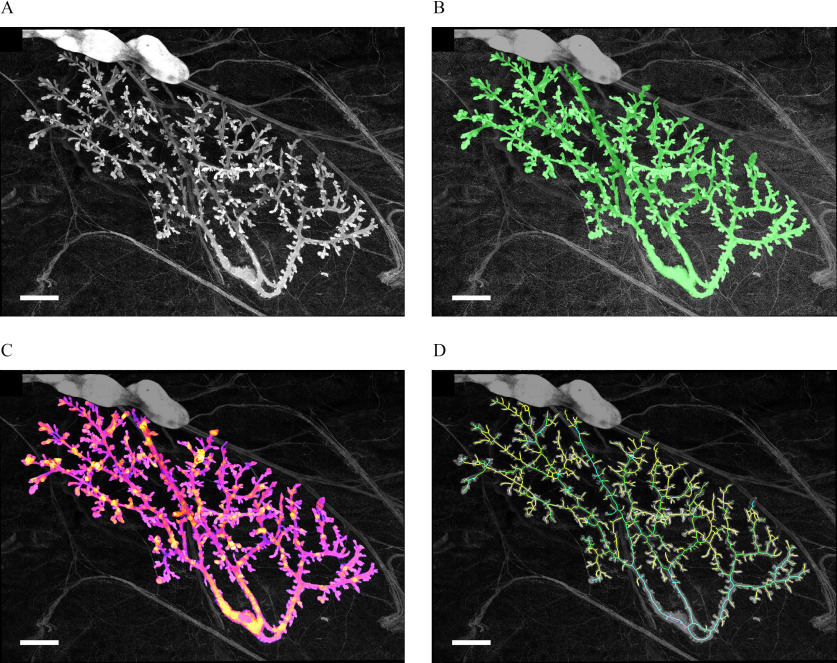
We aimed to ) determine whether BPA showed effects on the developing rat mammary gland using new quantitative and established semiquantitative methods in two laboratories, ) develop a software tool for automatic evaluation of quantifiable aspects of the mammary ductal tree, and ) compare those methods.
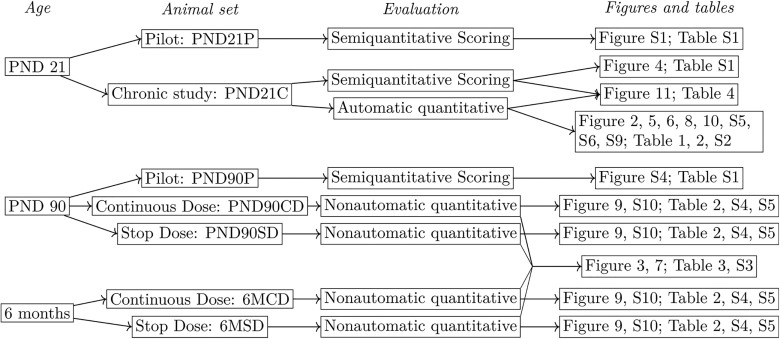
Sprague-Dawley rats were exposed to BPA, vehicle, or positive control [ethinyl estradiol (EE2)] by oral gavage beginning on gestational day (GD)6 and continuing with direct dosing of the pups after birth. There were two studies: subchronic and chronic. The latter used two exposure regimes, one stopping at postnatal day (PND)21 (stop-dose) the other continuing until tissue harvest (continuous). Glands were harvested at multiple time points; whole mounts and histological specimens were analyzed blinded to treatment.
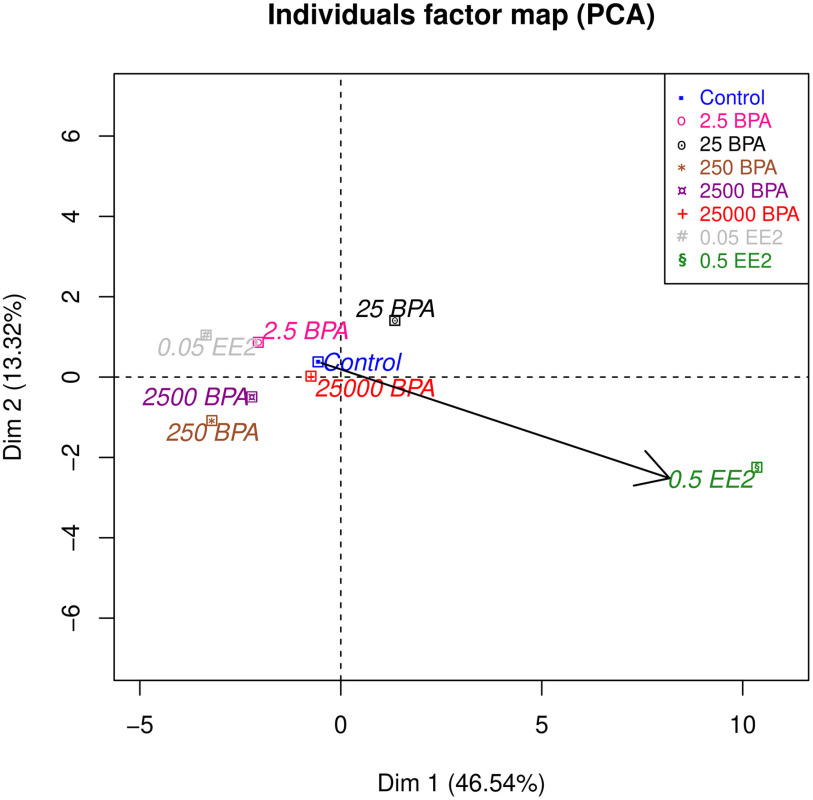
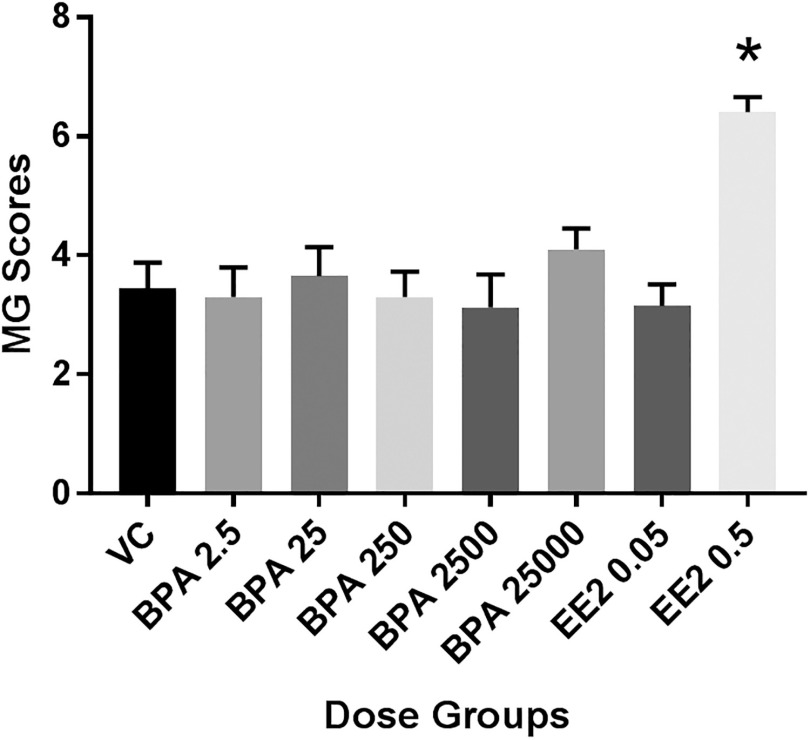
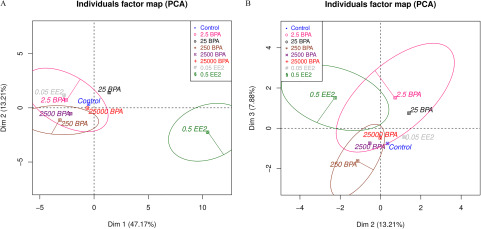
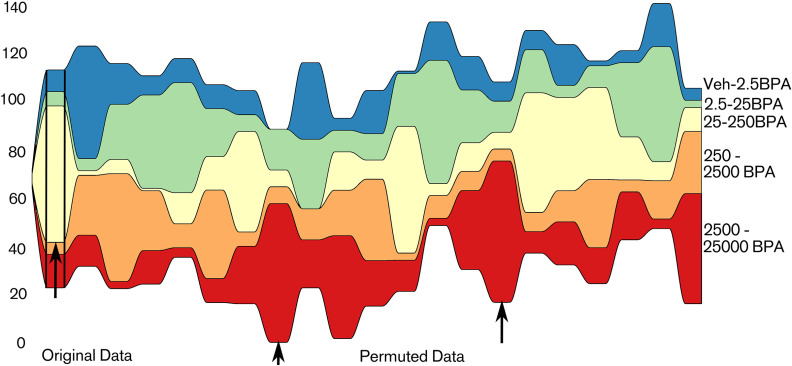
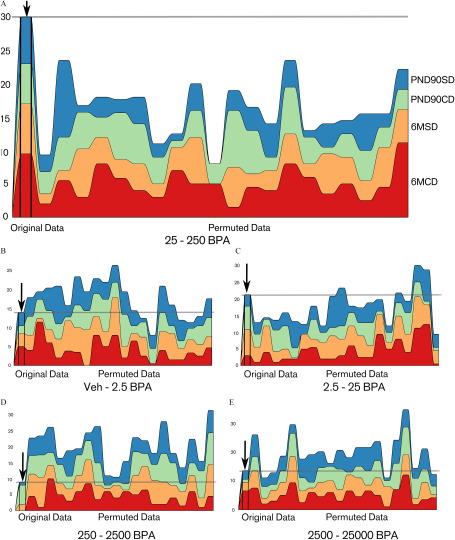
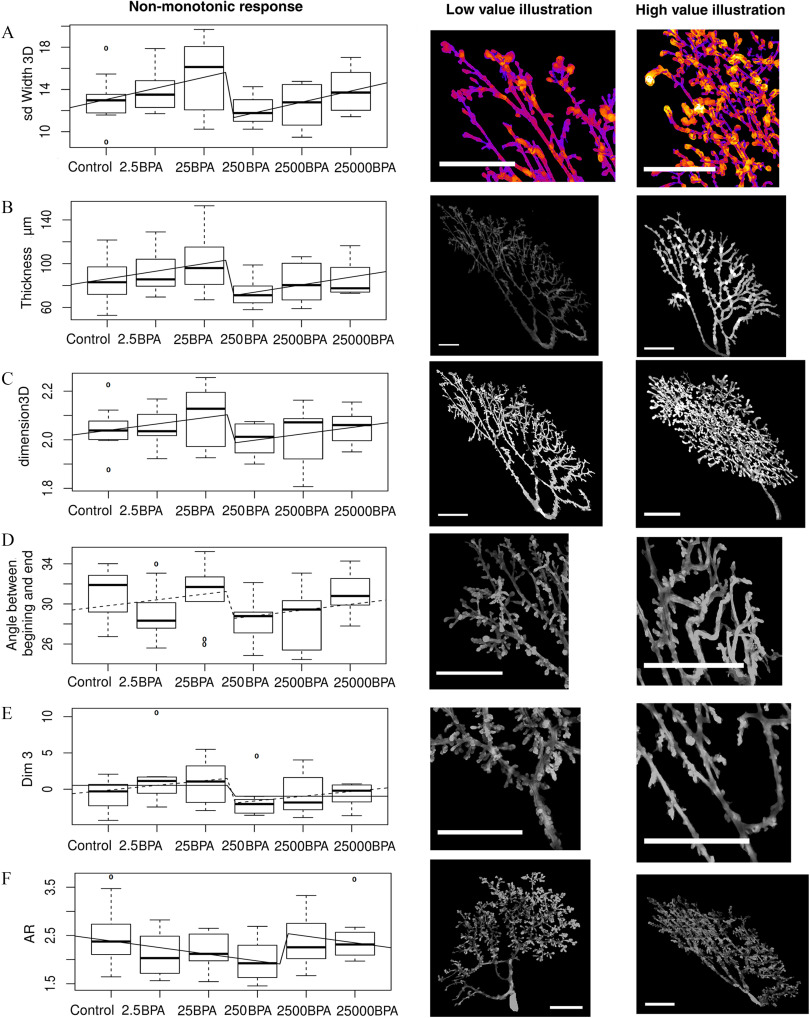
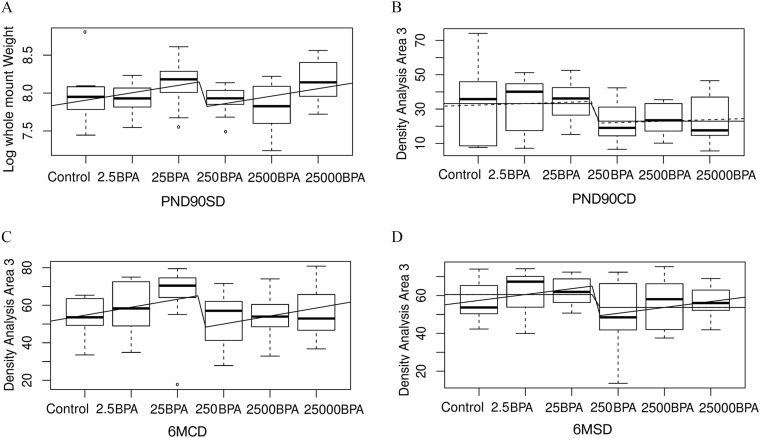
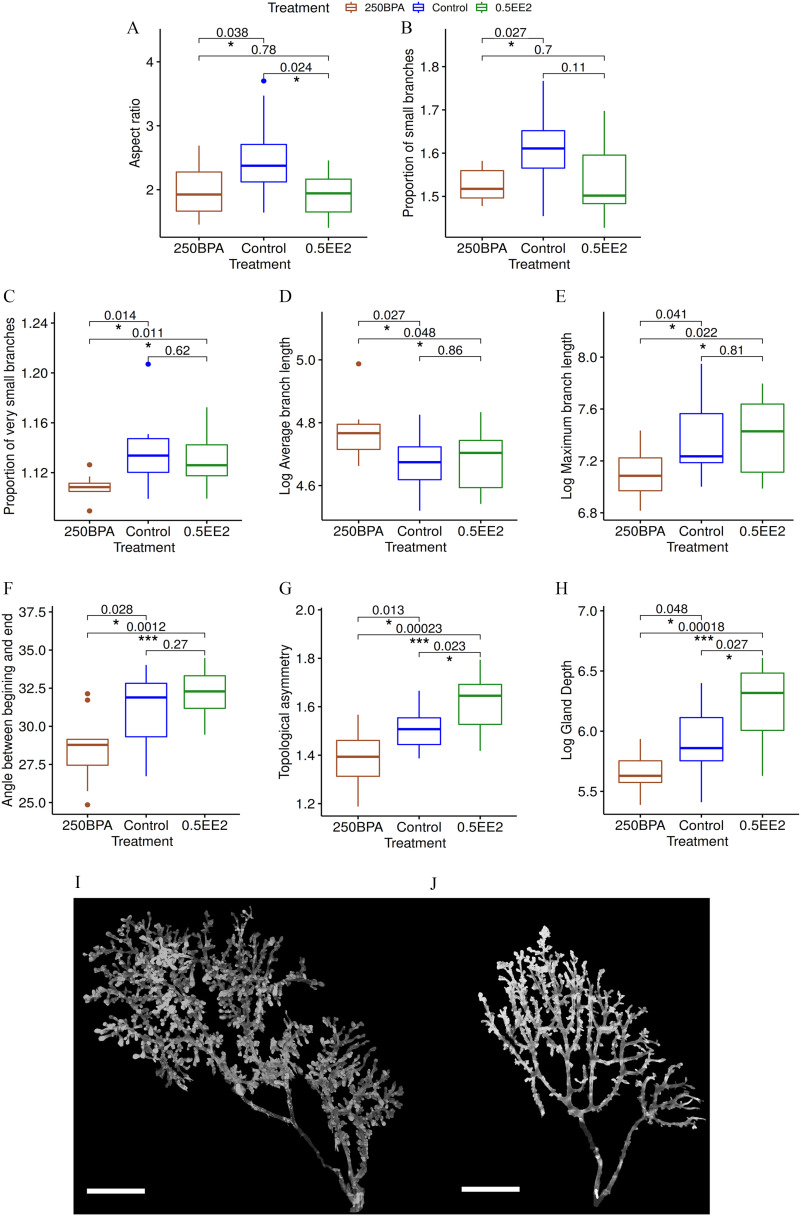
The subchronic study's semiquantitative analysis revealed no significant differences between control and BPA dose groups at PND21, whereas at PND90 there were significant differences between control and the lowest BPA dose and between control and the lowest EE2 dose in animals in estrus. Quantitative, automatized analysis of the chronic PND21 specimens displayed nonmonotonic BPA effects, with a breaking point between the 25 and body weight (BW) per day doses. This breaking point was confirmed by a global statistical analysis of chronic study animals at PND90 and 6 months analyzed by the quantitative method. The BPA response was different from the EE2 effect for many features.
Both the semiquantitative and the quantitative methods revealed nonmonotonic effects of BPA. The quantitative unsupervised analysis used and produced the most striking nonmonotonic dose-response curves. At all time points, lower doses resulted in larger effects, consistent with the core study, which revealed a significant increase of mammary adenocarcinoma incidence in the stop-dose animals at the lowest BPA dose tested. https://doi.org/10.1289/EHP6301.
学术界与监管机构联合评估双酚 A 联盟(CLARITY-BPA)是一项罕见的合作,涉及符合指南的(核心)研究和基于学术假设的研究,以评估双酚 A(BPA)的影响。
我们旨在)使用两个实验室中的新定量和既定半定量方法确定 BPA 是否对发育中的大鼠乳腺产生影响,)开发用于自动评估乳腺导管树可量化方面的软件工具,并)比较这些方法。
Sprague-Dawley 大鼠从妊娠第 6 天(GD)开始通过口服灌胃暴露于 BPA、载体或阳性对照[雌二醇(EE2)],并在出生后继续对幼仔进行直接给药。有两项研究:亚慢性和慢性。后者使用两种暴露方案,一种在产后第 21 天(停药)停止,另一种持续到组织采集(连续)。在多个时间点采集腺体;全距和组织学标本在不了解处理的情况下进行分析。
亚慢性研究的半定量分析显示,在 PND21 时,对照组和 BPA 剂量组之间没有显著差异,而在 PND90 时,发情期动物中对照组和最低 BPA 剂量组以及对照组和最低 EE2 剂量组之间存在显著差异。慢性 PND21 标本的定量、自动分析显示 BPA 呈非单调效应,在 25 和体重(BW)/天剂量之间存在断点。这一断点在 PND90 和 6 个月的慢性研究动物的全局统计分析中得到了确认,该分析采用了定量方法。BPA 的反应与 EE2 的反应在许多特征上不同。
半定量和定量方法都揭示了 BPA 的非单调效应。定量无监督分析使用了和产生了最显著的非单调剂量-反应曲线。在所有时间点,较低的剂量导致更大的影响,这与核心研究一致,该研究显示在测试的最低 BPA 剂量下,停药动物的乳腺腺癌发病率显著增加。https://doi.org/10.1289/EHP6301.