Seccia Teresa M, Rigato Matteo, Ravarotto Verdiana, Calò Lorenzo A
Department of Medicine, Hypertension Clinic, University of Padova, 35128 Padova, Italy.
Department of Medicine, Nephrology, Dialysis and Transplantation Unit, University of Padova, 35128 Padova, Italy.
J Clin Med. 2020 May 2;9(5):1328. doi: 10.3390/jcm9051328.
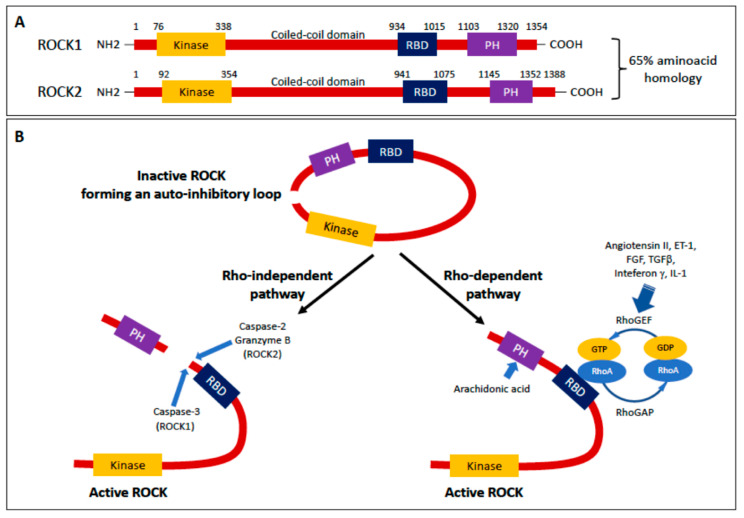
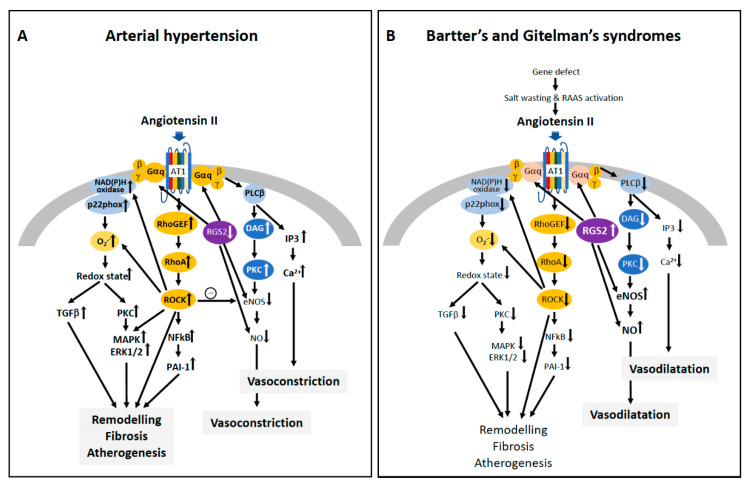
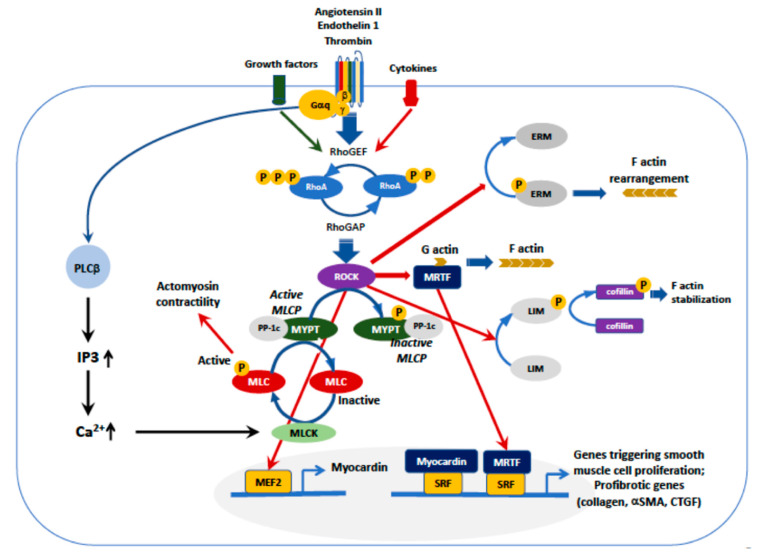
Rho-associated, coiled-coil containing kinases (ROCK) were originally identified as effectors of the RhoA small GTPase and found to belong to the AGC family of serine/threonine kinases. They were shown to be downstream effectors of RhoA and RhoC activation. They signal via phosphorylation of proteins such as MYPT-1, thereby regulating many key cellular functions including proliferation, motility and viability and the RhoA/ROCK signaling has been shown to be deeply involved in arterial hypertension, cardiovascular-renal remodeling, hypertensive nephropathy and posttransplant hypertension. Given the deep involvement of ROCK in cardiovascular-renal pathophysiology and the interaction of ROCK signaling with other signaling pathways, the reports of trials on the clinical beneficial effects of ROCK's pharmacologic targeting are growing. In this current review, we provide a brief survey of the current understanding of ROCK-signaling pathways, also integrating with the more novel data that overall support a relevant role of ROCK for the cardiovascular-renal physiology and pathophysiology.
Rho相关卷曲螺旋蛋白激酶(ROCK)最初被鉴定为RhoA小GTP酶的效应物,并被发现属于丝氨酸/苏氨酸激酶的AGC家族。它们被证明是RhoA和RhoC激活的下游效应物。它们通过磷酸化诸如MYPT-1等蛋白质来发出信号,从而调节许多关键的细胞功能,包括增殖、运动和生存能力,并且RhoA/ROCK信号已被证明与动脉高血压、心血管-肾脏重塑、高血压肾病和移植后高血压密切相关。鉴于ROCK在心血管-肾脏病理生理学中的深入参与以及ROCK信号与其他信号通路的相互作用,关于ROCK药物靶向治疗临床有益效果的试验报道越来越多。在本综述中,我们简要概述了目前对ROCK信号通路的理解,同时整合了更新的数据,这些数据总体上支持ROCK在心血管-肾脏生理和病理生理中的相关作用。