Center for Soft and Living Matter, Institute for Basic Science (IBS), Ulsan 44919, Republic of Korea.
Department of Biomedical Engineering, School of Life Sciences, Ulsan National Institute of Science and Technology (UNIST), Ulsan 44919, Republic of Korea.
Theranostics. 2020 Apr 6;10(12):5181-5194. doi: 10.7150/thno.44693. eCollection 2020.
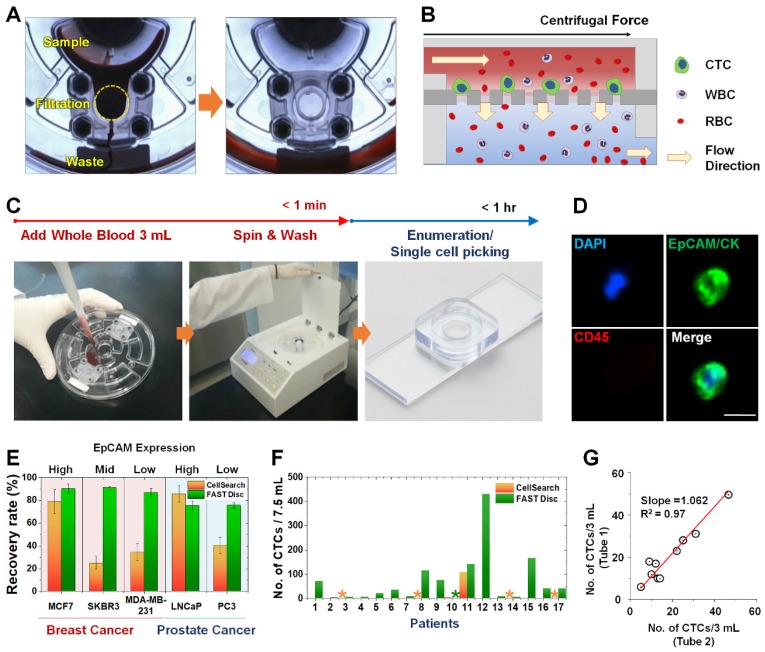
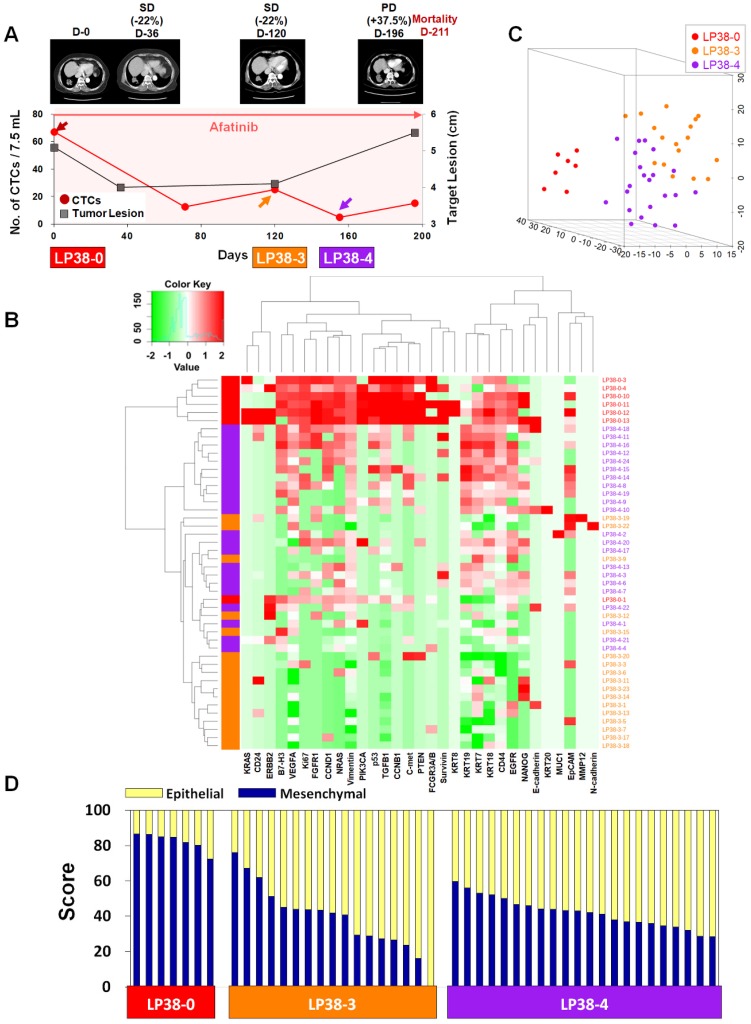
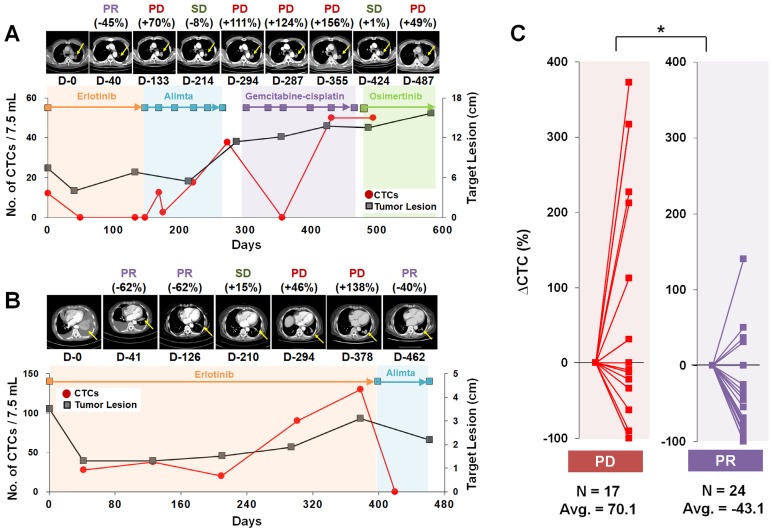
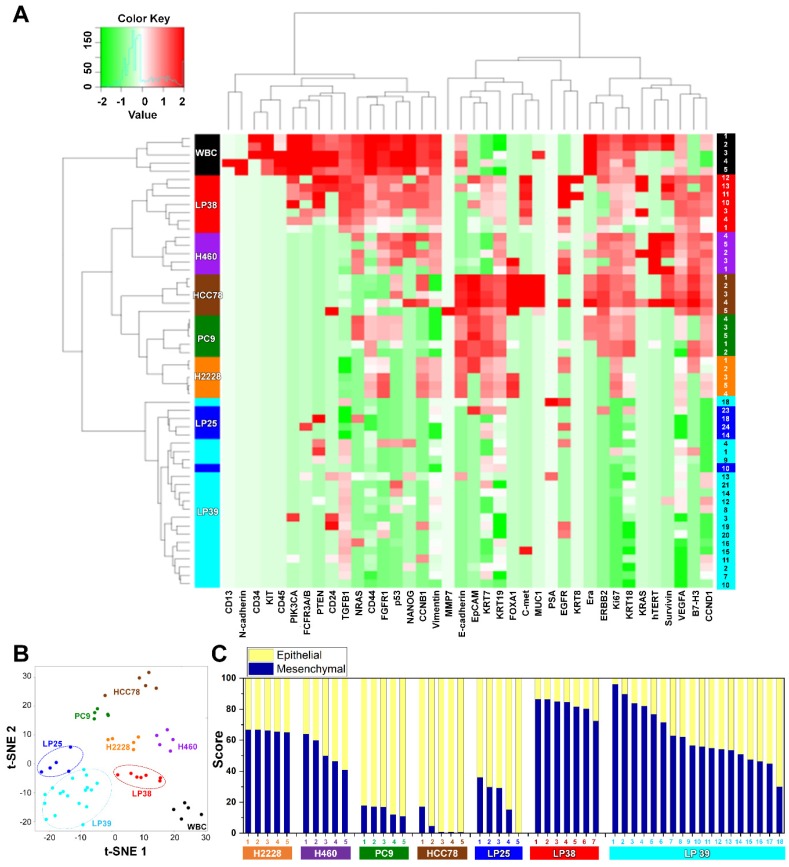
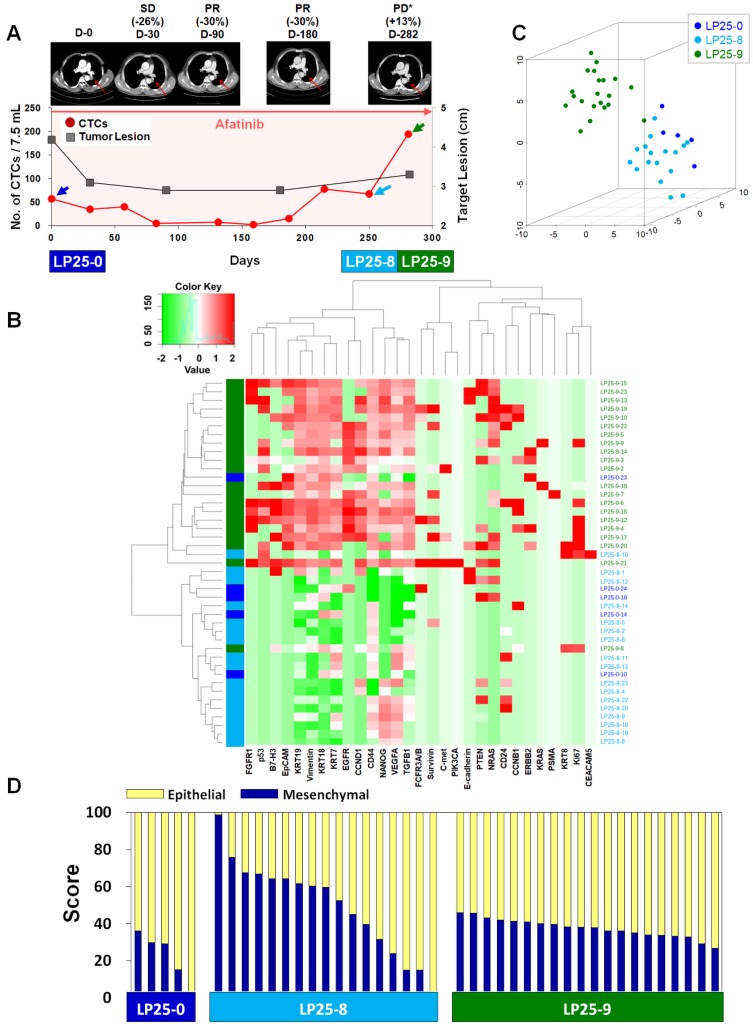
: Unlike traditional biopsy, liquid biopsy, which is a largely non-invasive diagnostic and monitoring tool, can be performed more frequently to better track tumors and mutations over time and to validate the efficiency of a cancer treatment. Circulating tumor cells (CTCs) are considered promising liquid biopsy biomarkers; however, their use in clinical settings is limited by high costs and a low throughput of standard platforms for CTC enumeration and analysis. In this study, we used a label-free, high-throughput method for CTC isolation directly from whole blood of patients using a standalone, clinical setting-friendly platform. : A CTC-based liquid biopsy approach was used to examine the efficacy of therapy and emergent drug resistance via longitudinal monitoring of CTC counts, DNA mutations, and single-cell-level gene expression in a prospective cohort of 40 patients with epidermal growth factor receptor (EGFR)-mutant non-small cell lung cancer. : The change ratio of the CTC counts was associated with tumor response, detected by CT scan, while the baseline CTC counts did not show association with progression-free survival or overall survival. We achieved a 100% concordance rate for the detection of mutation, including emergence of T790M, between tumor tissue and CTCs. More importantly, our data revealed the importance of the analysis of the epithelial/mesenchymal signature of individual pretreatment CTCs to predict drug responsiveness in patients. : The fluid-assisted separation technology disc platform enables serial monitoring of CTC counts, DNA mutations, as well as unbiased molecular characterization of individual CTCs associated with tumor progression during targeted therapy.
与传统的活检不同,液体活检作为一种主要的非侵入性诊断和监测工具,可以更频繁地进行,以便更好地随时间跟踪肿瘤和突变,并验证癌症治疗的效果。循环肿瘤细胞(CTC)被认为是很有前途的液体活检生物标志物;然而,由于标准 CTC 计数和分析平台的成本高且通量低,其在临床环境中的应用受到限制。在这项研究中,我们使用了一种无标记、高通量的方法,直接从患者的全血中分离 CTC,使用的是一种独立的、适合临床环境的平台。我们使用基于 CTC 的液体活检方法,通过对 40 名表皮生长因子受体(EGFR)突变型非小细胞肺癌患者的 CTC 计数、DNA 突变和单细胞水平基因表达进行纵向监测,来检测治疗效果和新出现的耐药性。CTC 计数的变化率与 CT 扫描检测到的肿瘤反应相关,而基线 CTC 计数与无进展生存期或总生存期无关。我们在肿瘤组织和 CTC 之间实现了 100%的突变检测一致性,包括 T790M 的出现。更重要的是,我们的数据揭示了分析个体预处理 CTC 上皮/间充质特征以预测患者药物反应性的重要性。液力辅助分离技术盘平台能够对 CTC 计数、DNA 突变进行连续监测,以及对与靶向治疗期间肿瘤进展相关的单个 CTC 进行无偏分子特征分析。