Department of Biomedical Engineering, Medical College of Wisconsin, Milwaukee, WI, USA.
Department of Radiology, Medical College of Wisconsin, Milwaukee, WI, USA.
Theranostics. 2020 Apr 6;10(12):5368-5383. doi: 10.7150/thno.41171. eCollection 2020.
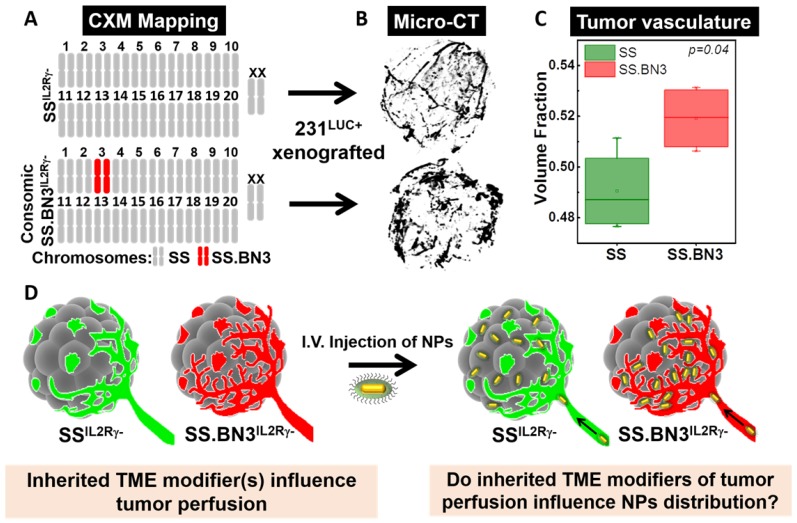
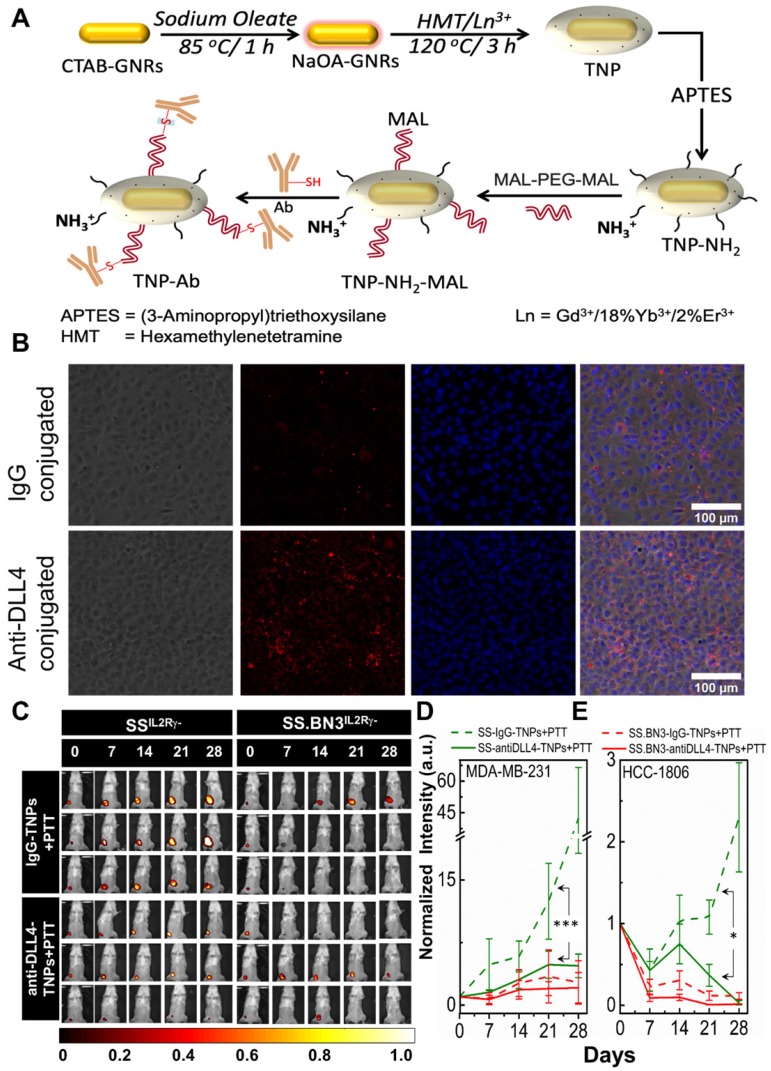
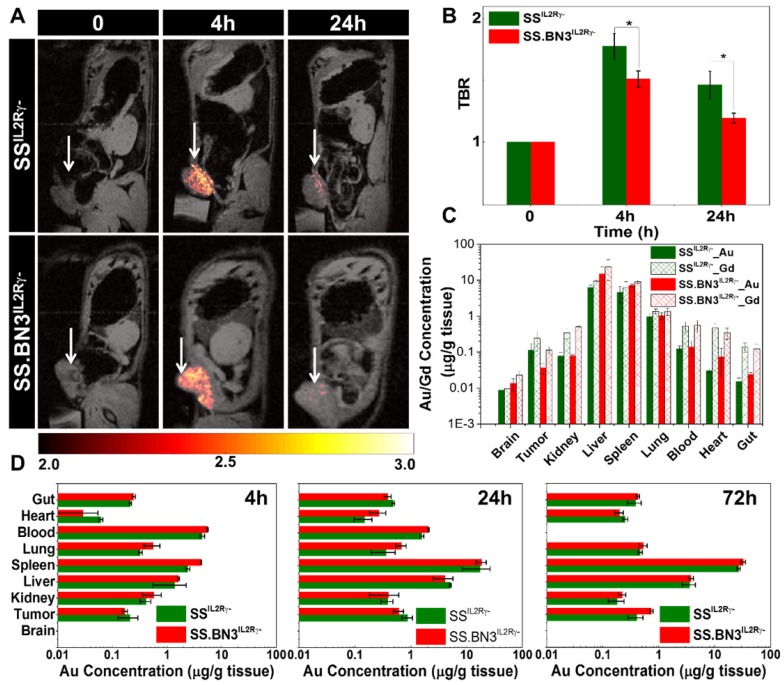
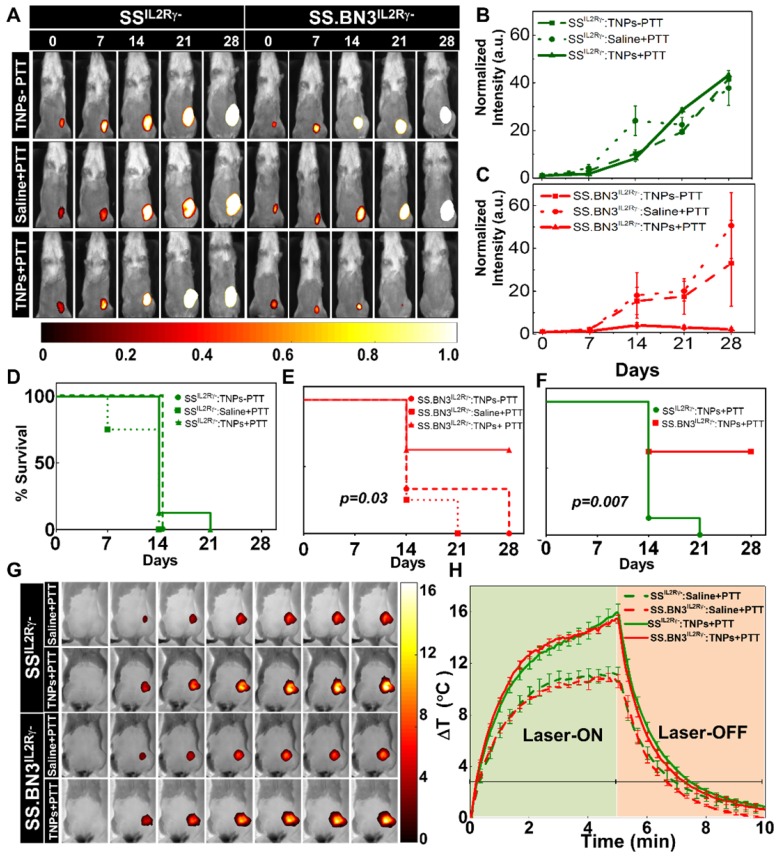
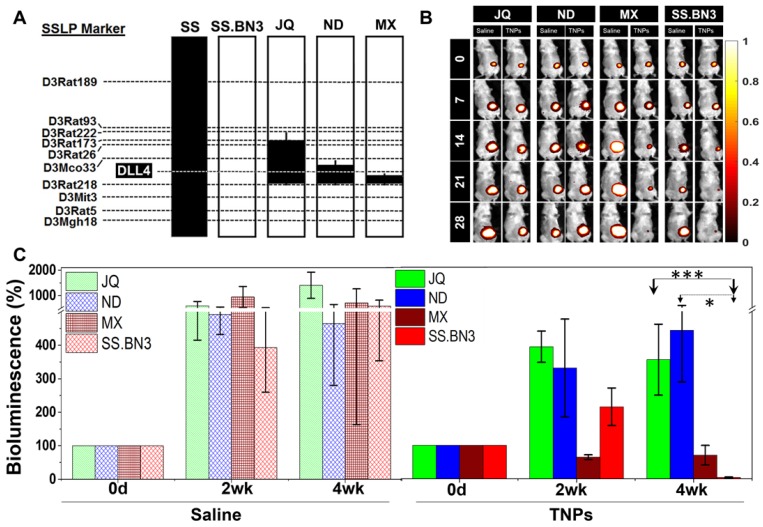
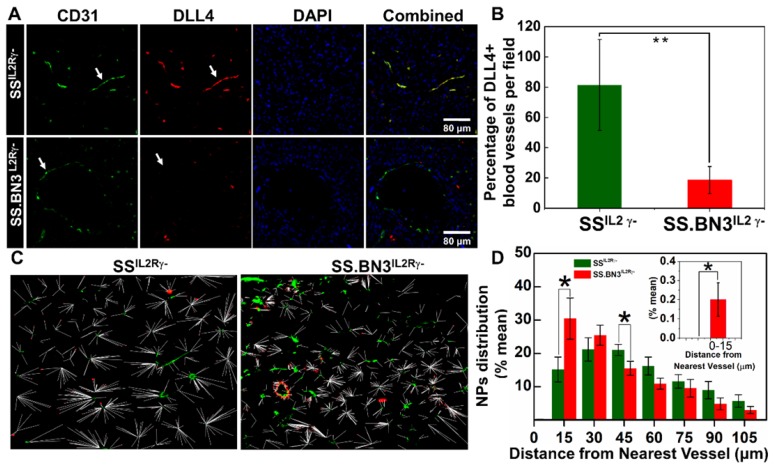
We report the impact of notch-DLL4-based hereditary vascular heterogeneities on the enhanced permeation and retention (EPR) effect and plasmonic photothermal therapy response in tumors. : We generated two consomic rat strains with differing DLL4 expression on 3 chromosome. These strains were based on immunocompromised Salt-sensitive or SS (DLL4-high) and SS.BN3 (DLL4-low) rats with 3rd chromosome substituted from Brown Norway rat. We further constructed three novel SS.BN3 congenic strains by introgressing varying segments of BN chromosome 3 into the parental SS strain to localize the role of SS DLL4 on tumor EPR effect with precision. We synthesized multimodal theranostic nanoparticles (TNPs) based on Au-nanorods which provide magnetic resonance imaging (MRI), X-ray, and optical contrasts to assess image guided PTT response and quantify host specific therapy response differences in tumors orthotopically xenografted in DLL4-high and -low strains. We tested recovery of therapy sensitivity of PTT resistant strains by employing anti-DLL4 conjugated TNPs in two triple negative breast cancer tumor xenografts. : Host strains with high DLL4 allele demonstrated slightly increased tumor nanoparticle uptake but consistently developed photothermal therapy resistance compared to tumors in host strains with low DLL4 allele. Tumor micro-environment with low DLL4 expression altered the geographic distribution of nanoparticles towards closer proximity with vasculature which improved efficacy of PTT in spite of lower overall TNP uptake. Targeting TNPs to tumor endothelium via anti-DLL4 antibody conjugation improved therapy sensitivity in high DLL4 allele hosts for two triple negative human breast cancer xenografts. : Inherited DLL4 expression modulates EPR effects in tumors, and molecular targeting of endothelial DLL4 via nanoparticles is an effective personalized nanomedicine strategy.
我们报告了基于 Notch-DLL4 的遗传性血管异质性对肿瘤增强渗透和保留 (EPR) 效应和等离子体光热治疗反应的影响。我们生成了两种具有不同 DLL4 表达的 consomic 大鼠品系,这些品系基于免疫缺陷盐敏感或 SS(DLL4 高)和 SS.BN3(DLL4 低)大鼠,第 3 号染色体来自褐鼠。我们进一步通过将 BN 染色体 3 的不同片段导入亲本 SS 品系,构建了三种新的 SS.BN3 近交系,以精确定位 SS DLL4 在肿瘤 EPR 效应中的作用。我们合成了基于金纳米棒的多模态治疗性纳米粒子 (TNP),提供磁共振成像 (MRI)、X 射线和光学对比度,以评估图像引导 PTT 反应并量化在 DLL4 高和低品系中异种移植的肿瘤中宿主特异性治疗反应的差异。我们通过在两种三阴性乳腺癌肿瘤异种移植中使用抗 DLL4 缀合的 TNP 来测试 PTT 耐药株的治疗敏感性恢复。与低 DLL4 等位基因宿主的肿瘤相比,高 DLL4 等位基因宿主的肿瘤纳米粒子摄取略有增加,但始终表现出光热治疗耐药性。低 DLL4 表达的肿瘤微环境改变了纳米粒子的地理分布,使其更接近血管,从而提高了 PTT 的疗效,尽管总体 TNP 摄取量较低。通过抗 DLL4 抗体缀合将 TNP 靶向肿瘤内皮,提高了两种三阴性人乳腺癌异种移植中高 DLL4 等位基因宿主的治疗敏感性。遗传的 DLL4 表达调节肿瘤中的 EPR 效应,通过纳米粒子对内皮 DLL4 的分子靶向是一种有效的个性化纳米医学策略。