Alkhamis Moh A, Li Chong, Torremorell Montserrat
Department of Epidemiology and Biostatistics, Faculty of Public Health, Health Sciences Center, Kuwait University, Kuwait City, Kuwait.
Department of Veterinary Population Medicine, College of Veterinary Medicine, University of Minnesota, St. Paul, MN, United States.
Front Vet Sci. 2020 Apr 21;7:176. doi: 10.3389/fvets.2020.00176. eCollection 2020.
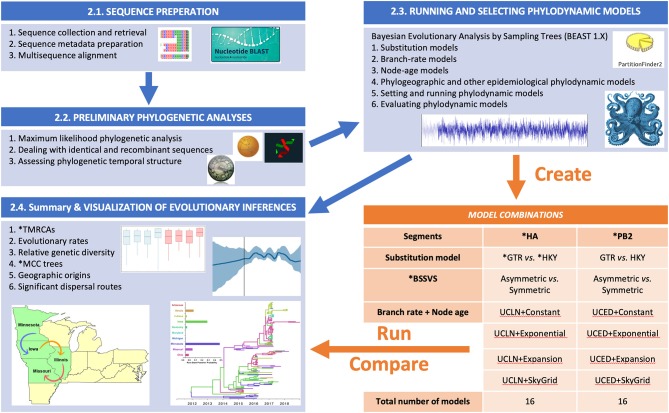
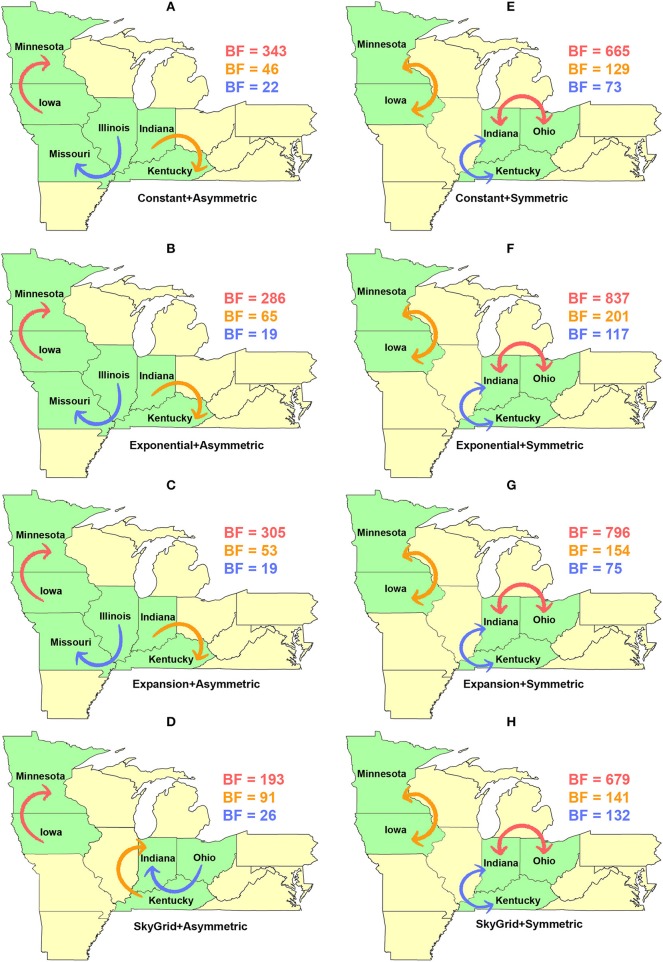
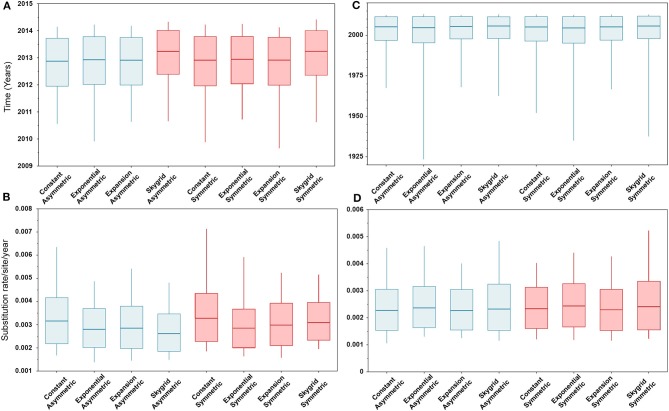
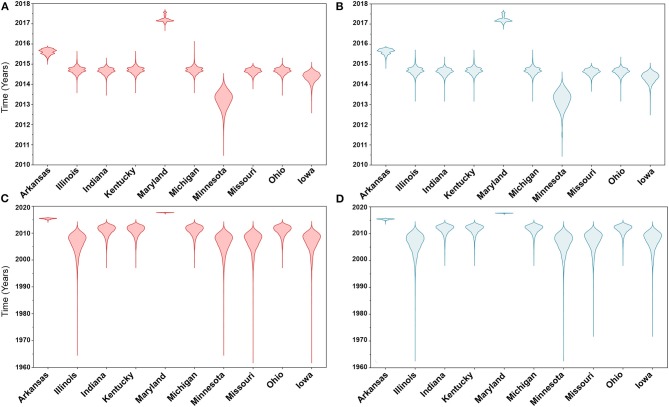
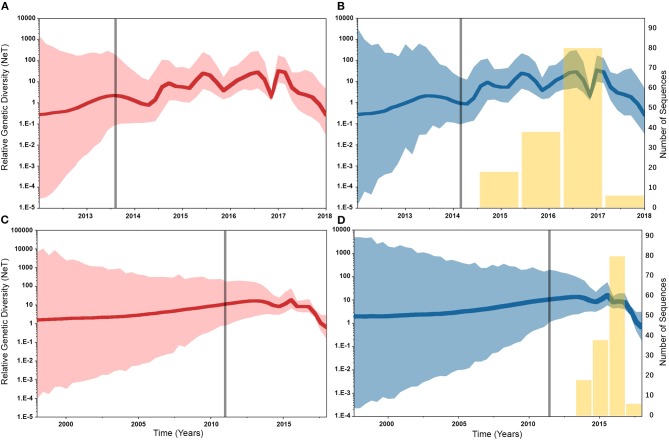
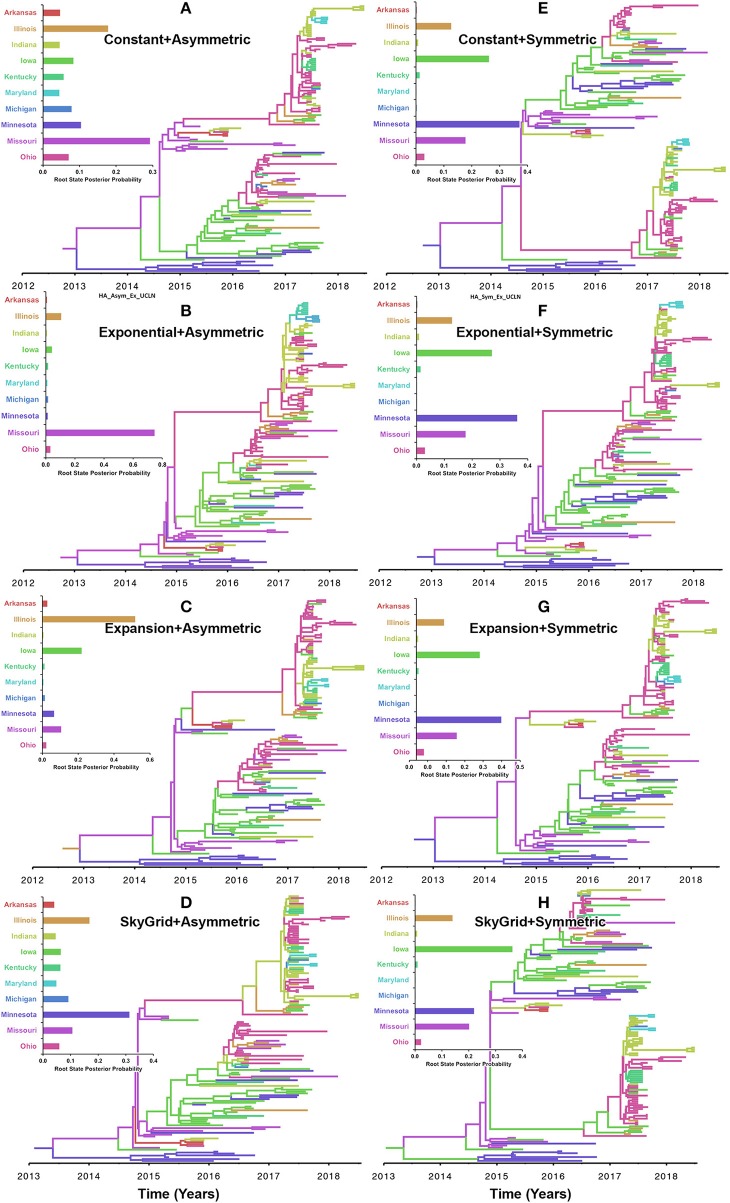
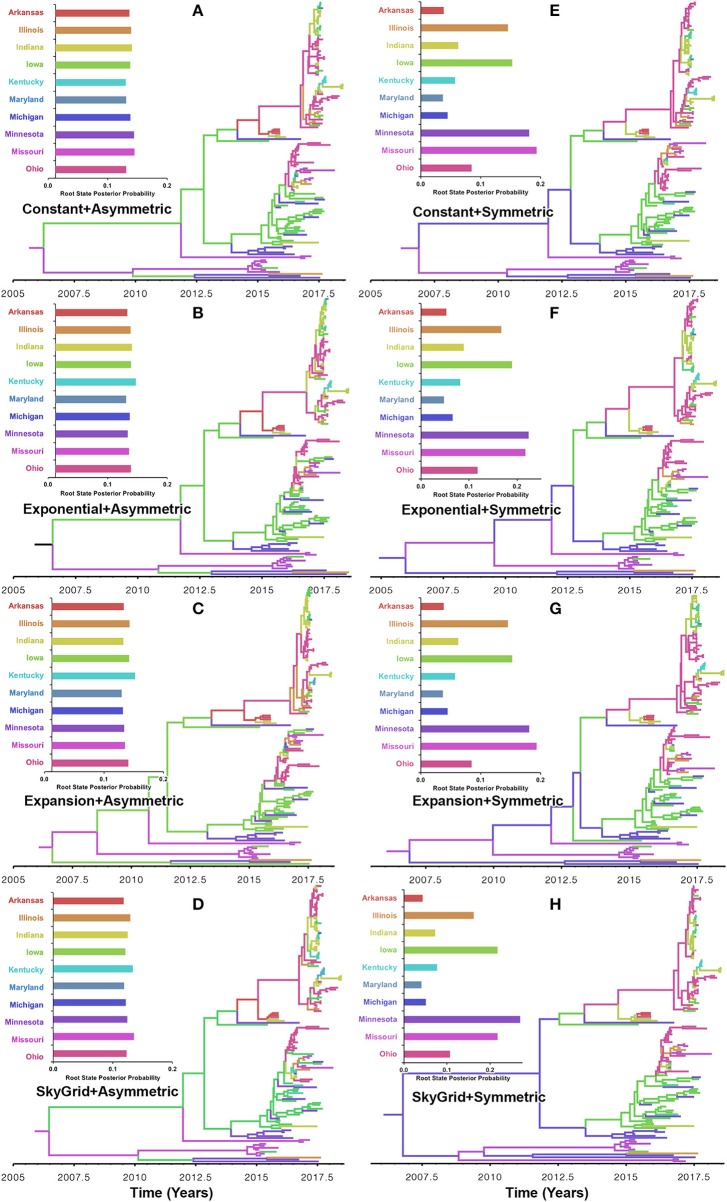
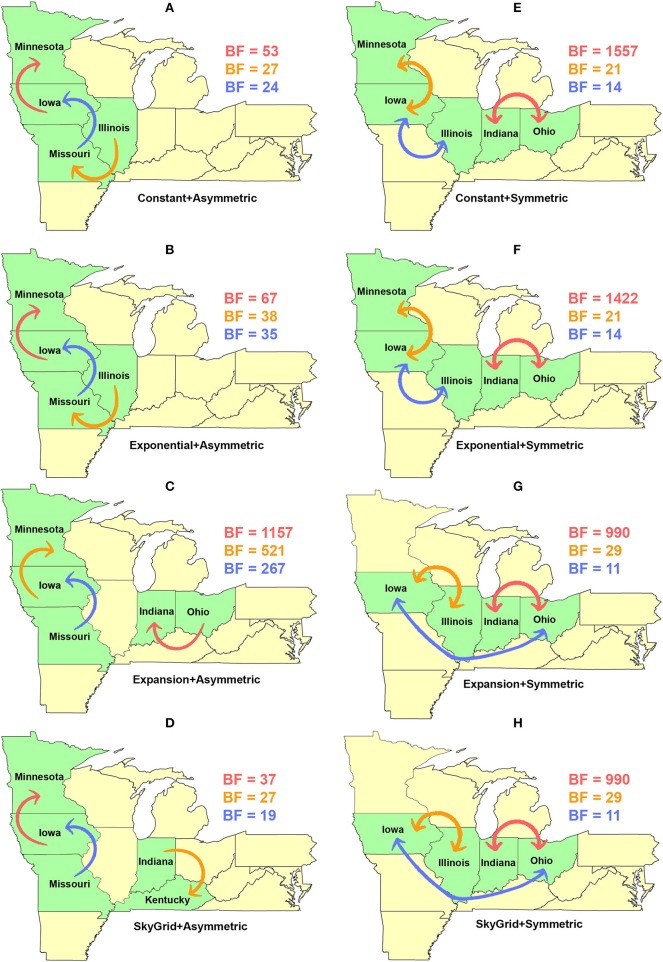
Emerging and endemic animal viral diseases continue to impose substantial impacts on animal and human health. Most current and past molecular surveillance studies of animal diseases investigated spatio-temporal and evolutionary dynamics of the viruses in a disjointed analytical framework, ignoring many uncertainties and made joint conclusions from both analytical approaches. Phylodynamic methods offer a uniquely integrated platform capable of inferring complex epidemiological and evolutionary processes from the phylogeny of viruses in populations using a single Bayesian statistical framework. In this study, we reviewed and outlined basic concepts and aspects of phylodynamic methods and attempted to summarize essential components of the methodology in one analytical pipeline to facilitate the proper use of the methods by animal health researchers. Also, we challenged the robustness of the posterior evolutionary parameters, inferred by the commonly used phylodynamic models, using hemagglutinin (HA) and polymerase basic 2 (PB2) segments of the currently circulating human-like H3 swine influenza (SI) viruses isolated in the United States and multiple priors. Subsequently, we compared similarities and differences between the posterior parameters inferred from sequence data using multiple phylodynamic models. Our suggested phylodynamic approach attempts to reduce the impact of its inherent limitations to offer less biased and biologically plausible inferences about the pathogen evolutionary characteristics to properly guide intervention activities. We also pinpointed requirements and challenges for integrating phylodynamic methods in routine animal disease surveillance activities.
新出现的和地方性动物病毒病继续对动物和人类健康造成重大影响。目前和过去大多数关于动物疾病的分子监测研究在一个脱节的分析框架中调查病毒的时空和进化动态,忽略了许多不确定性,并从两种分析方法中得出联合结论。系统发育动力学方法提供了一个独特的综合平台,能够使用单一的贝叶斯统计框架,从种群中病毒的系统发育推断复杂的流行病学和进化过程。在本研究中,我们回顾并概述了系统发育动力学方法的基本概念和方面,并试图在一个分析流程中总结该方法的基本组成部分,以方便动物健康研究人员正确使用这些方法。此外,我们使用在美国分离的当前流行的类人H3猪流感(SI)病毒的血凝素(HA)和聚合酶基本蛋白2(PB2)片段以及多个先验值,对常用系统发育动力学模型推断的后验进化参数的稳健性提出了质疑。随后,我们比较了使用多种系统发育动力学模型从序列数据推断的后验参数之间的异同。我们建议的系统发育动力学方法试图减少其固有局限性的影响,以便对病原体进化特征提供偏差较小且生物学上合理的推断,从而正确指导干预活动。我们还指出了将系统发育动力学方法整合到常规动物疾病监测活动中的要求和挑战。