Department of Neurology, Jingling Hospital, Nanjing University School of Medicine, 305# East Zhongshan Road, Nanjing, 210002, Jiangsu, China.
Department of Orthopedics, Nanjing Tongren Hospital, Nanjing, 210002, Jiangsu, China.
J Neuroinflammation. 2020 May 6;17(1):150. doi: 10.1186/s12974-020-01747-y.
Repetitive transcranial magnetic stimulation (rTMS) is a noninvasive treatment for ischemic stroke. Astrocytes regulation has been suggested as one mechanism for rTMS effectiveness. But how rTMS regulates astrocytes remains largely undetermined. There were neurotoxic and neuroprotective phenotypes of astrocytes (also denoted as classically and alternatively activated astrocytes or A1 and A2 astrocytes) pertaining to pro- or anti-inflammatory gene expression. Pro-inflammatory or neurotoxic polarized astrocytes were induced during cerebral ischemic stroke. The present study aimed to investigate the effects of rTMS on astrocytic polarization during cerebral ischemic/reperfusion injury.
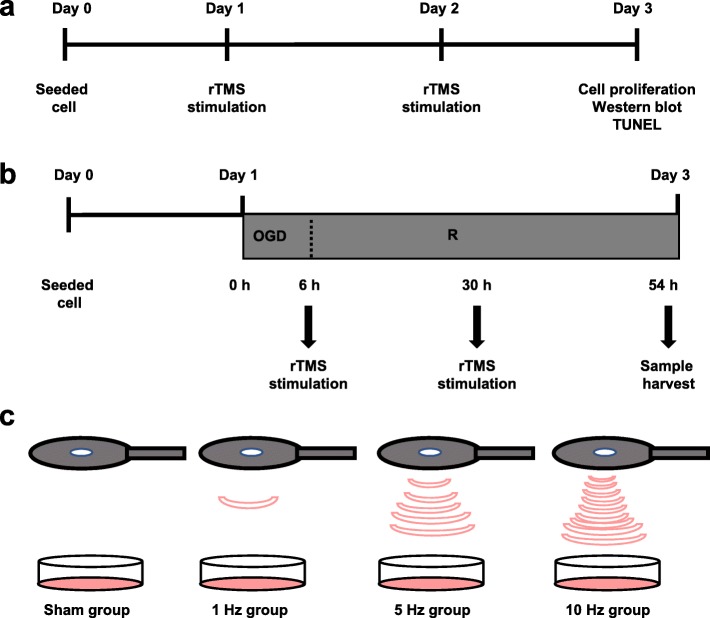
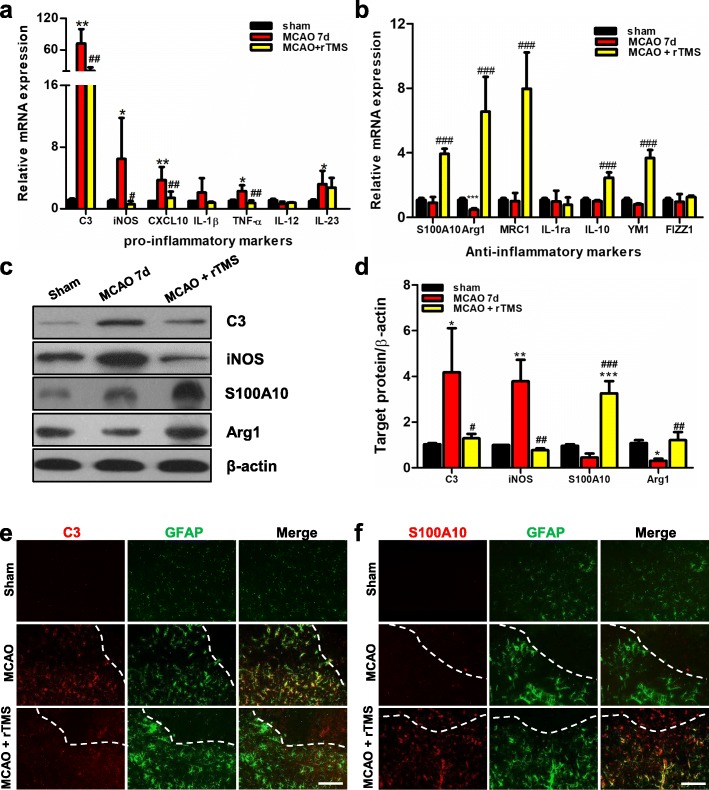
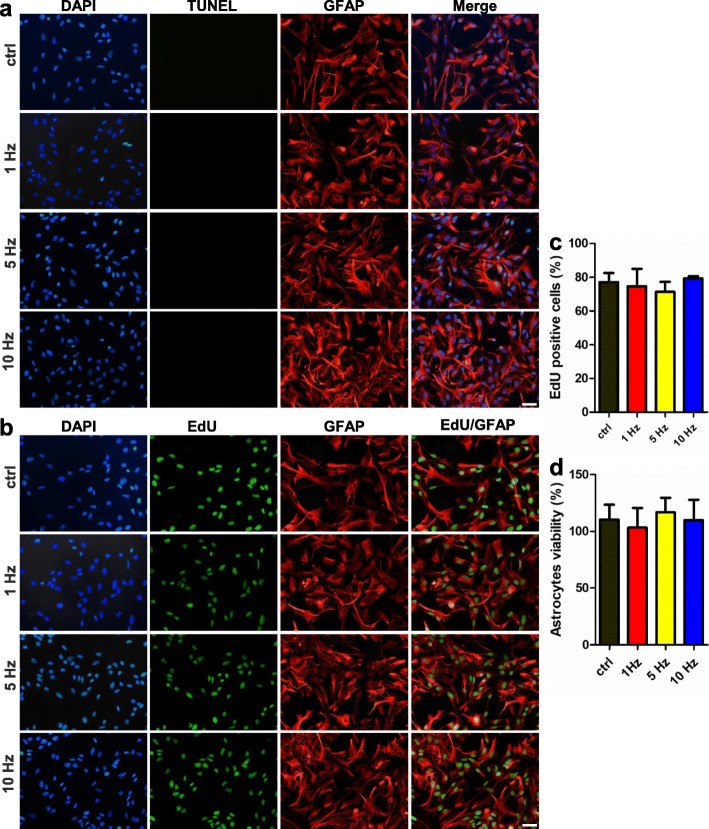
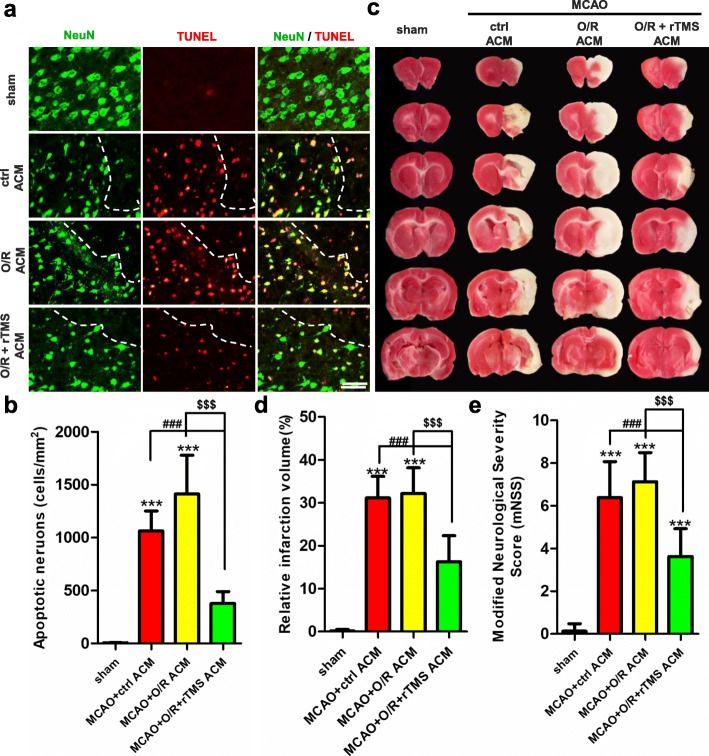
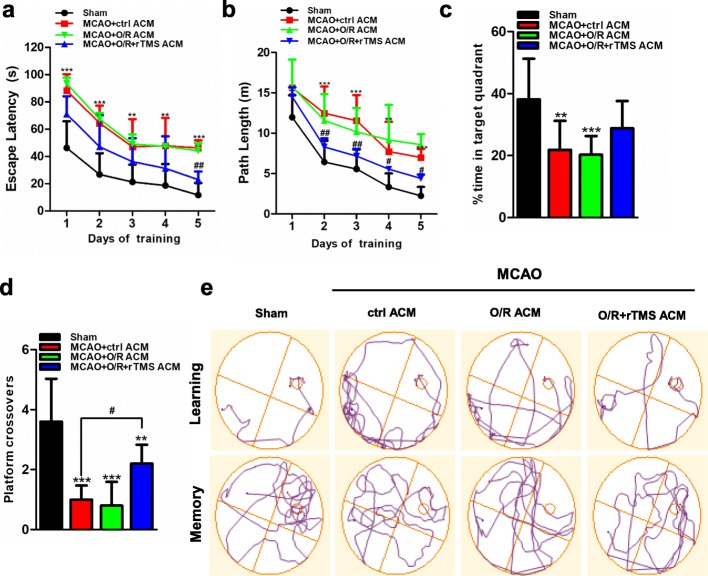
Three rTMS protocols were applied to primary astrocytes under normal and oxygen-glucose deprivation/reoxygenation (OGD/R) conditions. Cell survival, proliferation, and phenotypic changes were assessed after 2-day treatment. Astrocytes culture medium (ACM) from control, OGD/R, and OGD/R + rTMS groups were mixed with neuronal medium to culture neurons for 48 h and 7 days, in order to explore the influence on neuronal survival and synaptic plasticity. In vivo, rats were subjected to middle cerebral artery occlusion (MCAO), and received posterior orbital intravenous injection of ACM collected from different groups at reperfusion, and at 3 days post reperfusion. The apoptosis in the ischemic penumbra, infarct volumes, and the modified Neurological Severity Score (mNSS) were evaluated at 1 week after reperfusion, and cognitive functions were evaluated using the Morris Water Maze (MWM) tests. Finally, the 10 Hz rTMS was directly applied to MCAO rats to verify the rTMS effects on astrocytic polarization.
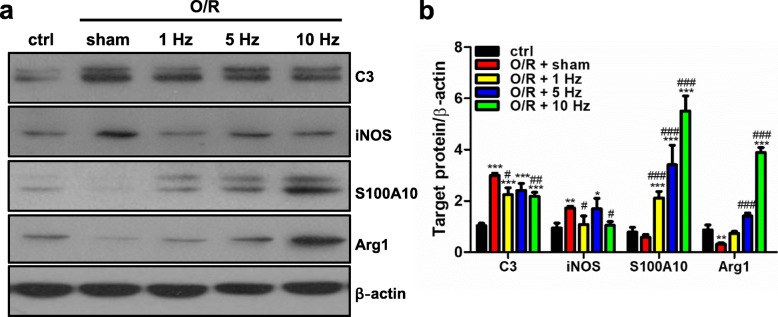
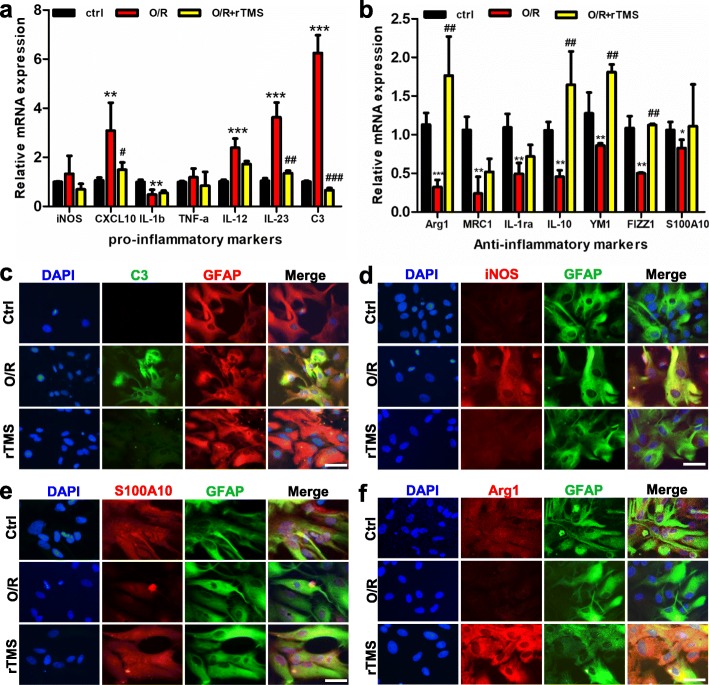
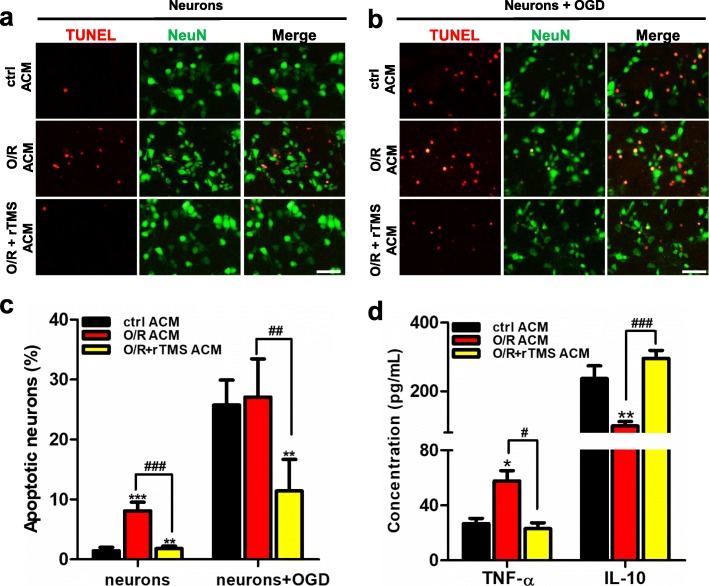
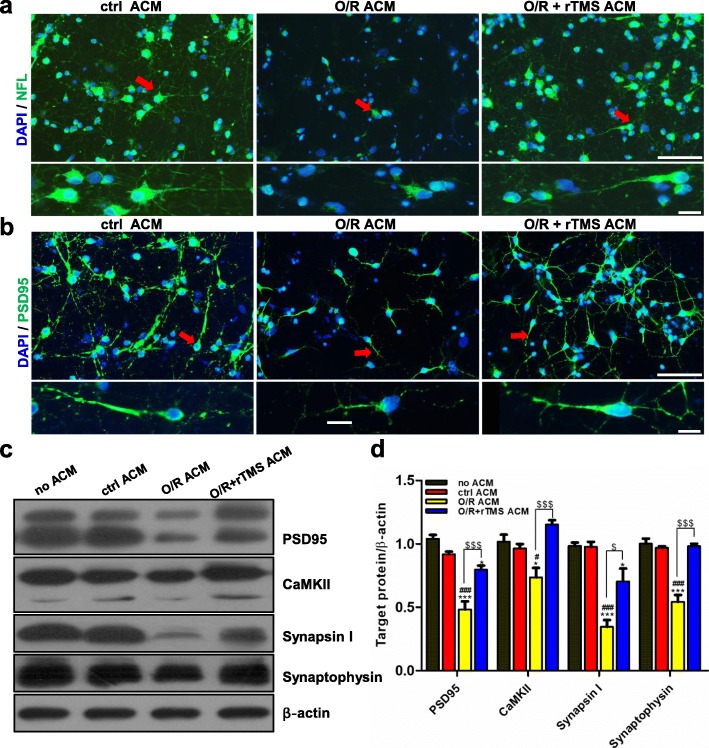
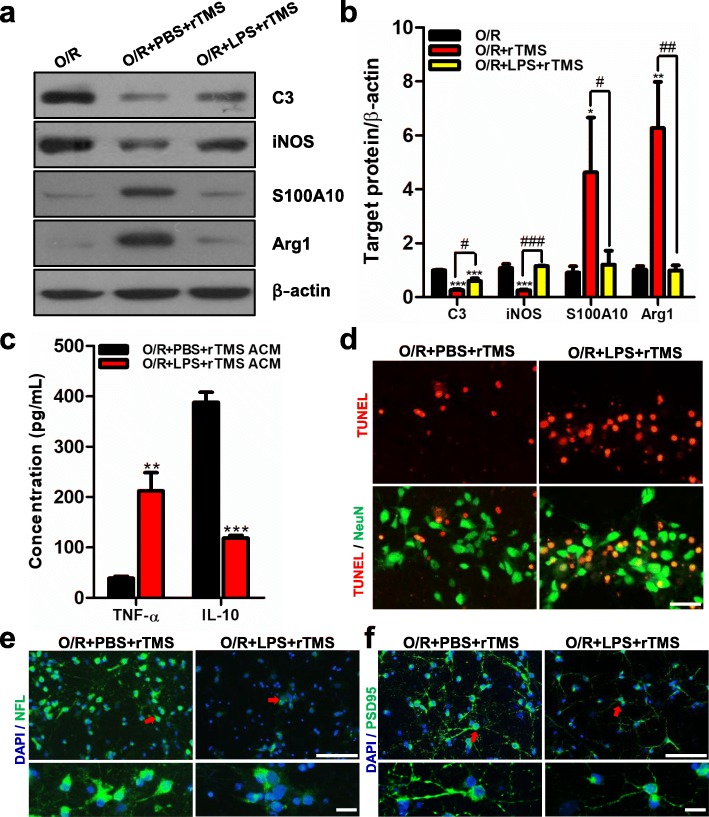
Among these three frequencies, the 10 Hz protocol exerted the greatest potential to modulate astrocytic polarization after OGD/R injury. Classically activated and A1 markers were significantly inhibited by rTMS treatment. In OGD/R model, the concentration of pro-inflammatory mediator TNF-α decreased from 57.7 to 23.0 рg/mL, while anti-inflammatory mediator IL-10 increased from 99.0 to 555.1 рg/mL in the ACM after rTMS treatment. The ACM collected from rTMS-treated astrocytes significantly alleviated neuronal apoptosis induced by OGD/R injury, and promoted neuronal plasticity. In MCAO rat model, the ACM collected from rTMS treatment decreased neuronal apoptosis and infarct volumes, and improved cognitive functions. The neurotoxic astrocytes were simultaneously inhibited after rTMS treatment.
Inhibition of neurotoxic astrocytic polarization is a potential mechanism for the effectiveness of high-frequency rTMS in cerebral ischemic stroke.
重复经颅磁刺激(rTMS)是一种治疗缺血性中风的非侵入性方法。星形胶质细胞的调节被认为是 rTMS 有效性的一种机制。但 rTMS 如何调节星形胶质细胞在很大程度上仍未确定。星形胶质细胞存在神经毒性和神经保护表型(也称为经典和替代激活的星形胶质细胞或 A1 和 A2 星形胶质细胞),与促炎或抗炎基因表达有关。在脑缺血性中风期间,诱导产生促炎或神经毒性极化的星形胶质细胞。本研究旨在探讨 rTMS 在脑缺血/再灌注损伤期间对星形胶质细胞极化的影响。
在正常和氧葡萄糖剥夺/再氧合(OGD/R)条件下,将三种 rTMS 方案应用于原代星形胶质细胞。在 2 天治疗后评估细胞存活、增殖和表型变化。将对照组、OGD/R 组和 OGD/R+rTMS 组的星形胶质细胞培养基(ACM)与神经元培养基混合,用于培养神经元 48 小时和 7 天,以探讨其对神经元存活和突触可塑性的影响。在体内,将大鼠进行大脑中动脉闭塞(MCAO),并在再灌注时以及再灌注后 3 天从不同组接受眶后静脉注射收集的 ACM。在再灌注后 1 周评估缺血半影区的细胞凋亡、梗死体积和改良神经严重程度评分(mNSS),并使用 Morris 水迷宫(MWM)测试评估认知功能。最后,将 10Hz rTMS 直接应用于 MCAO 大鼠,以验证 rTMS 对星形胶质细胞极化的影响。
在这三种频率中,10Hz 方案在 OGD/R 损伤后对星形胶质细胞极化的调节作用最大。rTMS 治疗显著抑制经典激活和 A1 标志物。在 OGD/R 模型中,rTMS 治疗后 ACM 中促炎介质 TNF-α的浓度从 57.7 降至 23.0 pg/mL,而抗炎介质 IL-10 的浓度从 99.0 升至 555.1 pg/mL。经 rTMS 处理的 ACM 可显著减轻 OGD/R 损伤诱导的神经元凋亡,并促进神经元可塑性。在 MCAO 大鼠模型中,rTMS 治疗后收集的 ACM 可减少神经元凋亡和梗死体积,并改善认知功能。同时抑制了神经毒性星形胶质细胞。
抑制神经毒性星形胶质细胞极化是高频 rTMS 治疗缺血性中风有效性的潜在机制。