Institute for Glycomics, Griffith University, Gold Coast Campus, Southport 4222, Queensland, Australia.
Griffith Institute for Drug Discovery, Griffith University, Nathan 4111, Queensland, Australia.
J Gen Virol. 2020 Jun;101(6):622-634. doi: 10.1099/jgv.0.001416. Epub 2020 Apr 28.
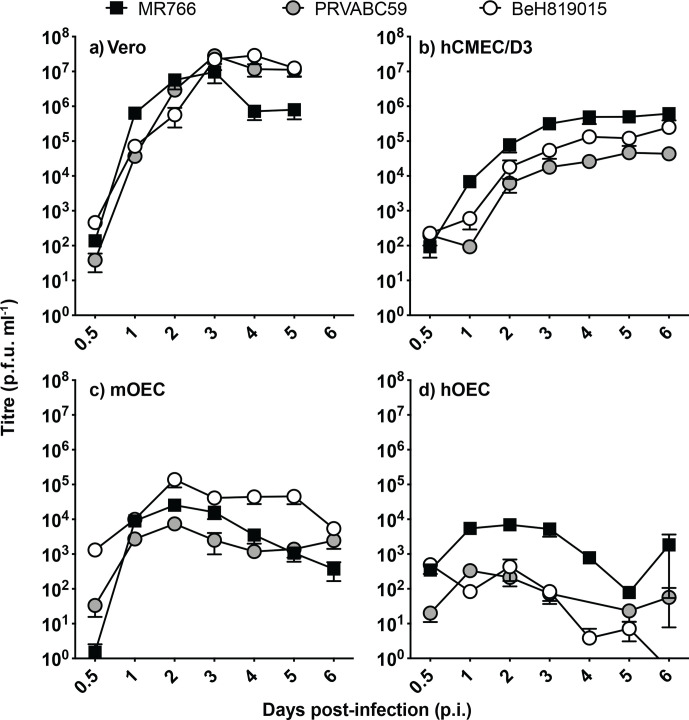
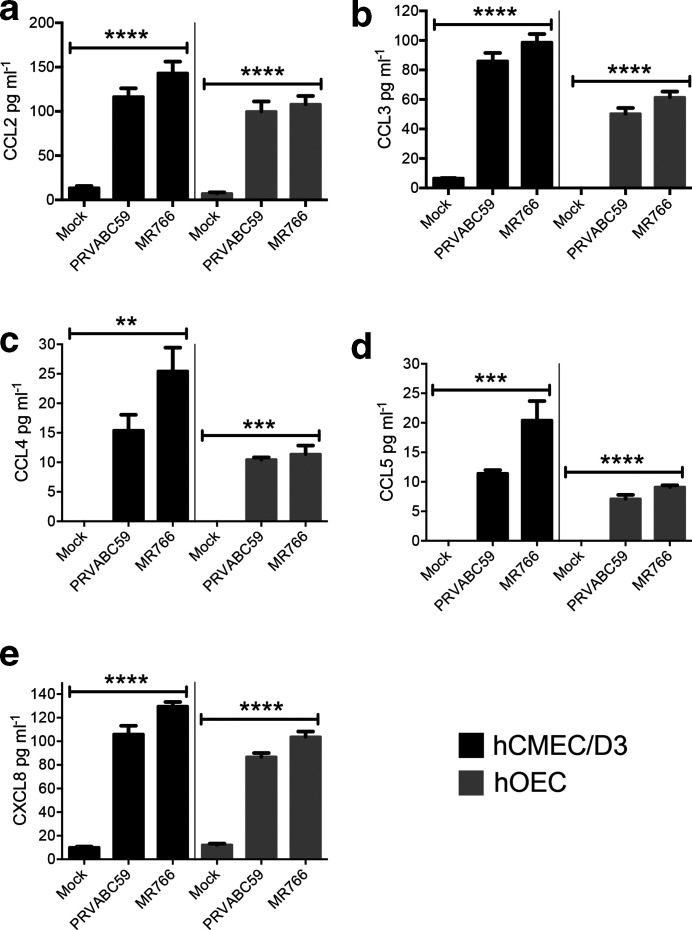
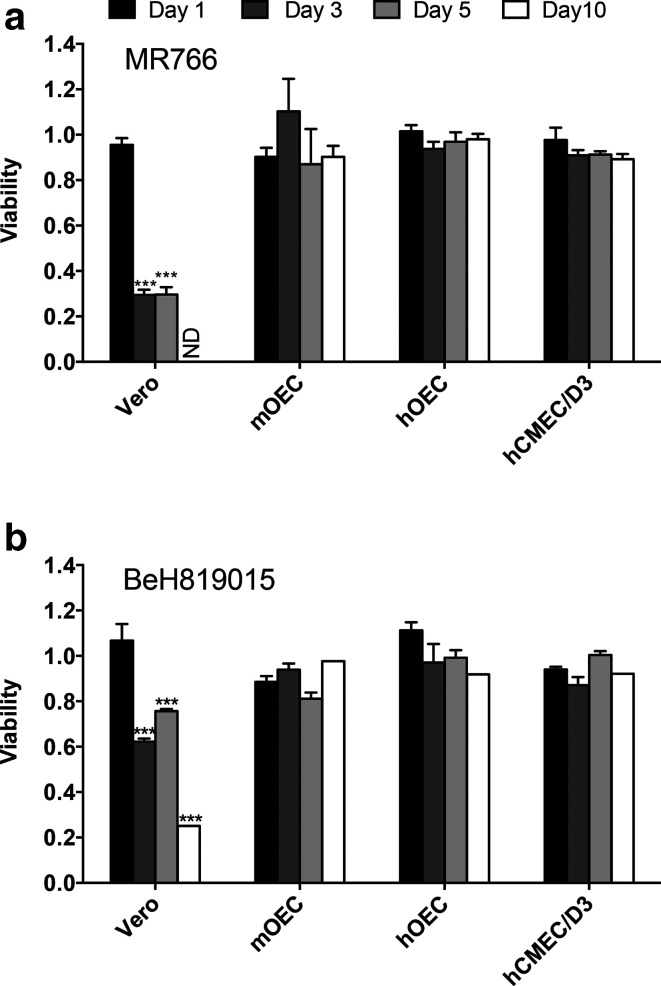
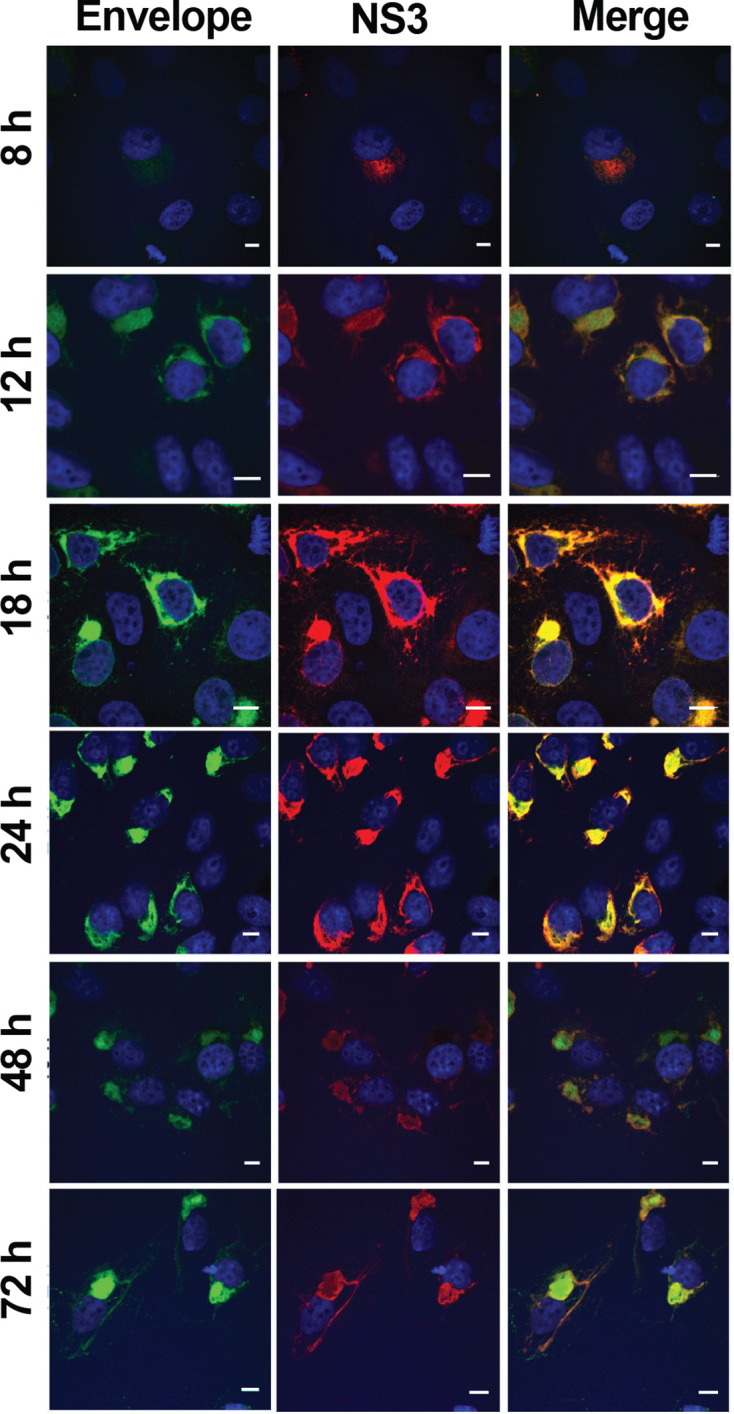
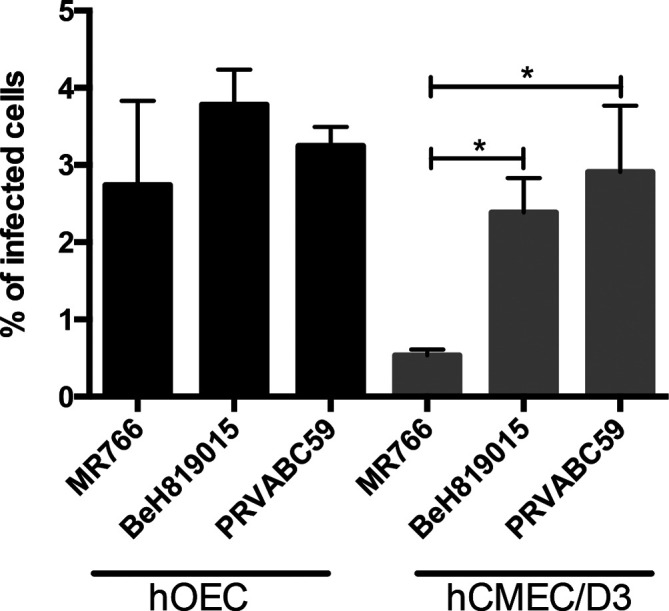
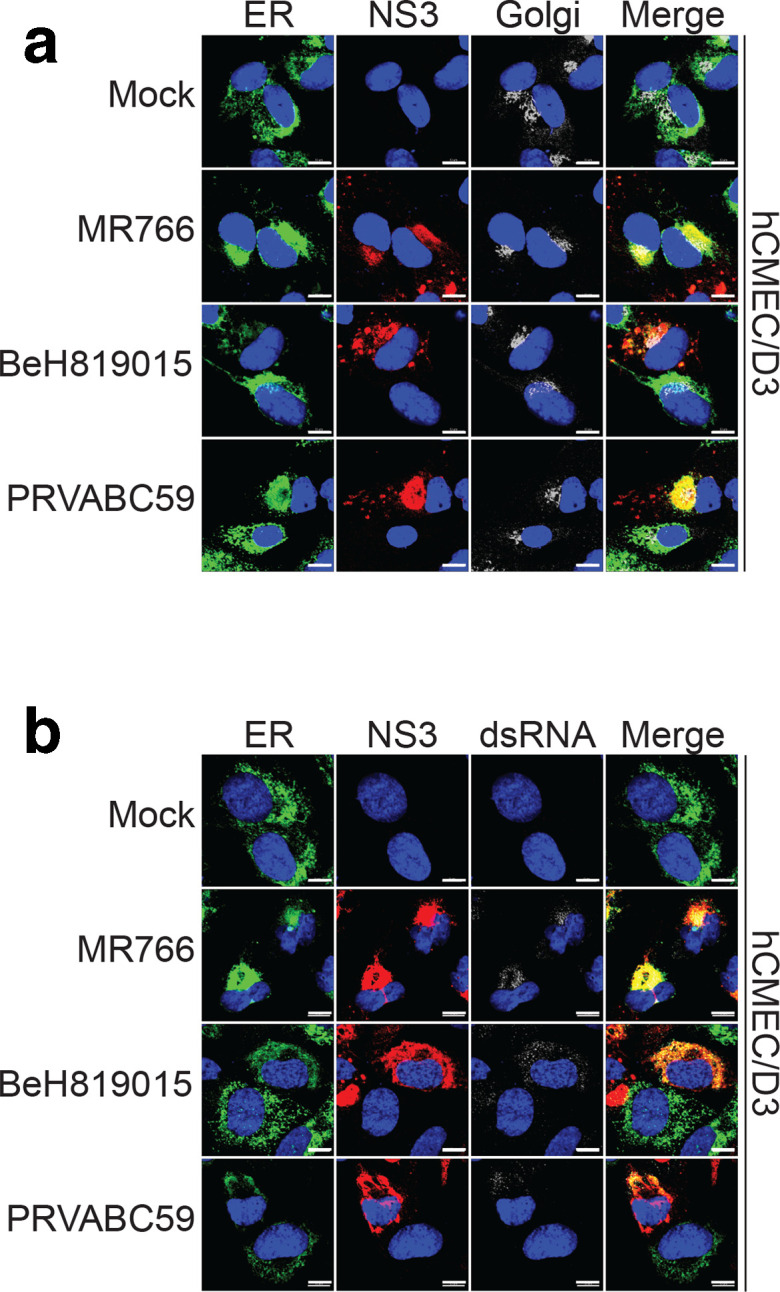
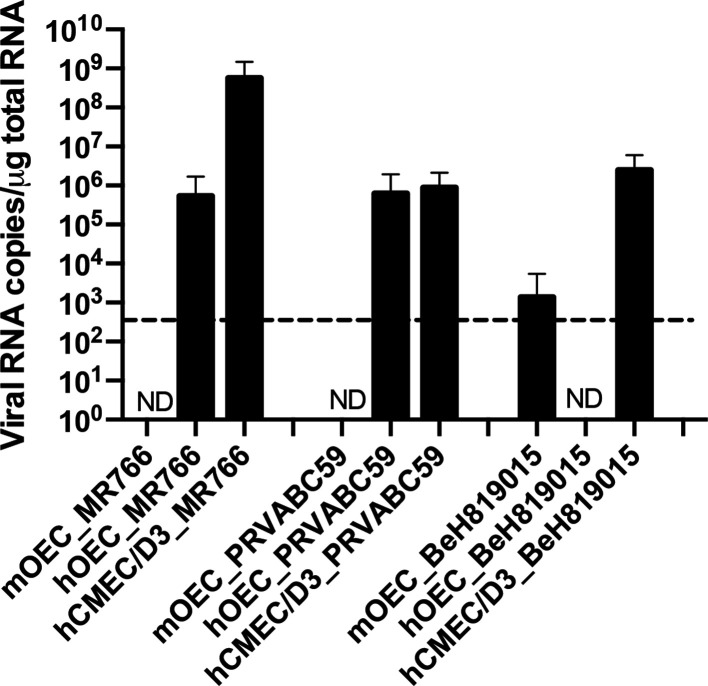
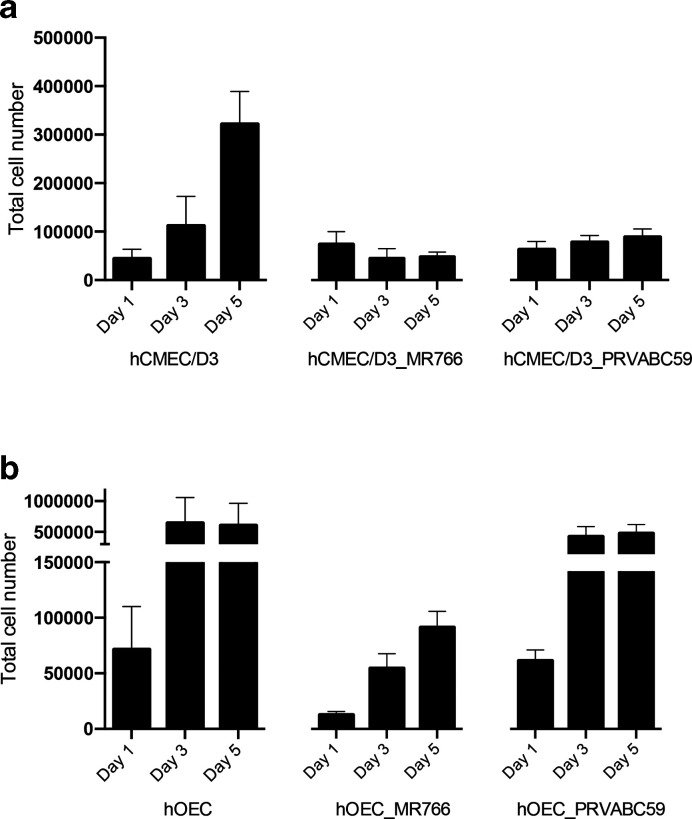
Zika virus (ZIKV) has recently emerged as an important human pathogen due to the strong evidence that it causes disease of the central nervous system, particularly microcephaly and Guillain-Barré syndrome. The pathogenesis of disease, including mechanisms of neuroinvasion, may include both invasion via the blood-brain barrier and via peripheral (including cranial) nerves. Cellular responses to infection are also poorly understood. This study characterizes the infection of laboratory-adapted ZIKV African MR766 and two Asian strains of (1) brain endothelial cells (hCMEC/D3 cell line) and (2) olfactory ensheathing cells (OECs) (the neuroglia populating cranial nerve I and the olfactory bulb; both human and mouse OEC lines) in comparison to kidney epithelial cells (Vero cells, in which ZIKV infection is well characterized). Readouts included infection kinetics, intracellular virus localization, viral persistence and cytokine responses. Although not as high as in Vero cells, viral titres exceeded 10 plaque-forming units (p.f.u.) ml in the endothelial/neuroglial cell types, except hOECs. Despite these substantial titres, a relatively small proportion of neuroglial cells were primarily infected. Immunolabelling of infected cells revealed localization of the ZIKV envelope and NS3 proteins in the cytoplasm; NS3 staining overlapped with that of dsRNA replication intermediate and the endoplasmic reticulum (ER). Infected OECs and endothelial cells produced high levels of pro-inflammatory chemokines. Nevertheless, ZIKV was also able to establish persistent infection in hOEC and hCMEC/D3 cells. Taken together, these results provide basic insights into ZIKV infection of endothelial and neuroglial cells and will form the basis for further study of ZIKV disease mechanisms.
寨卡病毒(ZIKV)最近成为一种重要的人类病原体,因为有强有力的证据表明它会导致中枢神经系统疾病,特别是小头症和格林-巴利综合征。疾病的发病机制,包括神经入侵的机制,可能包括通过血脑屏障和外周(包括颅神经)神经的入侵。细胞对感染的反应也知之甚少。本研究描述了实验室适应的 ZIKV 非洲 MR766 株和两种亚洲株(1)脑内皮细胞(hCMEC/D3 细胞系)和(2)嗅鞘细胞(OCs)(构成颅神经 I 和嗅球的神经胶质;人源和鼠源 OEC 系)的感染情况,并与肾上皮细胞(Vero 细胞,ZIKV 感染在其中得到很好的描述)进行了比较。检测指标包括感染动力学、细胞内病毒定位、病毒持续存在和细胞因子反应。尽管不如在 Vero 细胞中高,但内皮/神经胶质细胞类型中的病毒滴度超过了 10 噬菌斑形成单位(p.f.u.)ml,除了 hOEC 之外。尽管这些滴度很高,但只有相对较小比例的神经胶质细胞主要被感染。感染细胞的免疫标记显示 ZIKV 包膜和 NS3 蛋白定位于细胞质;NS3 染色与 dsRNA 复制中间体和内质网(ER)重叠。感染的 OEC 和内皮细胞产生高水平的促炎趋化因子。尽管如此,ZIKV 也能够在 hOEC 和 hCMEC/D3 细胞中建立持续感染。总之,这些结果提供了 ZIKV 感染内皮细胞和神经胶质细胞的基本见解,并将为进一步研究 ZIKV 疾病机制奠定基础。