Department of Virology, Veterinary Research Institute, Hudcova 70, 62100, Brno, Czech Republic.
Institute of Parasitology, Biology Centre of the Czech Academy of Sciences, Branisovska 31, 37005, Ceske Budejovice, Czech Republic.
BMC Neurosci. 2018 Feb 20;19(1):5. doi: 10.1186/s12868-018-0407-2.
The recent Zika virus (ZIKV) outbreak has linked ZIKV with microcephaly and other central nervous system pathologies in humans. Astrocytes are among the first cells to respond to ZIKV infection in the brain and are also targets for virus infection. In this study, we investigated the interaction between ZIKV and primary human brain cortical astrocytes (HBCA).
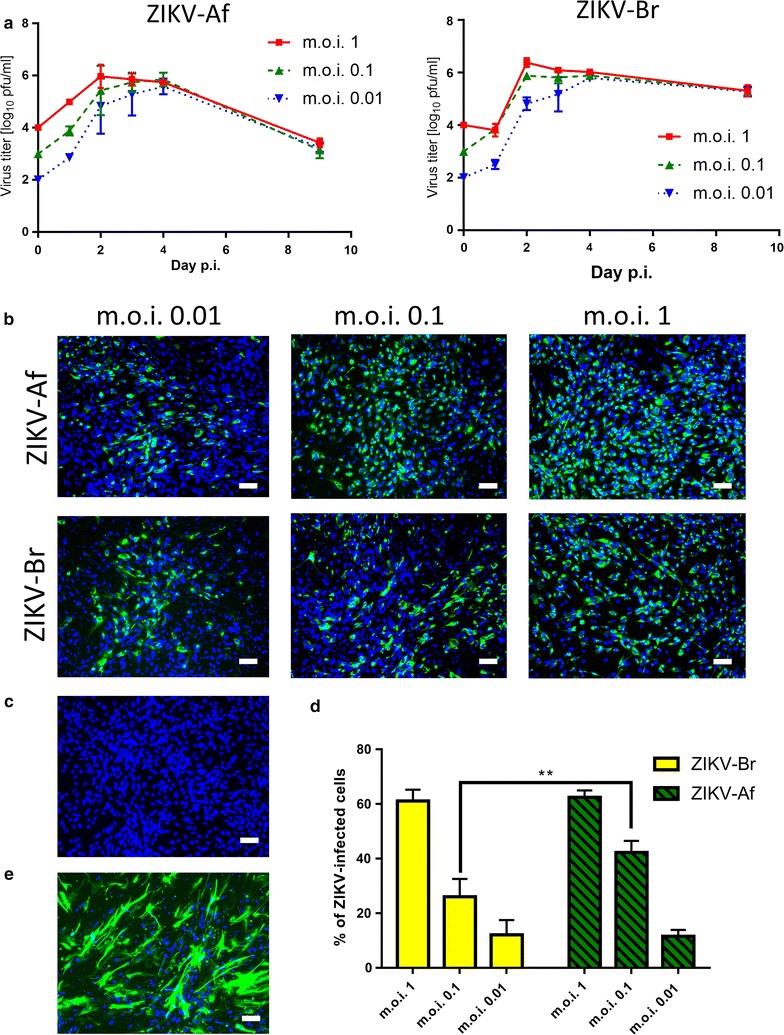
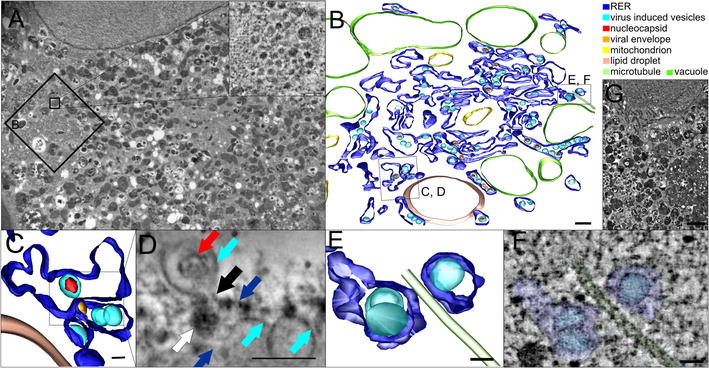
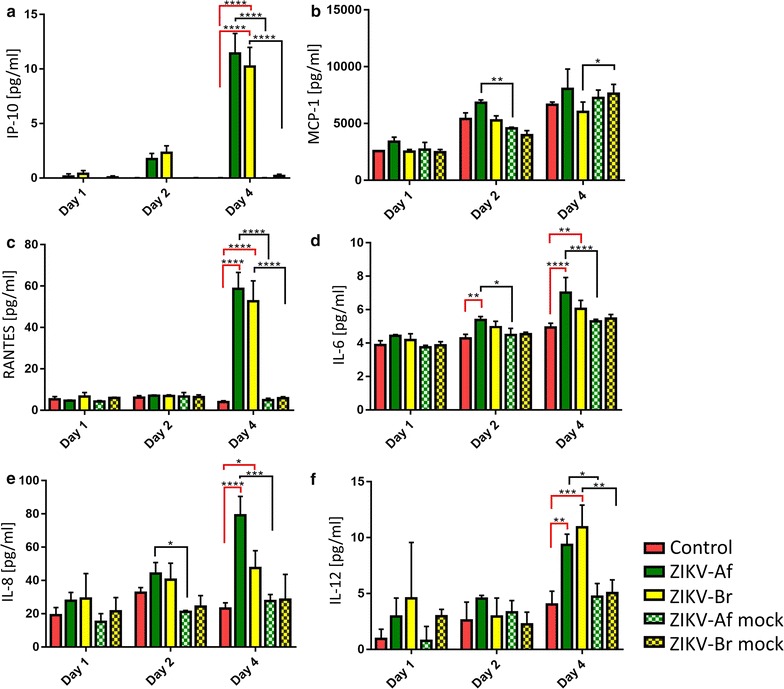
HBCAs were highly sensitive to representatives of both Asian and African ZIKV lineages and produced high viral yields. The infection was associated with limited immune cytokine/chemokine response activation; the highest increase of expression, following infection, was seen in CXCL-10 (IP-10), interleukin-6, 8, 12, and CCL5 (RANTES). Ultrastructural changes in the ZIKV-infected HBCA were characterized by electron tomography (ET). ET reconstructions elucidated high-resolution 3D images of the proliferating and extensively rearranged endoplasmic reticulum (ER) containing viral particles and virus-induced vesicles, tightly juxtaposed to collapsed ER cisternae.
The results confirm that human astrocytes are sensitive to ZIKV infection and could be a source of proinflammatory cytokines in the ZIKV-infected brain tissue.
最近的寨卡病毒(ZIKV)爆发将 ZIKV 与人类的小头症和其他中枢神经系统病变联系起来。星形胶质细胞是大脑中对 ZIKV 感染最早做出反应的细胞之一,也是病毒感染的靶标。在这项研究中,我们研究了 ZIKV 与原代人脑皮质星形胶质细胞(HBCA)之间的相互作用。
HBCA 对亚洲和非洲 ZIKV 谱系的代表均高度敏感,并产生高病毒产量。感染与有限的免疫细胞因子/趋化因子反应激活有关;感染后表达增加最高的是 CXCL-10(IP-10)、白细胞介素 6、8、12 和 CCL5(RANTES)。ZIKV 感染的 HBCA 的超微结构变化通过电子断层扫描(ET)进行了表征。ET 重建阐明了含有病毒颗粒和病毒诱导的小泡的增殖和广泛重排的内质网(ER)的高分辨率 3D 图像,这些小泡紧密毗邻塌陷的 ER 潴泡。
结果证实人类星形胶质细胞对 ZIKV 感染敏感,并且可能是 ZIKV 感染脑组织中促炎细胞因子的来源。