Department of Biochemistry and Immunology, Ribeirao Preto Medical School, University of Sao Paulo, Ribeirao Preto, Sao Paulo, Brazil.
Department of Physiological Sciences, Health Sciences Centre, Federal University of Espirito Santo, Vitoria, Espírito Santo, Brazil.
mSphere. 2020 May 6;5(3):e00190-20. doi: 10.1128/mSphere.00190-20.
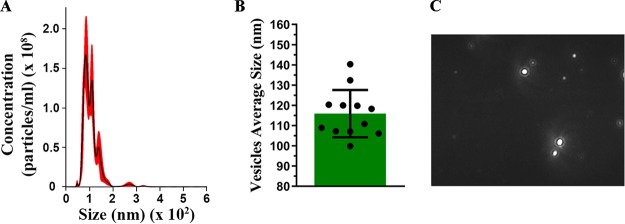
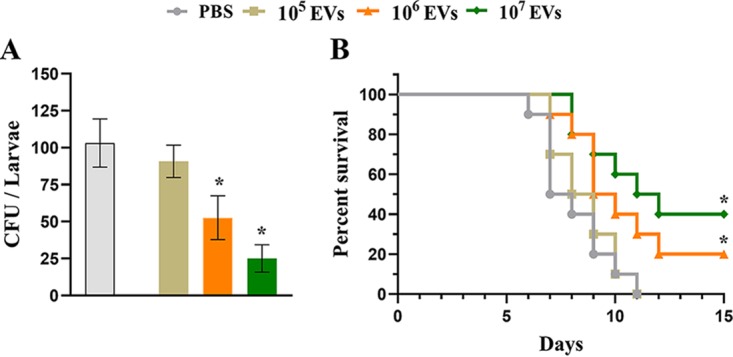
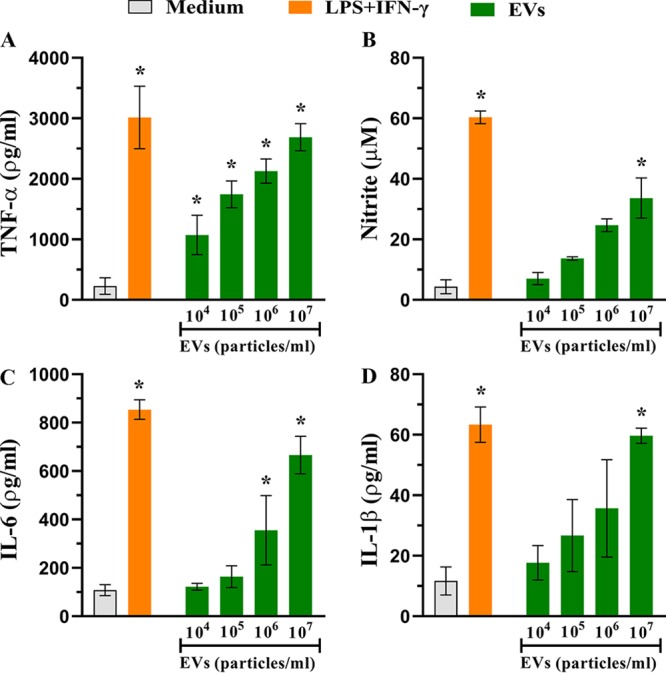
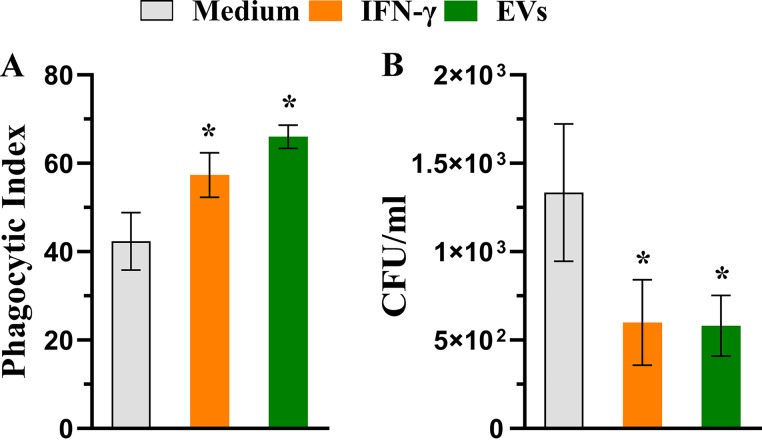
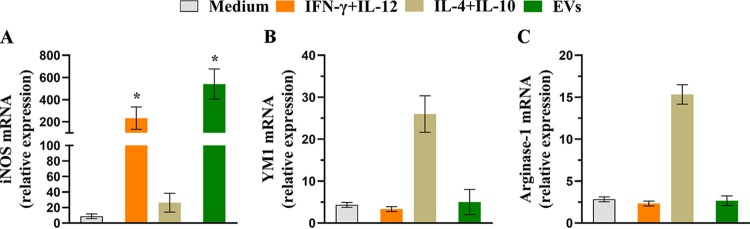
, a ubiquitous and saprophytic fungus, is the second most common cause of aspergillosis worldwide. Several mechanisms contribute to the establishment of the fungal infection. Extracellular vesicles (EVs) have been described as "virulence factor delivery bags" in several fungal species, demonstrating a crucial role during the infection. In this study, we evaluated production of EVs and their immunomodulatory functions. We verified that EVs induce macrophages to produce inflammatory mediators, such as nitric oxide, tumor necrosis factor alpha (TNF-α), interleukin-6 (IL-6), and IL-1β. Furthermore, the EVs enhance phagocytosis and killing by macrophages and induce M1 macrophage polarization In addition, a prior inoculation of EVs in larvae resulted in a protective effect against the fungal infection. Our findings suggest that EVs are biologically active and affect the interaction between and host immune cells, priming the innate immune system to eliminate the fungal infection. Collectively, our results suggest that EVs play a crucial role in aspergillosis. Immunocompromised patients are susceptible to several fungal infections. The genus can cause increased morbidity and mortality. Developing new therapies is essential to understand the fungal biology mechanisms. Fungal EVs carry important virulence factors, thus playing pivotal roles in fungal pathophysiology. No study to date has reported EV production by , a fungus considered to be the second most common cause of aspergillosis and relevant food contaminator found worldwide. In this study, we produced EVs and evaluated the immunomodulatory effects of EVs on bone marrow-derived macrophages (BMDMs) and effects in a model.
烟曲霉是一种普遍存在的腐生真菌,是世界范围内第二大常见的曲霉菌病致病菌。几种机制促成了真菌感染的建立。细胞外囊泡(EVs)已被描述为几种真菌物种中的“毒力因子传递袋”,在感染过程中发挥关键作用。在这项研究中,我们评估了 EVs 的产生及其免疫调节功能。我们证实 EVs 可诱导巨噬细胞产生炎症介质,如一氧化氮、肿瘤坏死因子-α(TNF-α)、白细胞介素-6(IL-6)和白细胞介素-1β。此外,EVs 增强了巨噬细胞的吞噬和杀伤作用,并诱导 M1 巨噬细胞极化。此外,预先接种 EVs 可使幼虫对真菌感染产生保护作用。我们的研究结果表明 EVs 具有生物活性,并影响 与宿主免疫细胞的相互作用,使先天免疫系统做好准备以消除真菌感染。总之,我们的研究结果表明 EVs 在曲霉菌病中起着至关重要的作用。免疫功能低下的患者易患多种真菌感染。青霉属可导致发病率和死亡率增加。为了了解真菌生物学机制,开发新的治疗方法至关重要。真菌 EVs 携带重要的毒力因子,因此在真菌病理生理学中发挥着关键作用。迄今为止,尚无研究报道过被认为是第二大常见曲霉菌病致病菌和全球相关食物污染物的烟曲霉产生 EVs。在这项研究中,我们产生了 EVs,并评估了 EVs 对骨髓来源的巨噬细胞(BMDMs)的免疫调节作用,以及 EVs 在 模型中的作用。