• 文献检索
  • 文档翻译
  • 深度研究
  • 学术资讯
  • Suppr Zotero 插件Zotero 插件
  • 邀请有礼
  • 套餐&价格
  • 历史记录
应用&插件
Suppr Zotero 插件Zotero 插件浏览器插件Mac 客户端Windows 客户端微信小程序
定价
高级版会员购买积分包购买API积分包
服务
文献检索文档翻译深度研究API 文档MCP 服务
关于我们
关于 Suppr公司介绍联系我们用户协议隐私条款
关注我们

Suppr 超能文献

核心技术专利:CN118964589B侵权必究
粤ICP备2023148730 号-1Suppr @ 2026

文献检索

告别复杂PubMed语法,用中文像聊天一样搜索,搜遍4000万医学文献。AI智能推荐,让科研检索更轻松。

立即免费搜索

文件翻译

保留排版,准确专业,支持PDF/Word/PPT等文件格式,支持 12+语言互译。

免费翻译文档

深度研究

AI帮你快速写综述,25分钟生成高质量综述,智能提取关键信息,辅助科研写作。

立即免费体验

机器学习方法在急性阑尾炎诊断中的应用

The Use of Machine Learning Approaches for the Diagnosis of Acute Appendicitis.

作者信息

Akmese Omer F, Dogan Gul, Kor Hakan, Erbay Hasan, Demir Emre

机构信息

Department of Computer Technologies, University of Hitit, University of Kırıkkale, Çorum 19500, Turkey.

Department of Surgical Medical Sciences, University of Hitit, Çorum 19040, Turkey.

出版信息

Emerg Med Int. 2020 Apr 25;2020:7306435. doi: 10.1155/2020/7306435. eCollection 2020.

DOI:10.1155/2020/7306435
PMID:32377437
原文链接:https://pmc.ncbi.nlm.nih.gov/articles/PMC7196991/
Abstract

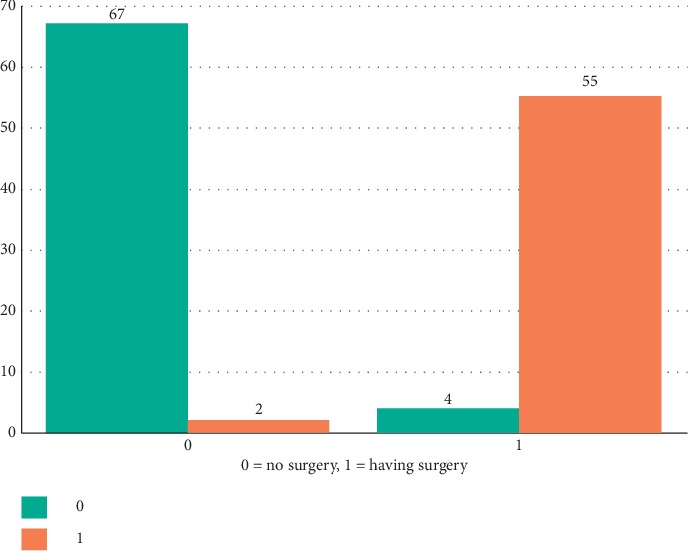
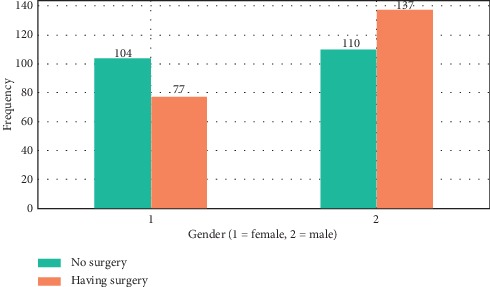
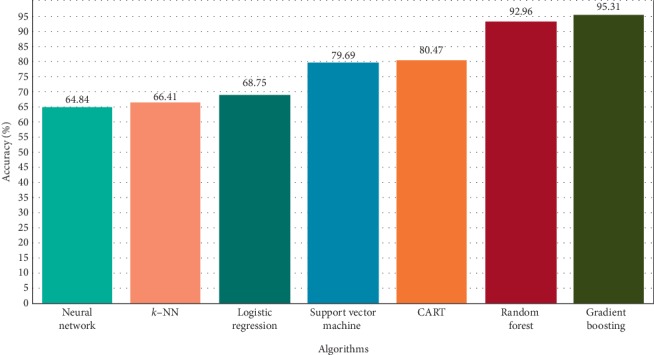
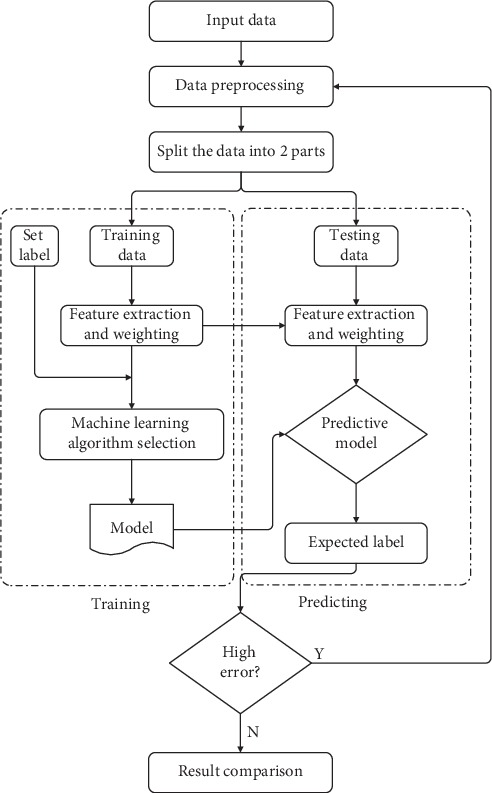
Acute appendicitis is one of the most common emergency diseases in general surgery clinics. It is more common, especially between the ages of 10 and 30 years. Additionally, approximately 7% of the entire population is diagnosed with acute appendicitis at some time in their lives and requires surgery. The study aims to develop an easy, fast, and accurate estimation method for early acute appendicitis diagnosis using machine learning algorithms. Retrospective clinical records were analyzed with predictive data mining models. The predictive success of the models obtained by various machine learning algorithms was compared. A total of 595 clinical records were used in the study, including 348 males (58.49%) and 247 females (41.51%). It was found that the gradient boosted trees algorithm achieves the best success with an accurate prediction success of 95.31%. In this study, an estimation method based on machine learning was developed to identify individuals with acute appendicitis. It is thought that this method will benefit patients with signs of appendicitis, especially in emergency departments in hospitals.

摘要

急性阑尾炎是普通外科门诊最常见的急诊疾病之一。它较为常见,尤其在10至30岁之间。此外,约7%的总人口在其一生中的某个时候会被诊断为急性阑尾炎并需要进行手术。该研究旨在使用机器学习算法开发一种简单、快速且准确的早期急性阑尾炎诊断估计方法。利用预测性数据挖掘模型对回顾性临床记录进行了分析。比较了各种机器学习算法所获得模型的预测成功率。该研究共使用了595份临床记录,其中男性348例(58.49%),女性247例(41.51%)。结果发现,梯度提升树算法取得了最佳效果,准确预测成功率为95.31%。在本研究中,开发了一种基于机器学习的估计方法来识别患有急性阑尾炎的个体。人们认为这种方法将使患有阑尾炎症状的患者受益,特别是在医院的急诊科。
https://cdn.ncbi.nlm.nih.gov/pmc/blobs/c8fd/7196991/e4c8a21783f4/EMI2020-7306435.004.jpg
https://cdn.ncbi.nlm.nih.gov/pmc/blobs/c8fd/7196991/87fbe48df3ca/EMI2020-7306435.001.jpg
https://cdn.ncbi.nlm.nih.gov/pmc/blobs/c8fd/7196991/47d75d5896f1/EMI2020-7306435.002.jpg
https://cdn.ncbi.nlm.nih.gov/pmc/blobs/c8fd/7196991/1e4f9179aa42/EMI2020-7306435.003.jpg
https://cdn.ncbi.nlm.nih.gov/pmc/blobs/c8fd/7196991/e4c8a21783f4/EMI2020-7306435.004.jpg
https://cdn.ncbi.nlm.nih.gov/pmc/blobs/c8fd/7196991/87fbe48df3ca/EMI2020-7306435.001.jpg
https://cdn.ncbi.nlm.nih.gov/pmc/blobs/c8fd/7196991/47d75d5896f1/EMI2020-7306435.002.jpg
https://cdn.ncbi.nlm.nih.gov/pmc/blobs/c8fd/7196991/1e4f9179aa42/EMI2020-7306435.003.jpg
https://cdn.ncbi.nlm.nih.gov/pmc/blobs/c8fd/7196991/e4c8a21783f4/EMI2020-7306435.004.jpg

相似文献

1
The Use of Machine Learning Approaches for the Diagnosis of Acute Appendicitis.机器学习方法在急性阑尾炎诊断中的应用
Emerg Med Int. 2020 Apr 25;2020:7306435. doi: 10.1155/2020/7306435. eCollection 2020.
2
A diagnostic testing for people with appendicitis using machine learning techniques.一种使用机器学习技术对阑尾炎患者进行的诊断测试。
Multimed Tools Appl. 2022;81(5):7011-7023. doi: 10.1007/s11042-022-11939-8. Epub 2022 Jan 24.
3
Construction of a clinical prediction model for complicated appendicitis based on machine learning techniques.基于机器学习技术构建复杂阑尾炎的临床预测模型。
Sci Rep. 2024 Jul 16;14(1):16473. doi: 10.1038/s41598-024-67453-4.
4
Machine Learning Algorithm Helps Identify Non-Diagnosed Prodromal Alzheimer's Disease Patients in the General Population.机器学习算法有助于在普通人群中识别未被诊断的前驱期阿尔茨海默病患者。
J Prev Alzheimers Dis. 2019;6(3):185-191. doi: 10.14283/jpad.2019.10.
5
Predicting post-stroke pneumonia using deep neural network approaches.使用深度神经网络方法预测卒中后肺炎。
Int J Med Inform. 2019 Dec;132:103986. doi: 10.1016/j.ijmedinf.2019.103986. Epub 2019 Oct 1.
6
Data-driven modeling and prediction of blood glucose dynamics: Machine learning applications in type 1 diabetes.基于数据驱动的血糖动力学建模与预测:机器学习在 1 型糖尿病中的应用。
Artif Intell Med. 2019 Jul;98:109-134. doi: 10.1016/j.artmed.2019.07.007. Epub 2019 Jul 26.
7
Comparison of three databases with a decision tree approach in the medical field of acute appendicitis.在急性阑尾炎医学领域中采用决策树方法对三个数据库进行比较。
Stud Health Technol Inform. 2001;84(Pt 2):1414-8.
8
Does size really matter--using a decision tree approach for comparison of three different databases from the medical field of acute appendicitis.规模真的重要吗——使用决策树方法比较急性阑尾炎医学领域的三个不同数据库。
J Med Syst. 2002 Oct;26(5):465-77. doi: 10.1023/a:1016461301710.
9
Diagnosis and classification of pediatric acute appendicitis by artificial intelligence methods: An investigator-independent approach.人工智能方法在儿科急性阑尾炎诊断和分类中的应用:一种独立于研究者的方法。
PLoS One. 2019 Sep 25;14(9):e0222030. doi: 10.1371/journal.pone.0222030. eCollection 2019.
10
A preclustering-based ensemble learning technique for acute appendicitis diagnoses.基于预聚类的集成学习技术在急性阑尾炎诊断中的应用。
Artif Intell Med. 2013 Jun;58(2):115-24. doi: 10.1016/j.artmed.2013.03.007. Epub 2013 Apr 23.

引用本文的文献

1
Role of immature granulocyte and blood biomarkers in predicting perforated acute appendicitis using machine learning model.未成熟粒细胞和血液生物标志物在使用机器学习模型预测穿孔性急性阑尾炎中的作用。
World J Clin Cases. 2025 Aug 6;13(22):104379. doi: 10.12998/wjcc.v13.i22.104379.
2
The Role of Artificial Intelligence and Machine Learning Applications in Emergency Surgery: A Systematic Review of Diagnostic Accuracy and Clinical Outcomes.人工智能和机器学习应用在急诊手术中的作用:诊断准确性和临床结果的系统评价
Cureus. 2025 Jun 5;17(6):e85386. doi: 10.7759/cureus.85386. eCollection 2025 Jun.
3
Evaluating Ensemble-Based Machine Learning Models for Diagnosing Pediatric Acute Appendicitis: Insights from a Retrospective Observational Study.

本文引用的文献

1
Ruling out Appendicitis in Children: Can We Use Clinical Prediction Rules?排除儿童阑尾炎:我们能否使用临床预测规则?
J Gastrointest Surg. 2019 Oct;23(10):2027-2048. doi: 10.1007/s11605-018-3997-1. Epub 2018 Oct 29.
2
CT Scan Findings Can Predict the Safety of Delayed Appendectomy for Acute Appendicitis.CT 扫描结果可预测急性阑尾炎延迟阑尾切除术的安全性。
J Gastrointest Surg. 2019 Sep;23(9):1856-1866. doi: 10.1007/s11605-018-3911-x. Epub 2018 Sep 17.
3
A review of recent advances in data analytics for post-operative patient deterioration detection.
评估基于集成的机器学习模型用于诊断小儿急性阑尾炎:一项回顾性观察研究的见解
J Clin Med. 2025 Jun 16;14(12):4264. doi: 10.3390/jcm14124264.
4
Leveraging Machine Learning for Pediatric Appendicitis Diagnosis: A Retrospective Study Integrating Clinical, Laboratory, and Imaging Data.利用机器学习进行小儿阑尾炎诊断:一项整合临床、实验室和影像数据的回顾性研究。
Health Sci Rep. 2025 Apr 21;8(4):e70756. doi: 10.1002/hsr2.70756. eCollection 2025 Apr.
5
A Systematic Integration of Artificial Intelligence Models in Appendicitis Management: A Comprehensive Review.人工智能模型在阑尾炎管理中的系统整合:全面综述
Diagnostics (Basel). 2025 Mar 28;15(7):866. doi: 10.3390/diagnostics15070866.
6
LesionScanNet: dual-path convolutional neural network for acute appendicitis diagnosis.病变扫描网络:用于急性阑尾炎诊断的双路径卷积神经网络
Health Inf Sci Syst. 2024 Dec 7;13(1):3. doi: 10.1007/s13755-024-00321-7. eCollection 2025 Dec.
7
Efficacy of automated machine learning models and feature engineering for diagnosis of equivocal appendicitis using clinical and computed tomography findings.自动化机器学习模型和特征工程在使用临床和计算机断层扫描结果诊断疑似阑尾炎中的效果。
Sci Rep. 2024 Sep 30;14(1):22658. doi: 10.1038/s41598-024-72889-9.
8
Construction of a clinical prediction model for complicated appendicitis based on machine learning techniques.基于机器学习技术构建复杂阑尾炎的临床预测模型。
Sci Rep. 2024 Jul 16;14(1):16473. doi: 10.1038/s41598-024-67453-4.
9
A method for predicting mortality in acute mesenteric ischemia: Machine learning.一种预测急性肠系膜缺血患者死亡率的方法:机器学习。
Ulus Travma Acil Cerrahi Derg. 2024 Jul;30(7):487-492. doi: 10.14744/tjtes.2024.48074.
10
Predicting severity of acute appendicitis with machine learning methods: a simple and promising approach for clinicians.运用机器学习方法预测急性阑尾炎的严重程度:一种简单而有前途的临床方法。
BMC Emerg Med. 2024 Jun 18;24(1):101. doi: 10.1186/s12873-024-01023-9.
术后患者病情恶化检测的数据分析最新进展综述。
J Clin Monit Comput. 2018 Jun;32(3):391-402. doi: 10.1007/s10877-017-0054-7. Epub 2017 Aug 21.
4
Diagnostic value of basic laboratory parameters for simple and perforated acute appendicitis: an analysis of 3392 cases.基础实验室参数对单纯性及穿孔性急性阑尾炎的诊断价值:3392例病例分析
Ulus Travma Acil Cerrahi Derg. 2016 Mar;22(2):155-62. doi: 10.5505/tjtes.2016.54388.
5
Scoring system to distinguish uncomplicated from complicated acute appendicitis.用于区分单纯性和复杂性急性阑尾炎的评分系统。
Br J Surg. 2015 Jul;102(8):979-90. doi: 10.1002/bjs.9835. Epub 2015 May 12.
6
Application of knowledge discovery process on the prediction of stroke.知识发现过程在中风预测中的应用。
Comput Methods Programs Biomed. 2015 May;119(3):181-5. doi: 10.1016/j.cmpb.2015.03.002. Epub 2015 Mar 13.
7
Less negative appendectomies due to imaging in patients with suspected appendicitis.疑似阑尾炎患者因影像学检查减少阴性阑尾切除术。
Surg Endosc. 2015 Aug;29(8):2365-70. doi: 10.1007/s00464-014-3963-2. Epub 2014 Dec 5.
8
The value of biochemical markers in predicting a perforation in acute appendicitis.生化标志物在预测急性阑尾炎穿孔中的价值。
ANZ J Surg. 2013 Jan;83(1-2):79-83. doi: 10.1111/ans.12032. Epub 2012 Dec 12.
9
Radiation-induced cancer: a modern view.辐射致癌:现代观点。
Br J Radiol. 2012 Dec;85(1020):e1166-73. doi: 10.1259/bjr/25026140.
10
Correlation of serum C-reactive protein, white blood count and neutrophil percentage with histopathology findings in acute appendicitis.血清 C 反应蛋白、白细胞计数和中性粒细胞百分比与急性阑尾炎组织病理学发现的相关性。
World J Emerg Surg. 2012 Aug 6;7(1):27. doi: 10.1186/1749-7922-7-27.