Department for Gynaecology and Obstetrics, Technische Universität Dresden, University Hospital, Dresden, Germany.
Department for Gynaecological Endocrinology and Reproductive Medicine, University Hospital of Heidelberg, Heidelberg, Germany.
Arch Gynecol Obstet. 2020 Jun;301(6):1579-1588. doi: 10.1007/s00404-020-05563-w. Epub 2020 May 6.
Due to modern and individualised treatments, women at reproductive age have a high survival rate after cancer therapy. What are pregnancy and birth rates of women after cancer and how often do they use cryopreserved ovarian tissue or gametes?
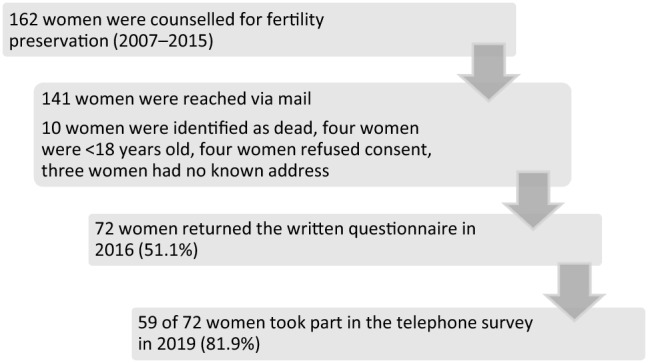
From 2007 to 2015, 162 women aged 26.7 ± 6.9 years were counselled for fertility preservation at a single University Fertility Centre. A questionnaire study was performed in average 3 and 6 years after the diagnosis of cancer. The women were asked about their fertility, partnership, family planning, and pregnancy history. 72 women (51%) answered a written questionnaire in 2016. 59 women were reached again by phone in 2019 (82%).
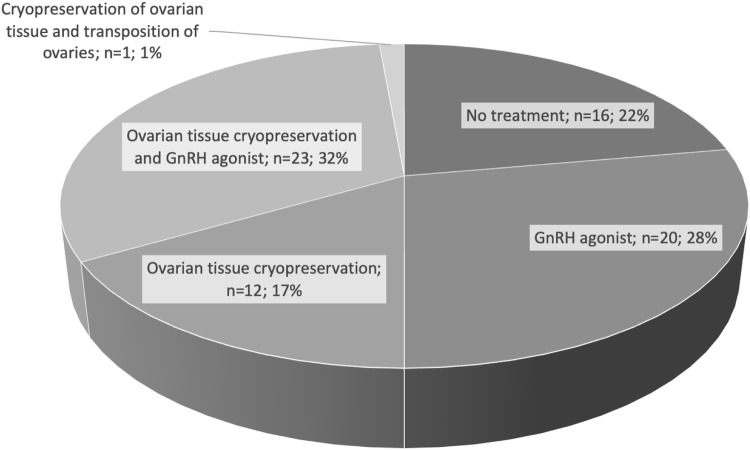
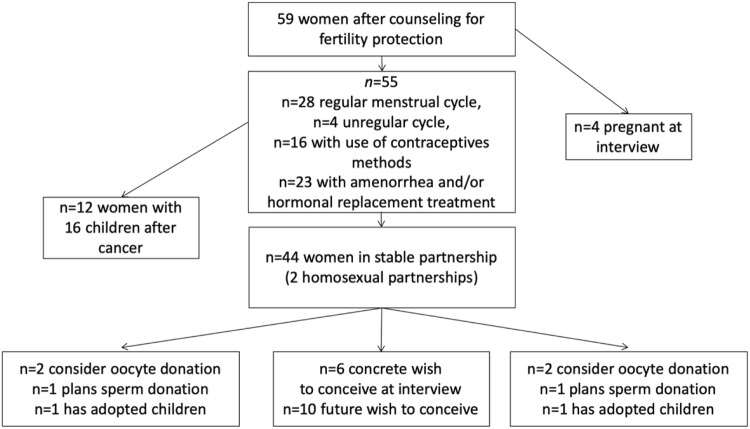
The preferred method of fertility preservation was ovarian tissue cryopreservation (n = 36, 50%); none of the women had ovarian hyperstimulation in order to cryopreserve oocytes. About 3 years after treatment, 37 women of 72 women (51%) of the women with a mean age of 29.9 years had a strong wish to conceive. 21/72 (29%) had actively tried to conceive after successful cancer treatment; eight women (11%) were already pregnant or had children. Six years after cancer diagnosis 16/59 (27%) women had ongoing anticancer treatment. 12/59 (20%) were pregnant or had children, while 39% (23/59) had no menstrual cycle. Only one woman used her cryopreserved ovarian tissue, but did not become pregnant.
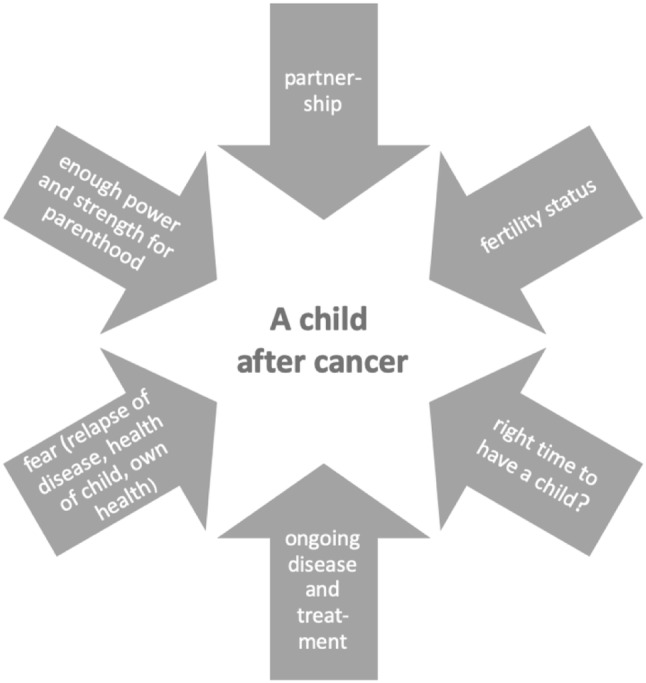
After cancer and gonadotoxic treatment, women's desire to have a child is substantial. In this study, the rate of spontaneous pregnancies and births was 20% 6 years after gonadotoxic therapies. Not every woman, however, has the opportunity to conceive: factors impairing fertility include ongoing cancer treatment or persistent disease, no partner, no menstrual cycle, as well as other reasons for infertility.
由于现代和个体化治疗,生育年龄的女性在癌症治疗后具有较高的生存率。癌症后女性的妊娠和出生率是多少,她们经常使用冷冻卵巢组织或配子吗?
2007 年至 2015 年,在一家大学生育中心对 162 名年龄 26.7±6.9 岁的女性进行了生育力保存咨询。在癌症诊断后 3 年和 6 年平均进行了问卷调查研究。询问女性的生育力、伴侣关系、计划生育和妊娠史。2016 年,72 名女性(51%)回答了书面问卷。2019 年,再次通过电话联系到 59 名女性(82%)。
首选的生育力保存方法是卵巢组织冷冻保存(n=36,50%);为了冷冻保存卵母细胞,没有进行卵巢过度刺激。治疗后约 3 年,72 名女性中有 37 名(51%)年龄 29.9 岁的女性强烈希望怀孕。21/72(29%)名在成功治疗癌症后积极尝试怀孕;8 名女性(11%)已经怀孕或有孩子。癌症诊断后 6 年,16/59(27%)名女性正在接受抗癌治疗。12/59(20%)名女性怀孕或有孩子,而 39%(23/59)名女性没有月经周期。只有一名女性使用了她的冷冻卵巢组织,但没有怀孕。
癌症和性腺毒性治疗后,女性生育孩子的愿望很强烈。在这项研究中,性腺毒性治疗后 6 年,自然妊娠和分娩率为 20%。然而,并非每个女性都有机会怀孕:影响生育力的因素包括正在进行的癌症治疗或持续的疾病、没有伴侣、没有月经周期以及其他不孕原因。