From the Department of Pediatrics, Tongji Hospital, Tongji Medical College, Huazhong University of Science and Technology, Wuhan, Hubei, China.
Department of Pediatrics, Xiangyang No.1 People's Hospital, Hubei University of Medicine, Xiangyang, Hubei, China.
Pediatr Infect Dis J. 2020 Jul;39(7):e87-e90. doi: 10.1097/INF.0000000000002720.
The outbreak of coronavirus disease 2019 (COVID-19) is becoming a global threat. However, our understanding of the clinical characteristics and treatment of critically ill pediatric patients and their ability of transmitting the coronavirus that causes COVID-19 still remains inadequate because only a handful pediatric cases of COVID-19 have been reported.
Epidemiology, clinical characteristics, treatment, laboratory data and follow-up information and the treatment of critically ill infant were recorded.
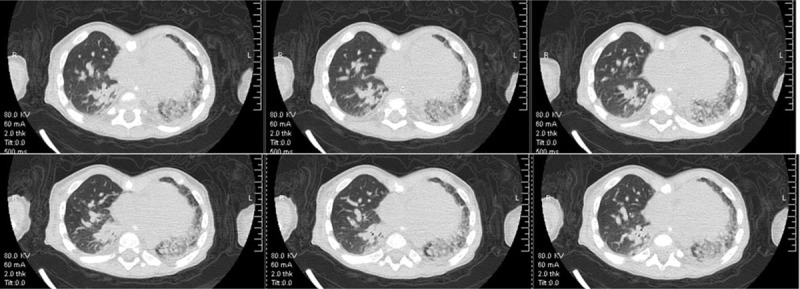
The infant had life-threatening clinical features including high fever, septic shock, recurrent apnea, petechiae and acute kidney injury and persistent declined CD3+, CD4+ and CD8+ T cells. The duration of nasopharyngeal virus shedding lasted for 49 days even with the administration of lopinavir/ritonavir for 8 days. The CD3+, CD4+ and CD8+ T cells was partially recovered 68 days post onset of the disease. Accumulating of effector memory CD4+ T cells (CD4+TEM) was observed among T-cell compartment. The nucleic acid tests and serum antibody for the severe acute respiratory syndrome coronavirus 2 of the infant's mother who kept intimate contact with the infant were negative despite no strict personal protection.
The persistent reduction of CD4+ and CD8+ T cells was the typical feature of critically ill infant with COVID-19. CD4+ and CD8+ T cells might play a key role in aggravating COVID-19 and predicts a more critical course in children. The prolonged nasopharyngeal virus shedding was related with the severity of respiratory injury. The transmission of SARS-CoV-2 from infant (even very critical cases) to adult might be unlikely.
2019 年冠状病毒病(COVID-19)的爆发正在成为全球性威胁。然而,由于仅报道了少数几例 COVID-19 的儿科病例,我们对危重新生儿患者的临床特征和治疗方法以及其传播导致 COVID-19 的冠状病毒的能力仍了解不足。
记录了婴儿的流行病学、临床特征、治疗、实验室数据和随访信息以及对危重新生儿的治疗。
该婴儿具有危及生命的临床特征,包括高热、脓毒性休克、反复呼吸暂停、瘀点和急性肾损伤以及持续下降的 CD3+、CD4+和 CD8+T 细胞。即使在给予洛匹那韦/利托那韦治疗 8 天后,鼻咽病毒脱落仍持续了 49 天。发病后 68 天,CD3+、CD4+和 CD8+T 细胞部分恢复。在 T 细胞群中观察到效应记忆 CD4+T 细胞(CD4+TEM)的积累。尽管未采取严格的个人保护措施,但与婴儿保持密切接触的母亲的严重急性呼吸综合征冠状病毒 2 的核酸检测和血清抗体均为阴性。
CD4+和 CD8+T 细胞持续减少是 COVID-19 危重新生儿的典型特征。CD4+和 CD8+T 细胞可能在加重 COVID-19 中起关键作用,并预示着儿童的病情更严重。鼻咽病毒脱落时间延长与呼吸损伤的严重程度有关。SARS-CoV-2 从婴儿(甚至是非常危急的病例)传播到成人可能不太可能。