S Rodrigues Marco, Fiedler Patrique, Küchler Nora, P Domingues Rui, Lopes Cláudia, Borges Joel, Haueisen Jens, Vaz Filipe
Centro de Física, Universidade do Minho, Campus de Gualtar, 4710-057 Braga, Portugal.
Institute of Biomedical Engineering and Informatics, Technische Universität Ilmenau, 98693 Ilmenau, Germany.
Materials (Basel). 2020 May 5;13(9):2135. doi: 10.3390/ma13092135.
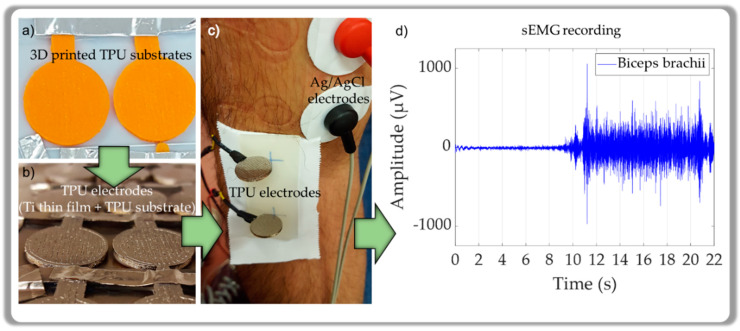
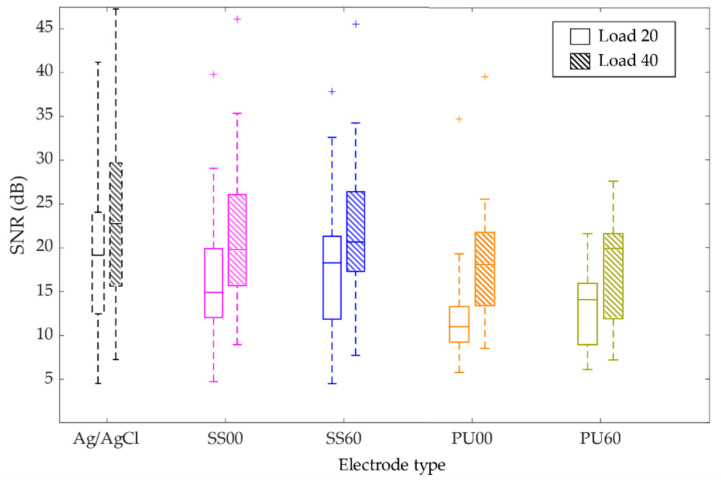
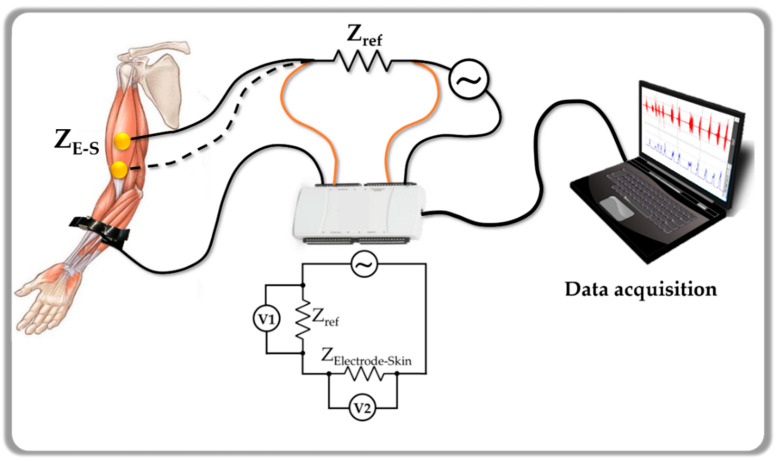
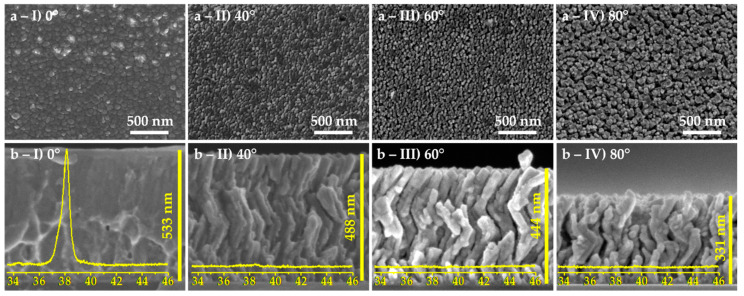
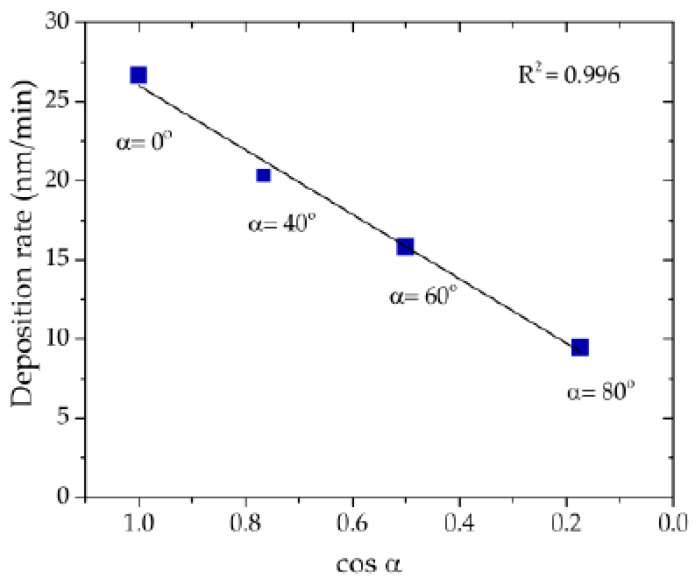
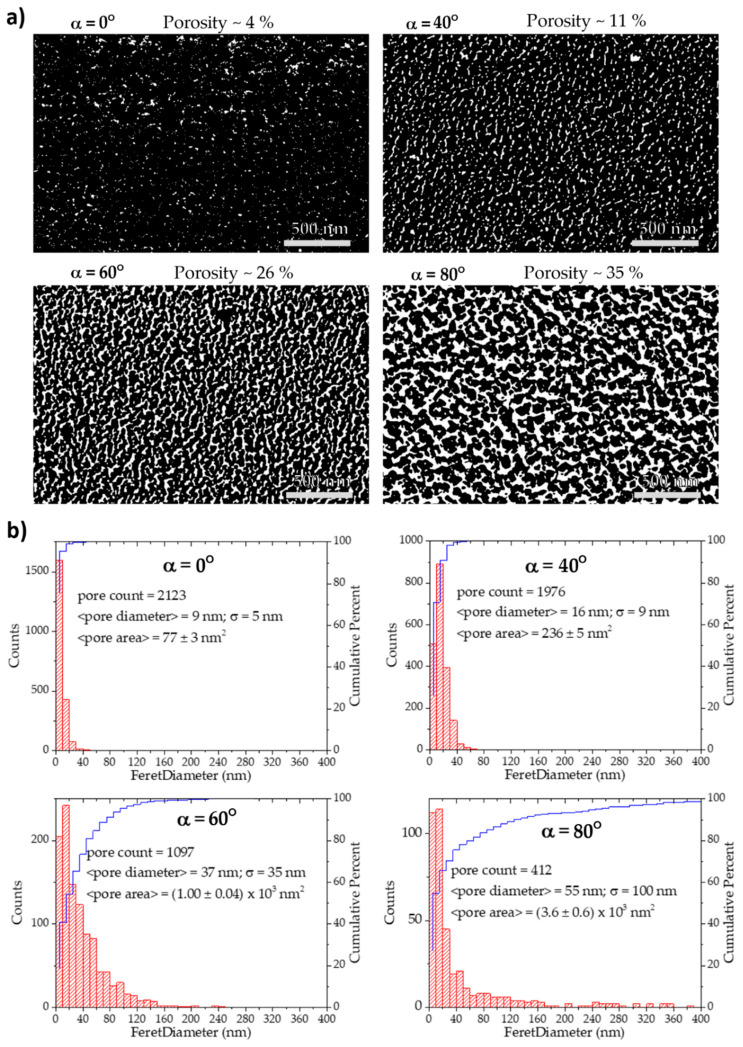
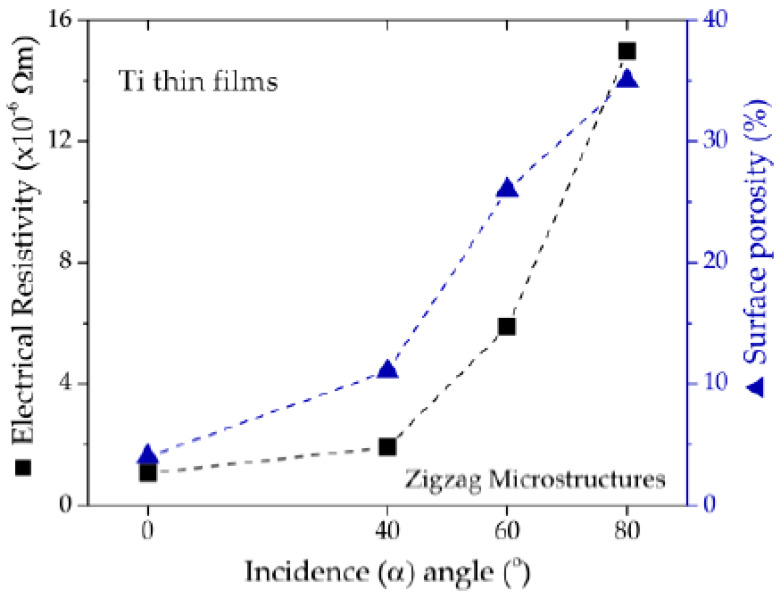
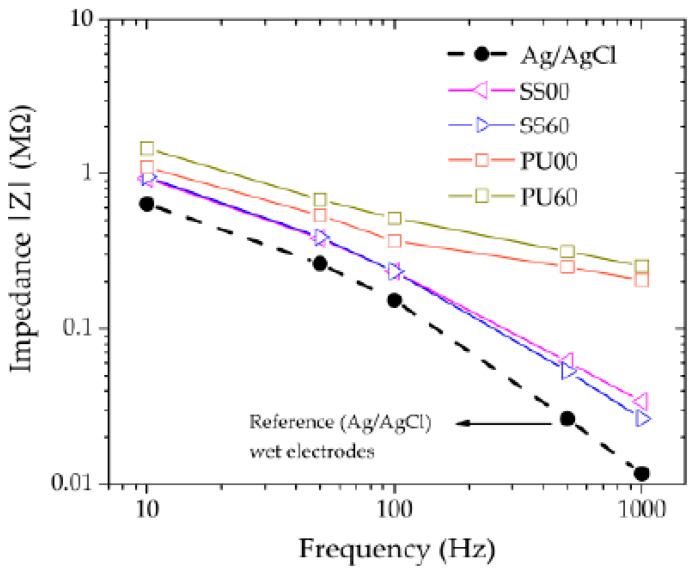
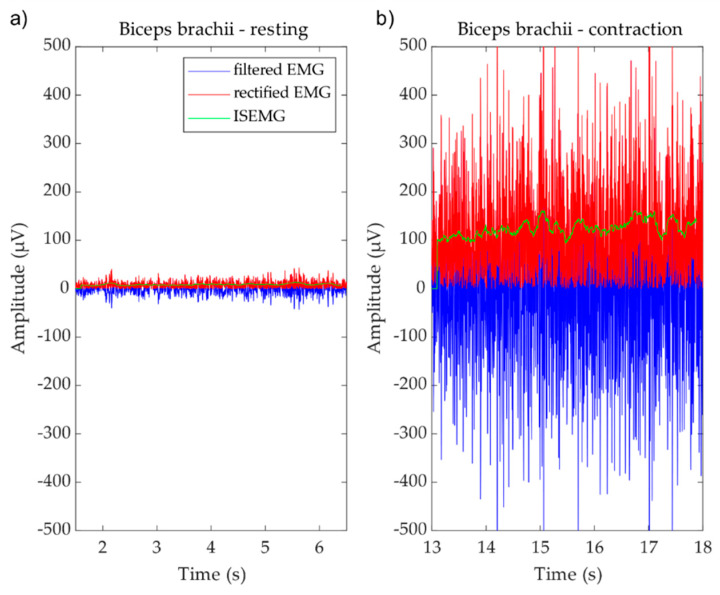
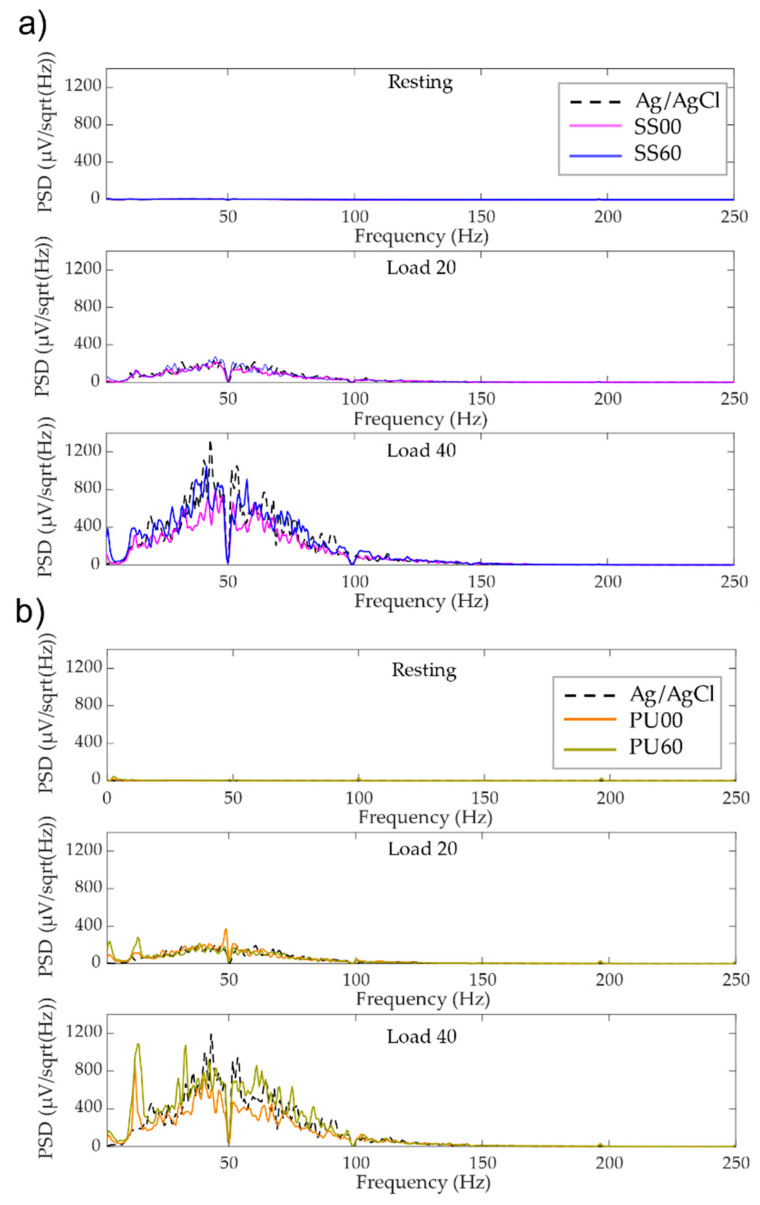
Electrodes of silver/silver chloride (Ag/AgCl) are dominant in clinical settings for surface electromyography (sEMG) recordings. These electrodes need a conductive electrolyte gel to ensure proper performance, which dries during long-term measurements inhibiting the immediate electrode's reuse and is often linked to skin irritation episodes. To overcome these drawbacks, a new type of dry electrodes based on architectured titanium (Ti) thin films were proposed in this work. The architectured microstructures were zigzags, obtained with different sputtering incidence angles (α), which have been shown to directly influence the films' porosity and electrical conductivity. The electrodes were prepared using thermoplastic polyurethane (TPU) and stainless-steel (SS) substrates, and their performance was tested in male volunteers (athletes) by recording electromyography (EMG) signals, preceded by electrode-skin impedance measurements. In general, the results showed that both SS and TPU dry electrodes can be used for sEMG recordings. While SS electrodes almost match the signal quality parameters of reference electrodes of Ag/AgCl, the performance of electrodes based on TPU functionalized with a Ti thin film still requires further improvements. Noteworthy was the clear increase of the signal to noise ratios when the thin films' microstructure evolved from normal growth towards zigzag microstructures, meaning that further tailoring of the thin film microstructure is a possible route to achieve optimized performances. Finally, the developed dry electrodes are reusable and allow for multiple EMG recordings without being replaced.
银/氯化银(Ag/AgCl)电极在临床表面肌电图(sEMG)记录中占主导地位。这些电极需要导电电解质凝胶来确保正常性能,而在长期测量过程中凝胶会变干,这会阻碍电极立即重复使用,并且常常与皮肤刺激事件相关联。为了克服这些缺点,本文提出了一种基于结构化钛(Ti)薄膜的新型干电极。结构化微结构为锯齿形,通过不同的溅射入射角(α)获得,已证明其直接影响薄膜的孔隙率和电导率。电极采用热塑性聚氨酯(TPU)和不锈钢(SS)基板制备,并在男性志愿者(运动员)中通过记录肌电图(EMG)信号来测试其性能,测试前先进行电极 - 皮肤阻抗测量。总体而言,结果表明SS和TPU干电极均可用于sEMG记录。虽然SS电极几乎与Ag/AgCl参比电极的信号质量参数相当,但基于用Ti薄膜功能化的TPU电极的性能仍需进一步改进。值得注意的是,当薄膜微观结构从正常生长向锯齿形微观结构演变时,信噪比明显增加,这意味着进一步调整薄膜微观结构是实现优化性能的一条可行途径。最后,所开发的干电极可重复使用,允许进行多次EMG记录而无需更换。