Great Network, 00191 Rome, Italy.
Department of Emergency and Time Dependent Networks, 84124 ASL Salerno, Italy.
Medicina (Kaunas). 2020 May 5;56(5):218. doi: 10.3390/medicina56050218.
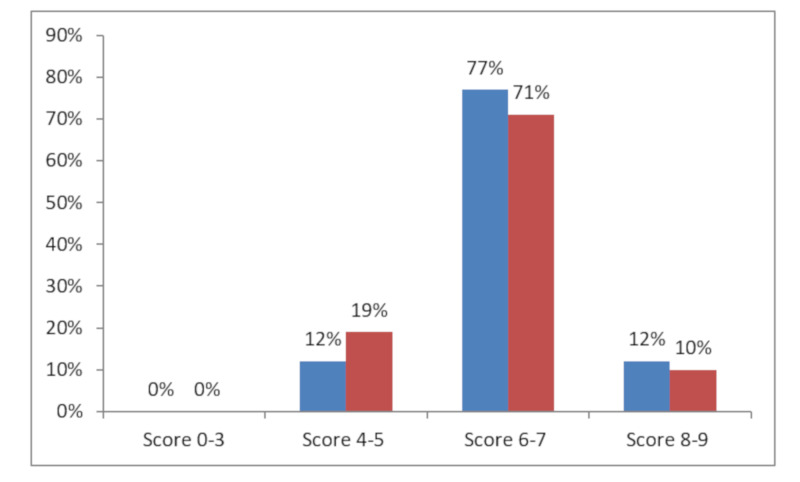
Nonagenarians and centenarians (NCs) are an extremely fragile population, particularly in regard to their physical and cognitive function. The aim of this study was to define the neurocognitive profiles among 29 NCs and their 49 younger cohabitants aged 50-75 years from The Cilento Initiative on Aging Outcomes (CIAO) Pilot study in the South of Italy that had provided initial hypotheses regarding positive psychological traits related to exceptional longevity. : During the home visits, lifestyle information with specific questionnaires, functional autonomy and the neuropsychological Mini Mental Scale Examination (MMSE), and the Alzheimer's Disease Assessment Scale-Cognitive (ADAS-Cog) scale were obtained by qualified study personnel. The total blood oxidative capacity was also determined by testing the reactive derivative of oxygen metabolites (d-ROM) and by the Biological Antioxidant Potential (BAP). In all individuals, the APOE genotype determination was also performed. : All the subjects in both groups showed high adherence to the Mediterranean Diet. None of the NCs had severe cognitive impairment, and a very low incidence of dementia was found. The data obtained on the Activities ed Instrumental Activities of Daily Living (ADL-IADL) scale showed that the majority of NCs (16/29) were autonomous in daily life activities. The comparative assessment of NCs and cohabitants showed no significant differences in the laboratory assessment of oxidative stress and APOE genotype. In the Cilento Region of Southern Italy, NCs seemed to have good cognitive status when compared to younger cohabitants aging 50-65 years without significant differences in oxidative stress markers or APOE genotype. These results might be related to optimal adherence to the Mediterranean diet, although other lifestyle factors and positive personality traits may also contribute to their healthy aging. Further studies on a larger population should be performed to confirm the results of this pilot study.
九十岁及以上高龄者(NCs)的身体和认知功能非常脆弱。本研究旨在定义意大利南部 Cilento Initiative on Aging Outcomes(CIAO)试点研究中 29 名 NCs 及其 49 名年龄在 50-75 岁之间的年轻同居者的神经认知特征,这些同居者提供了与异常长寿相关的积极心理特征的初步假设。:在家庭访问期间,由合格的研究人员获取生活方式信息,包括特定的问卷、功能自主性和神经心理 Mini 精神状态检查(MMSE),以及阿尔茨海默病评估量表-认知(ADAS-Cog)量表。还通过测试氧代谢物的反应衍生物(d-ROM)和生物抗氧化潜力(BAP)来确定总血液氧化能力。在所有个体中,还进行了 APOE 基因型测定。:两组所有受试者均高度遵循地中海饮食。NC 组中没有严重认知障碍,痴呆症发病率非常低。在 ADL-IADL 量表上获得的数据表明,大多数 NC(29 人中的 16 人)在日常生活活动中是自主的。NC 与同居者的比较评估显示,在氧化应激和 APOE 基因型的实验室评估方面,两者没有显著差异。在意大利南部的 Cilento 地区,与年龄在 50-65 岁之间的年轻同居者相比,NC 似乎具有良好的认知状态,氧化应激标志物或 APOE 基因型没有显著差异。这些结果可能与对地中海饮食的最佳依从性有关,尽管其他生活方式因素和积极的人格特征也可能有助于他们的健康衰老。应该在更大的人群中进行进一步的研究,以证实这项试点研究的结果。