Chen Geng, Wu Shuodong
Department of General Surgery, Shengjing Hospital of China Medical University, Shenyang 110004, China.
Department of General Surgery, The First Affiliated Hospital of Dalian Medical University, Dalian 116600, China.
Gastroenterol Res Pract. 2020 Apr 21;2020:1343969. doi: 10.1155/2020/1343969. eCollection 2020.
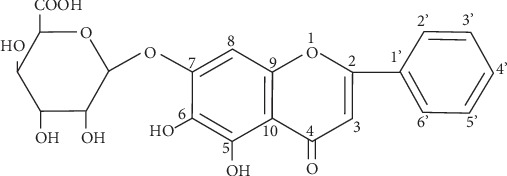
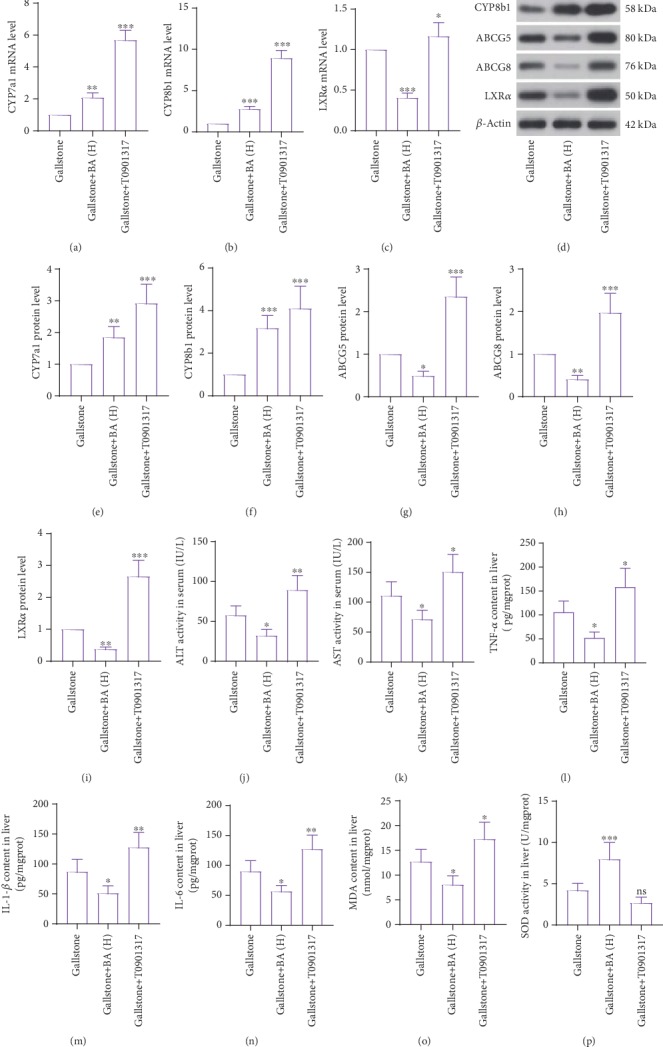
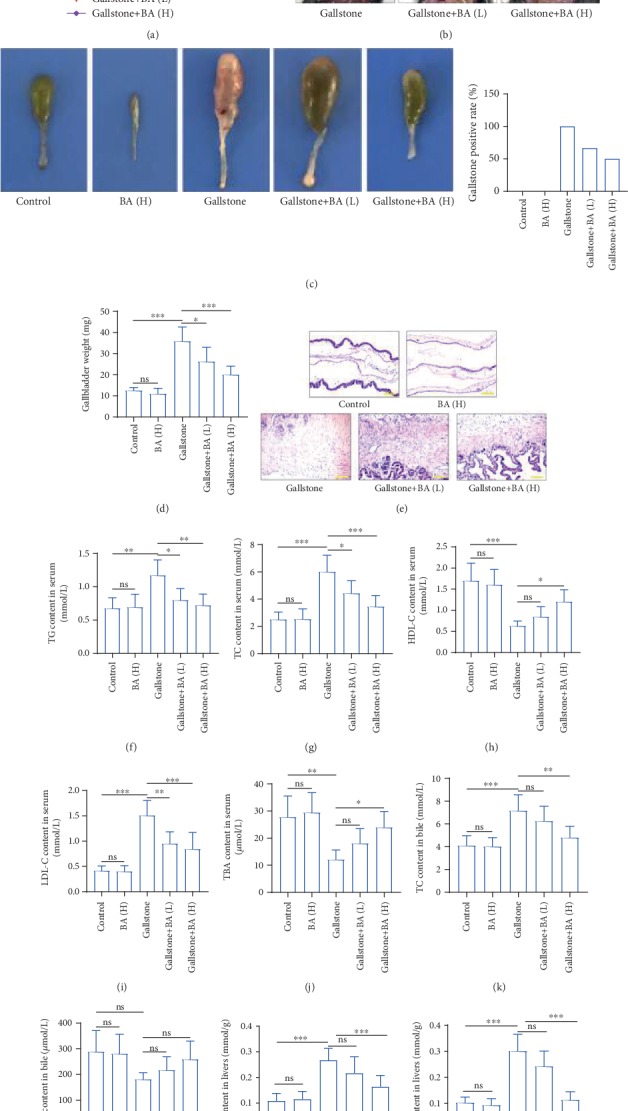
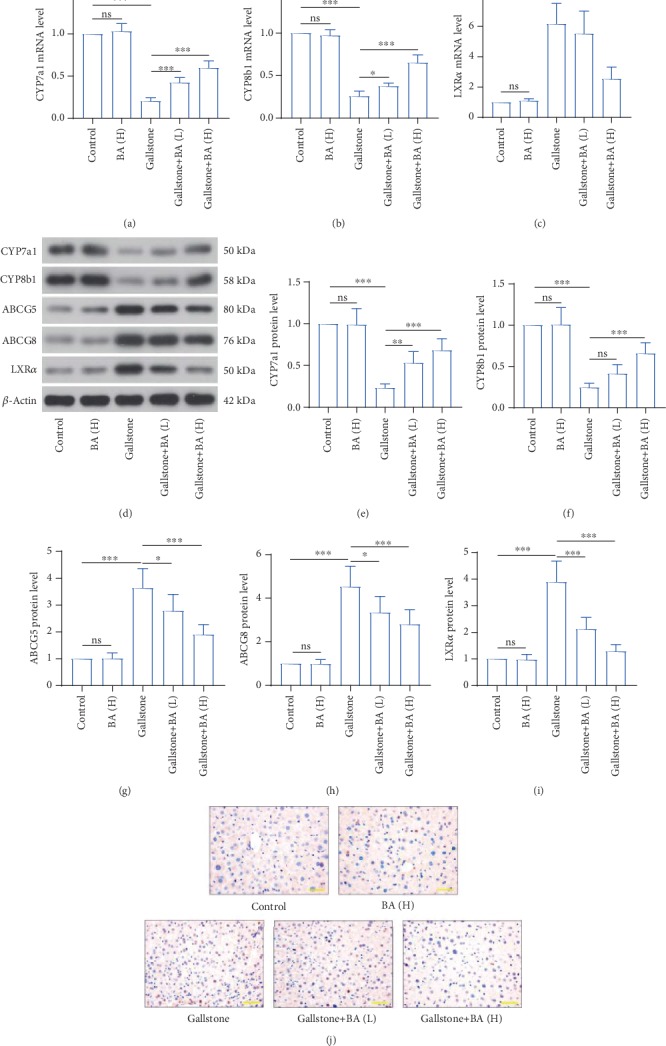
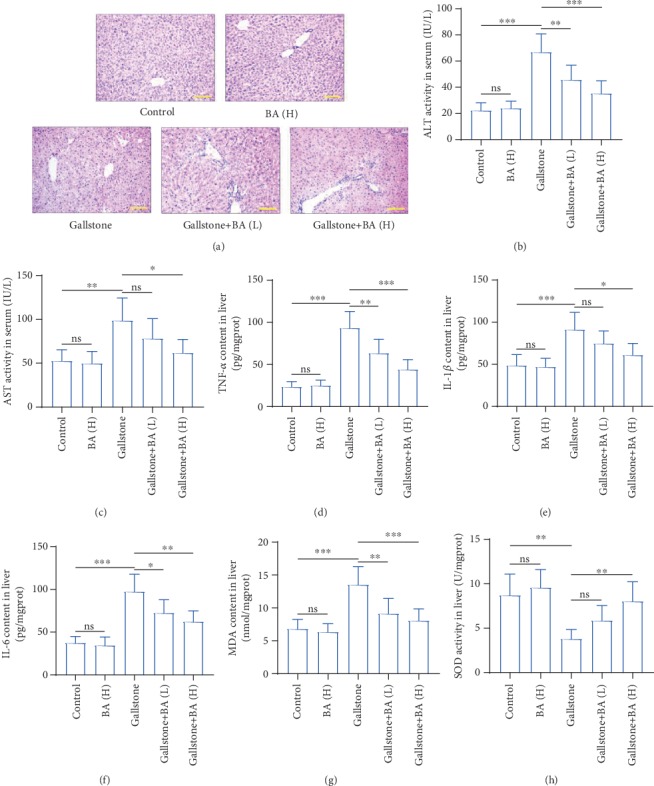
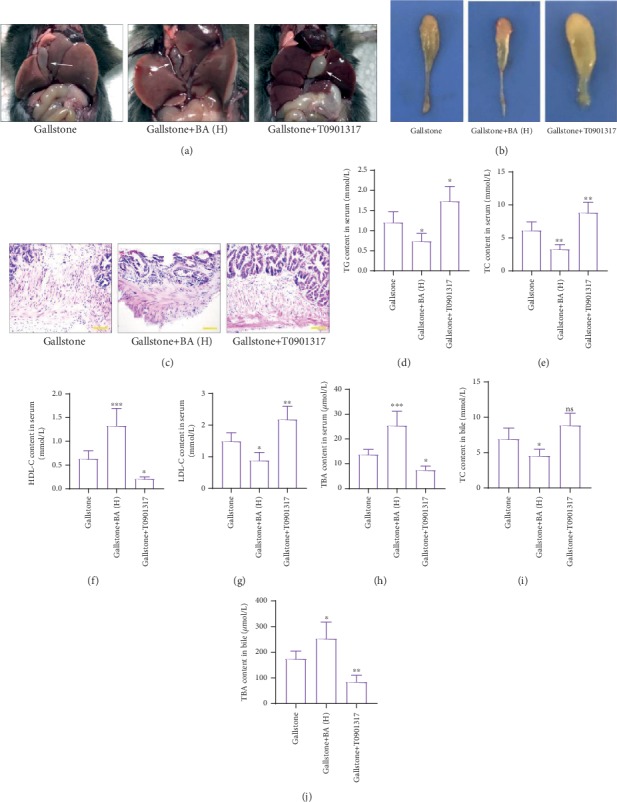
This study was aimed at investigating the effect of baicalin on experimental cholesterol gallstones in mice. The mouse gallstone model was induced by feeding with a lithogenic diet, and cholesterol stones were found in the gallbladder. The lithogenic diet caused elevation of triglycerides, cholesterol, and low-density lipoprotein concentrations and descent of high-density lipoprotein concentration in serum. Hyperplasia and inflammatory infiltration were observed in the gallbladder wall of lithogenic diet-fed mice. We also found the increase of cholesterol content and the decrease of bile acid in bile. Real-time PCR and western blot results demonstrated that the expression levels of two enzymes (cholesterol 7-hydroxylase (CYP7a1) and sterol 12-hydroxylase (CYP8b1)) to catalyze the synthesis of bile acid from cholesterol were decreased and that two cholesterol transporters (ATP-binding cassette transporter G5/G8 (ABCG5/8)) were increased in the liver of lithogenic diet-fed mice. The lithogenic diet also led to enhanced activity of alanine aminotransferase and aspartate aminotransferase in serum; increased concentrations of tumor necrosis factor-, interleukin- (IL-) 1, IL-6, and malondialdehyde; and decreased superoxide dismutase activity in the liver, suggesting inflammatory and oxidative stress. In addition, liver X receptor alpha (LXR) was increased in the liver. After gavage of baicalin, the lithogenic diet-induced gallstones, hyperlipidemia, gallbladder hyperplasia, inflammation, and oxidative stress in liver and cholesterol metabolism disorders were all alleviated to some degree. The expression of LXR in the liver was inhibited by baicalin. In addition, the LXR agonist T0901317 aggravated lithogenic diet-induced harmful symptoms in mice, including the increase of gallstone formation, hyperlipidemia, hepatic injury, inflammation, and oxidative stress. In conclusion, we demonstrated that baicalin played a protective role in a lithogenic diet-induced gallstone mouse model, which may be mediated by inhibition of LXR activity. These findings may provide novel insights for prevention and therapy of gallstones in the clinic.
本研究旨在探讨黄芩苷对小鼠实验性胆固醇性胆结石的影响。通过给予致石饮食诱导小鼠胆结石模型,在胆囊中发现了胆固醇结石。致石饮食导致血清中甘油三酯、胆固醇和低密度脂蛋白浓度升高,高密度脂蛋白浓度下降。在喂食致石饮食的小鼠胆囊壁中观察到增生和炎症浸润。我们还发现胆汁中胆固醇含量增加,胆汁酸减少。实时荧光定量聚合酶链反应(Real-time PCR)和蛋白质免疫印迹(western blot)结果表明,在喂食致石饮食的小鼠肝脏中,两种催化胆固醇合成胆汁酸的酶(胆固醇7α-羟化酶(CYP7a1)和甾醇12α-羟化酶(CYP8b1))的表达水平降低,而两种胆固醇转运蛋白(ATP结合盒转运体G5/G8(ABCG5/8))增加。致石饮食还导致血清中丙氨酸氨基转移酶和天冬氨酸氨基转移酶活性增强;肿瘤坏死因子-α、白细胞介素-1(IL-1)、IL-6和丙二醛浓度升高;肝脏中超氧化物歧化酶活性降低,提示存在炎症和氧化应激。此外,肝脏中肝脏X受体α(LXR)增加。灌胃黄芩苷后,致石饮食诱导的胆结石、高脂血症、胆囊增生、炎症以及肝脏氧化应激和胆固醇代谢紊乱均得到一定程度的缓解。黄芩苷抑制了肝脏中LXR的表达。此外,LXR激动剂T0901317加重了致石饮食诱导的小鼠有害症状,包括胆结石形成增加、高脂血症、肝损伤、炎症和氧化应激。总之,我们证明黄芩苷在致石饮食诱导的胆结石小鼠模型中发挥了保护作用,这可能是通过抑制LXR活性介导的。这些发现可能为临床胆结石的预防和治疗提供新的见解。