Huang Wei, Mehta Kamal D
Department of Biological Chemistry and Pharmacology, Dorothy M. Davis Heart and Lung Research Institute, Ohio State University College of Medicine, Columbus, Ohio.
Cell Mol Gastroenterol Hepatol. 2015 Jun 3;1(4):395-405. doi: 10.1016/j.jcmgh.2015.05.008. eCollection 2015 Jul.
BACKGROUND & AIMS: Dietary factors are likely an important determinant of gallstone development, and difficulty in adapting to lithogenic diets may predispose individuals to gallstone formation. Identification of the critical early diet-dependent metabolic markers of adaptability is urgently needed to prevent gallstone development. We focus on the interaction between diet and genes, and the resulting potential to influence gallstone risk by dietary modification.
Expression levels of hepatic protein kinase C (PKC) isoforms were determined in lithogenic diet-fed mice, and the relationship of hepatic cholesterol content and PKCβ expression and the effect of hepatic PKCβ overexpression on intracellular signaling pathways were analyzed.
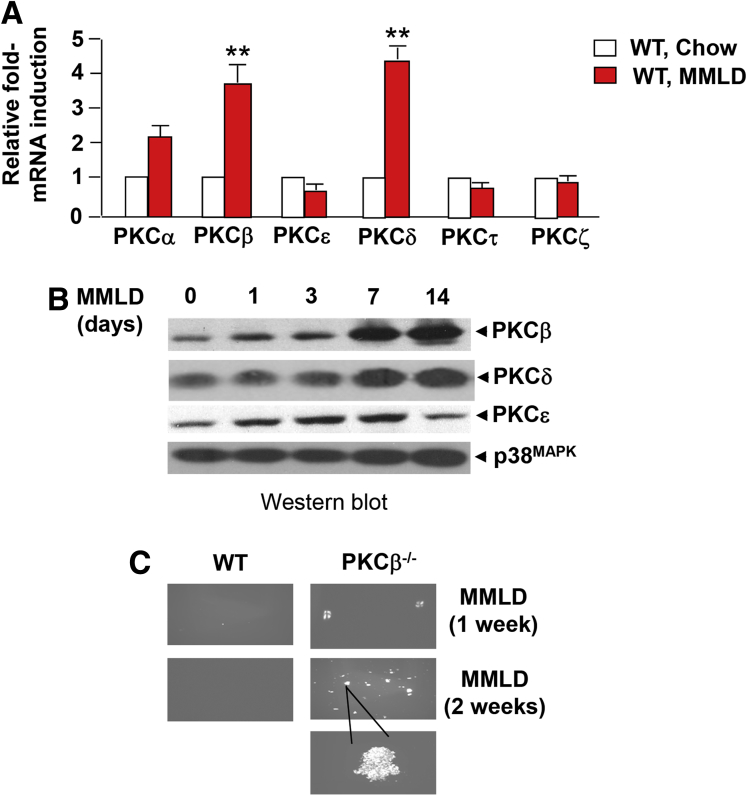
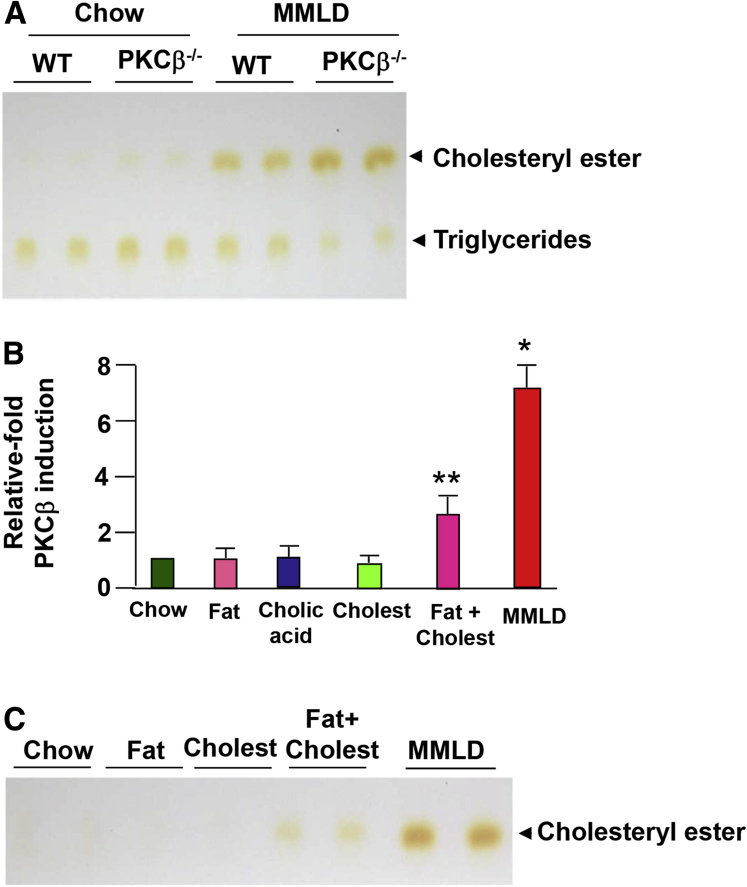
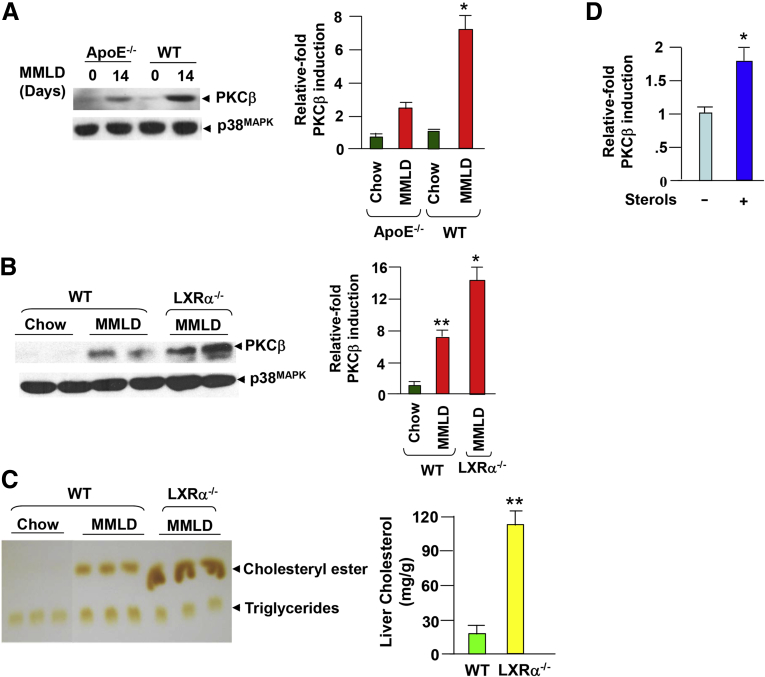
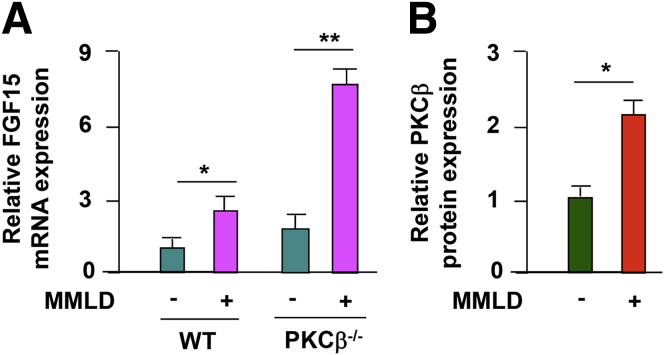
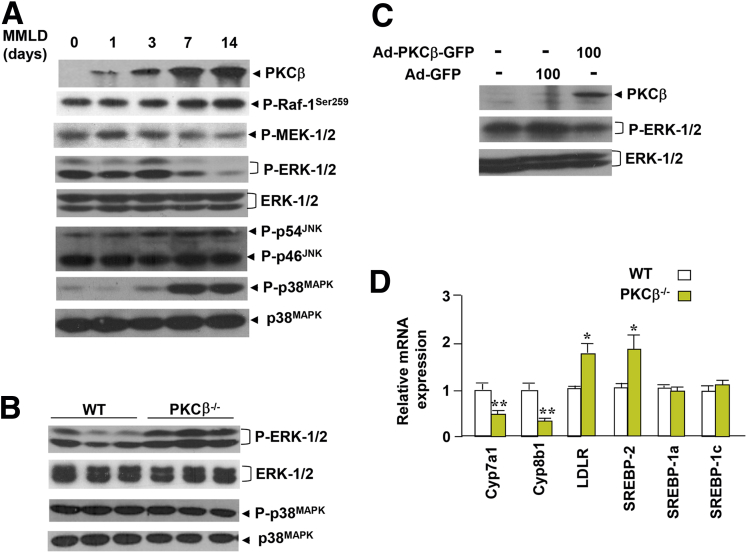
Lithogenic diet feeding resulted in a striking induction of hepatic PKCβ and PKCδ mRNA and protein levels, which preceded the appearance of biliary cholesterol crystals. Unlike PKCβ deficiency, global PKCδ deficiency did not influence lithogenic diet-induced gallstone formation. Interestingly, a deficiency of apolipoprotein E abrogated the diet-induced hepatic PKCβ expression, whereas a deficiency of liver X receptor-α further potentiated the induction, suggesting a potential link between the degree of hepatic PKCβ induction and the intracellular cholesterol content. Furthermore, our results suggest that PKCβ is a physiologic repressor of ileum basal fibroblast growth factor 15 (FGF15) expression and activity of hepatic proto-oncogene serine/threonine-protein kinase Raf-1/mitogen-activated protein (MAP) kinase kinase/extracellular signal-regulated kinases 1/2 (Raf-1/MEK/ERK1/2) cascade proteins, and the complex interactions between these pathways may determine the degree of hepatic ERK1/2 activation, a potent suppressor of cholesterol 7α-hydroxylase and sterol 12α-hydroxylase expression. We found that PKCβ regulated Raf-1 activity by modulating the inhibitory Raf-1 phosphorylation.
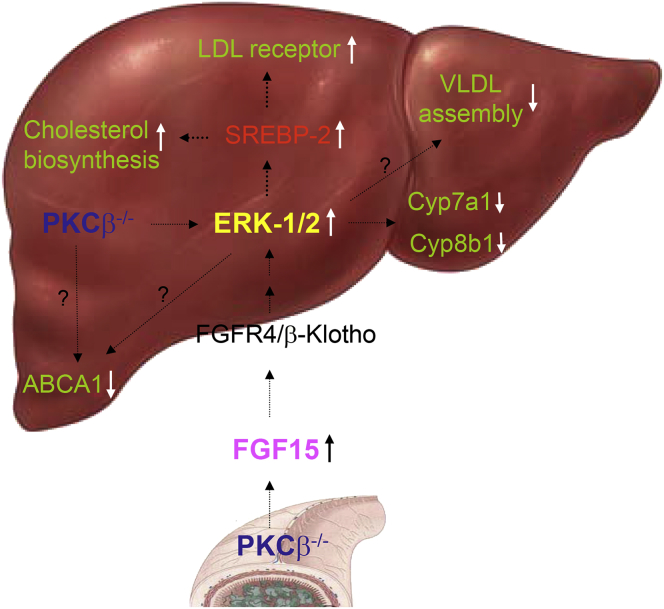
Our results demonstrate a novel interaction between the hepatic PKCβ/Raf-1 regulatory axis and ileum PKCβ/FGF15/ERK axis, which could modulate the bile lithogenecity of dietary lipids. The data presented are consistent with a two-pronged mechanism by which intestine and liver PKCβ signaling converges on the liver ERK1/2 pathway to control the hepatic adaptive response to a lithogenic diet. Elucidating the impact and the underlying mechanism(s) of PKCβ action could help us understand how different types of dietary fat modify the risk of gallstone formation, information that could help to identify novel targets for therapeutic approaches to combat this disease.
饮食因素可能是胆结石形成的重要决定因素,难以适应致石性饮食可能使个体易患胆结石。迫切需要确定适应性关键的早期饮食依赖性代谢标志物以预防胆结石形成。我们关注饮食与基因之间的相互作用,以及通过饮食调整影响胆结石风险的潜在可能性。
测定致石性饮食喂养小鼠肝脏蛋白激酶C(PKC)同工型的表达水平,分析肝脏胆固醇含量与PKCβ表达的关系以及肝脏PKCβ过表达对细胞内信号通路的影响。
致石性饮食喂养导致肝脏PKCβ和PKCδ mRNA及蛋白水平显著诱导,这先于胆汁胆固醇晶体的出现。与PKCβ缺乏不同,全身性PKCδ缺乏不影响致石性饮食诱导的胆结石形成。有趣的是,载脂蛋白E缺乏消除了饮食诱导的肝脏PKCβ表达,而肝脏X受体α缺乏进一步增强了这种诱导,提示肝脏PKCβ诱导程度与细胞内胆固醇含量之间存在潜在联系。此外,我们的结果表明PKCβ是回肠基础成纤维细胞生长因子15(FGF15)表达以及肝脏原癌基因丝氨酸/苏氨酸蛋白激酶Raf-1/丝裂原活化蛋白(MAP)激酶激酶/细胞外信号调节激酶1/2(Raf-1/MEK/ERK1/2)级联蛋白活性的生理抑制因子,这些通路之间的复杂相互作用可能决定肝脏ERK1/2活化程度,ERK1/2是胆固醇7α-羟化酶和固醇12α-羟化酶表达的有效抑制因子。我们发现PKCβ通过调节抑制性Raf-1磷酸化来调节Raf-1活性。
我们的结果证明了肝脏PKCβ/Raf-1调节轴与回肠PKCβ/FGF15/ERK轴之间存在新的相互作用,这可能调节饮食脂质的胆汁致石性。所呈现的数据与一种双管齐下的机制一致,即肠道和肝脏PKCβ信号在肝脏ERK1/2途径上汇聚,以控制肝脏对致石性饮食的适应性反应。阐明PKCβ作用的影响及潜在机制有助于我们理解不同类型的膳食脂肪如何改变胆结石形成风险,这些信息有助于确定对抗该疾病治疗方法的新靶点。