Ling Feng, Yoshida Minoru
Chemical Genetics Research Group, RIKEN Center for Sustainable Resource Science, Hirosawa 2-1, Wako, Saitama 351-0198, Japan.
Graduate School of Science and Engineering, Saitama University, Saitama 338-8570, Japan.
Genes (Basel). 2020 May 6;11(5):514. doi: 10.3390/genes11050514.
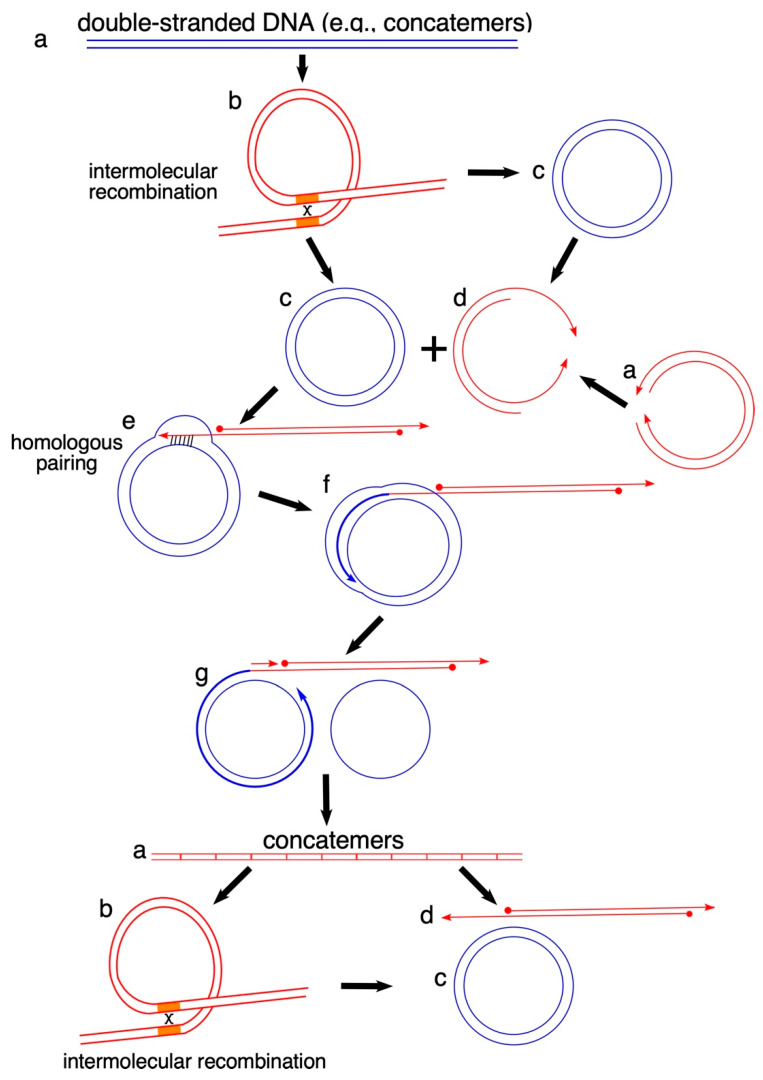
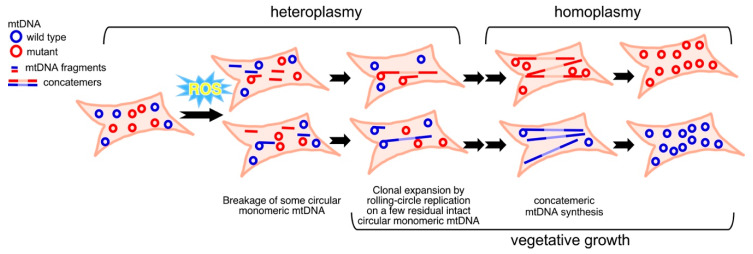
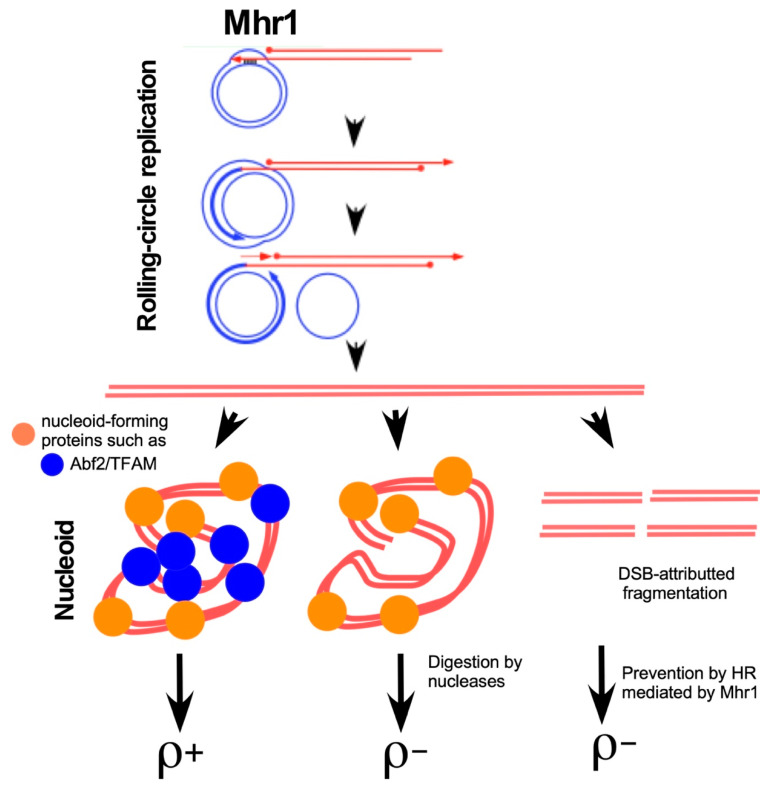
Studies of mitochondrial (mt)DNA replication, which forms the basis of mitochondrial inheritance, have demonstrated that a rolling-circle replication mode exists in yeasts and human cells. In yeast, rolling-circle mtDNA replication mediated by homologous recombination is the predominant pathway for replication of wild-type mtDNA. In human cells, reactive oxygen species (ROS) induce rolling-circle replication to produce concatemers, linear tandem multimers linked by head-to-tail unit-sized mtDNA that promote restoration of homoplasmy from heteroplasmy. The event occurs ahead of mtDNA replication mechanisms observed in mammalian cells, especially under higher ROS load, as newly synthesized mtDNA is concatemeric in hydrogen peroxide-treated human cells. Rolling-circle replication holds promise for treatment of mtDNA heteroplasmy-attributed diseases, which are regarded as incurable. This review highlights the potential therapeutic value of rolling-circle mtDNA replication.
线粒体(mt)DNA复制是线粒体遗传的基础,相关研究表明,酵母和人类细胞中存在滚环复制模式。在酵母中,由同源重组介导的滚环mtDNA复制是野生型mtDNA复制的主要途径。在人类细胞中,活性氧(ROS)诱导滚环复制以产生多联体,即由头对头单位大小的mtDNA连接而成的线性串联多聚体,可促进异质性向同质性的恢复。该事件发生在哺乳动物细胞中观察到的mtDNA复制机制之前,尤其是在较高ROS负荷下,因为在过氧化氢处理的人类细胞中,新合成的mtDNA是多联体形式。滚环复制有望用于治疗被认为无法治愈的mtDNA异质性相关疾病。本综述强调了滚环mtDNA复制的潜在治疗价值。