Department of Geriatrics, Sichuan Provincial People's Hospital, University of Electronic Science and Technology of China, Chengdu, Sichuan, China (mainland).
Department of Neurology, Sichuan Provincial People's Hospital, University of Electronic Science and Technology of China, Chengdu, Sichuan, China (mainland).
Med Sci Monit. 2022 Mar 9;28:e934679. doi: 10.12659/MSM.934679.
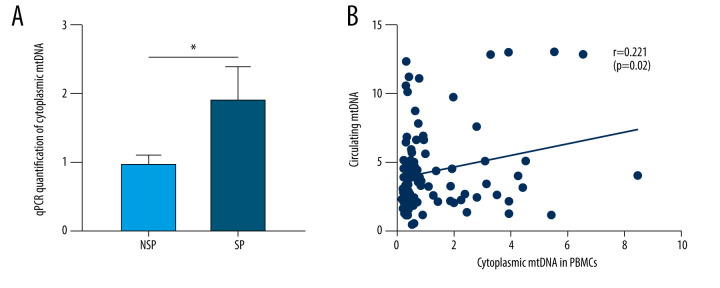
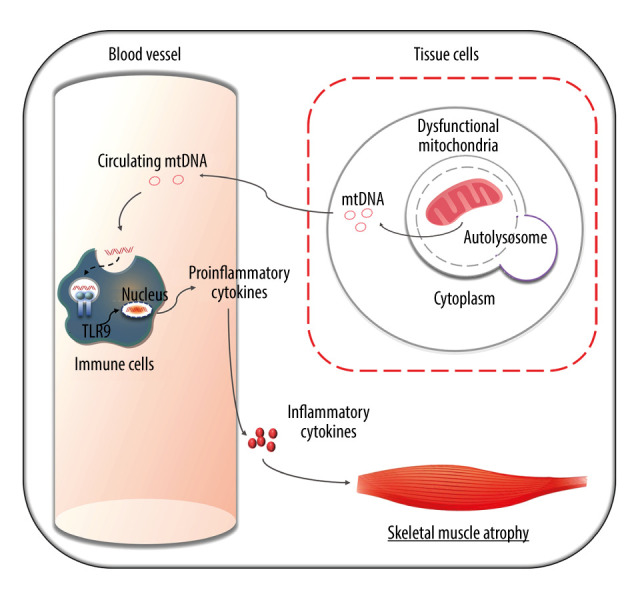
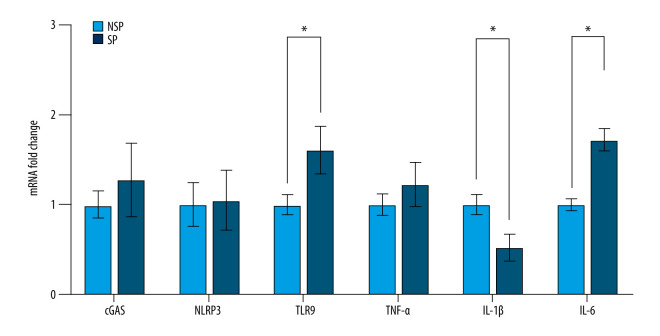
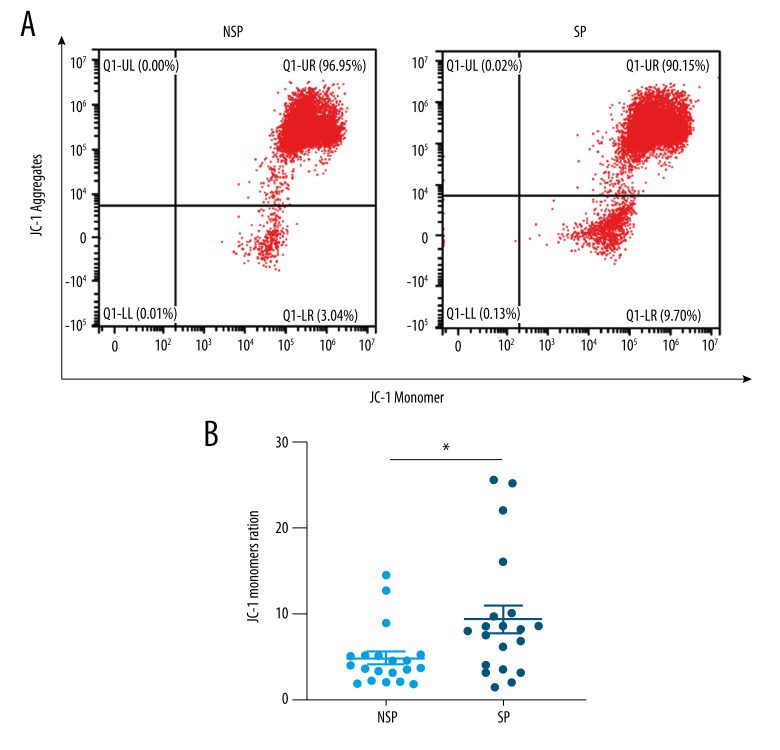
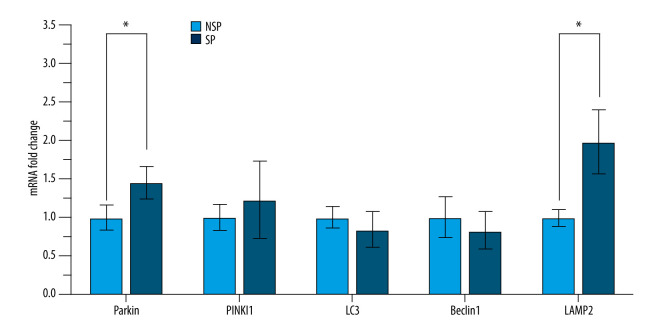
BACKGROUND Mitochondrial impairment and exaggerated inflammation are hallmarks of sarcopenia. Recently, cell-free mitochondrial DNA (cf-mtDNA) has been in the spotlight as an endogenous danger molecule that can potentially elicit inflammation. Yet, its actual impact on sarcopenia, especially in patients with maintenance hemodialysis (MHD), is still at an early stage of investigation. MATERIAL AND METHODS A total of 105 MHD patients were enrolled in this study. The subjects were classified into sarcopenia group (SP) and non-sarcopenia group (NSP) according to the DXA scan and grip strength. Plasma and peripheral blood mononuclear cells (PBMCs) were separated from whole blood. Circulating cf-mtDNA (ccf-mtDNA) was detected using Taq Man RT-qPCR. Cytosolic mtDNA and inflammation- and mitophagy-related genes in PBMCs were quantitated using SYBR Green RT-qPCR. ΔΨm was analyzed using the fluorescent probe JC-1. RESULTS ccf-mtDNA content was significantly higher in SP group than in NSP group. Multivariate regression analysis showed a significant correlation of ccf-mtDNA with sarcopenia after adjusting for potential confounders. A similar trend of increased mtDNA was also observed in the mitochondria-free cytoplasm of PBMCs from SP patients, together with higher expression of TLR9 and IL-6 in this group. Next, using PBMCs as surrogates for mitochondria-rich cells, we found that ΔΨm was dramatically decreased in the SP group. In parallel, the mRNA levels of mitophagy-related genes Parkin and LAMP2 were increased in the SP group. CONCLUSIONS The results obtained demonstrated that ccf-mtDNA, as a potential driver of inflammatory component, may be involved in the pathogenesis of the MHD-related sarcopenia.
线粒体损伤和炎症反应过度是肌肉减少症的特征。最近,作为一种潜在的内源性危险分子,无细胞线粒体 DNA(cf-mtDNA)引起了人们的关注,它可能引发炎症。然而,其对肌肉减少症的实际影响,特别是在维持性血液透析(MHD)患者中,仍处于研究的早期阶段。
本研究共纳入 105 例 MHD 患者。根据 DXA 扫描和握力将受试者分为肌肉减少症组(SP)和非肌肉减少症组(NSP)。从全血中分离血浆和外周血单个核细胞(PBMC)。使用 Taq Man RT-qPCR 检测循环 cf-mtDNA(ccf-mtDNA)。使用 SYBR Green RT-qPCR 定量 PBMC 中细胞质 mtDNA 及炎症和自噬相关基因。使用荧光探针 JC-1 分析 ΔΨm。
SP 组 ccf-mtDNA 含量明显高于 NSP 组。多元回归分析显示,在校正潜在混杂因素后,ccf-mtDNA 与肌肉减少症显著相关。来自 SP 患者的 PBMC 无线粒体细胞质中也观察到 mtDNA 增加的相似趋势,同时该组 TLR9 和 IL-6 的表达增加。接下来,使用 PBMC 作为富含线粒体细胞的替代物,我们发现 SP 组的 ΔΨm 显著降低。同时,SP 组自噬相关基因 Parkin 和 LAMP2 的 mRNA 水平升高。
研究结果表明,作为炎症成分的潜在驱动因素,ccf-mtDNA 可能参与了 MHD 相关肌肉减少症的发病机制。