Department of Cellular and Integrative Physiology, University of Nebraska Medical Center, 985850 Nebraska Medical Center, Omaha, NE, 68198-5850, USA.
Division of Basic Biomedical Sciences, Sanford School of Medicine of the University of South Dakota, Vermillion, SD, USA.
Cardiovasc Diabetol. 2020 May 8;19(1):57. doi: 10.1186/s12933-020-01029-0.
Glucagon-like peptide-1 (GLP-1) induces diuresis and natriuresis. Previously we have shown that GLP-1 activates afferent renal nerve to increase efferent renal sympathetic nerve activity that negates the diuresis and natriuresis as a negative feedback mechanism in normal rats. However, renal effects of GLP-1 in heart failure (HF) has not been elucidated. The present study was designed to assess GLP-1-induced diuresis and natriuresis in rats with HF and its interactions with renal nerve activity.
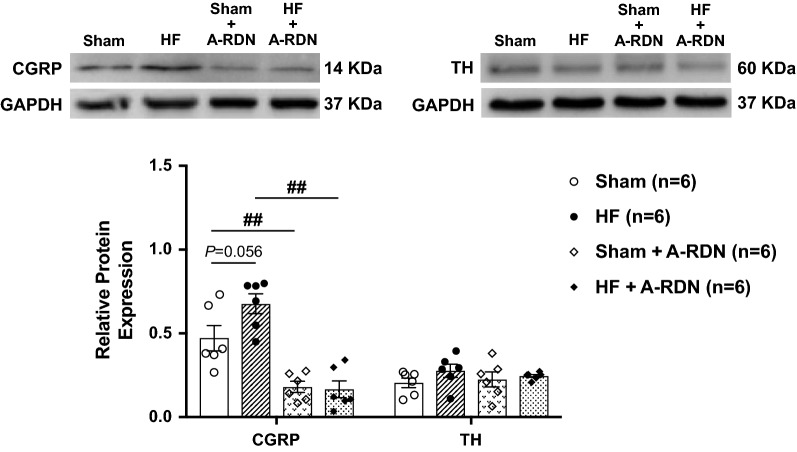
HF was induced in rats by coronary artery ligation. The direct recording of afferent renal nerve activity (ARNA) with intrapelvic injection of GLP-1 and total renal sympathetic nerve activity (RSNA) with intravenous infusion of GLP-1 were performed. GLP-1 receptor expression in renal pelvis, densely innervated by afferent renal nerve, was assessed by real-time PCR and western blot analysis. In separate group of rats after coronary artery ligation selective afferent renal denervation (A-RDN) was performed by periaxonal application of capsaicin, then intravenous infusion of GLP-1-induced diuresis and natriuresis were evaluated.
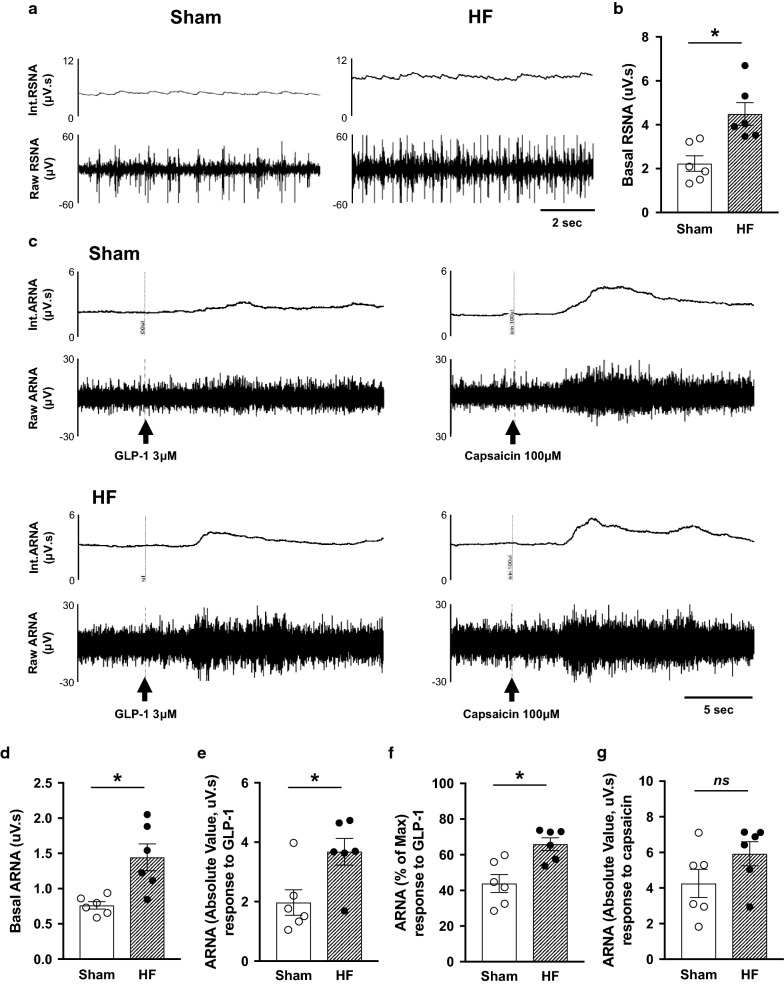
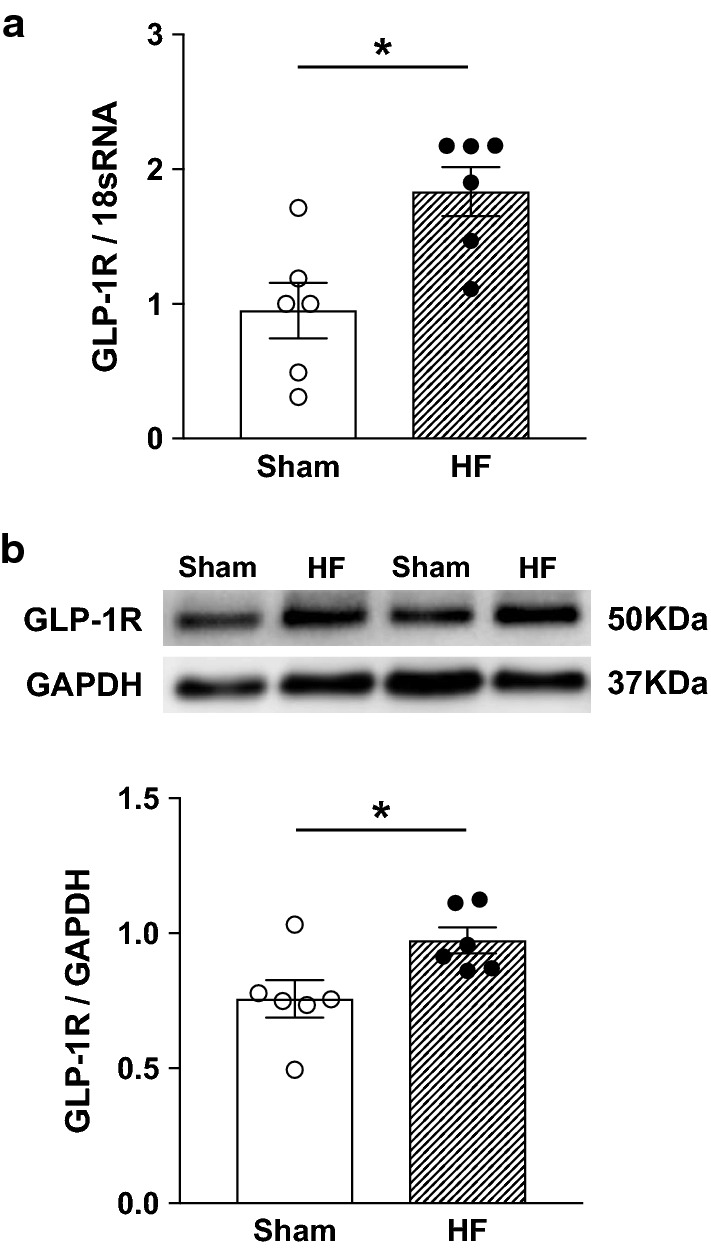
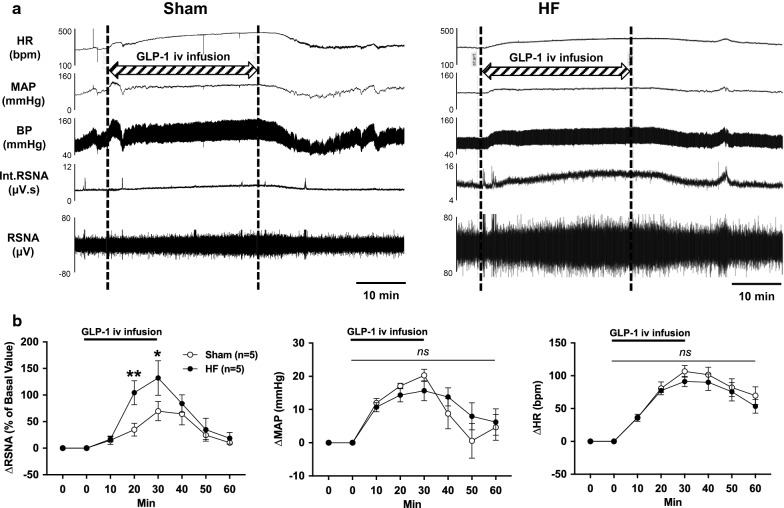
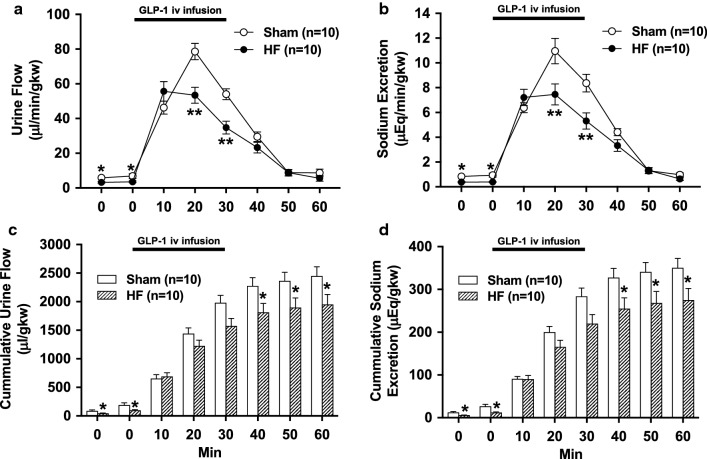
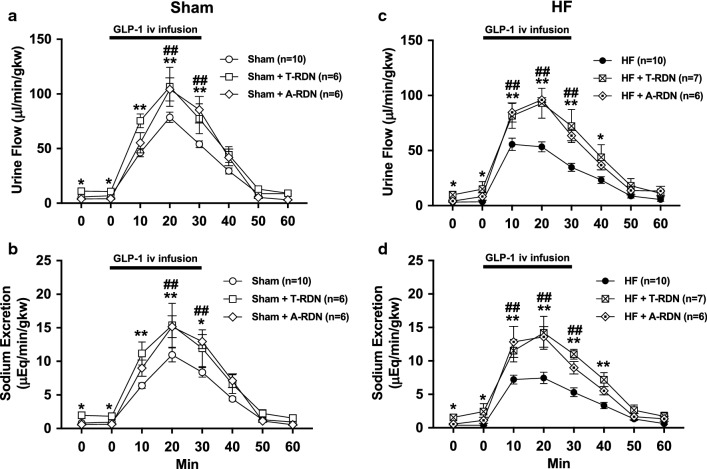
In HF, compared to sham-operated control; (1) response of increase in ARNA to intrapelvic injection of GLP-1 was enhanced (3.7 ± 0.4 vs. 2.0 ± 0.4 µV s), (2) GLP-1 receptor expression was increased in renal pelvis, (3) response of increase in RSNA to intravenous infusion of GLP-1 was enhanced (132 ± 30% vs. 70 ± 16% of the baseline level), and (4) diuretic and natriuretic responses to intravenous infusion of GLP-1 were blunted (urine flow 53.4 ± 4.3 vs. 78.6 ± 4.4 µl/min/gkw, sodium excretion 7.4 ± 0.8 vs. 10.9 ± 1.0 µEq/min/gkw). A-RDN induced significant increases in diuretic and natriuretic responses to GLP-1 in HF (urine flow 96.0 ± 1.9 vs. 53.4 ± 4.3 µl/min/gkw, sodium excretion 13.6 ± 1.4 vs. 7.4 ± 0.8 µEq/min/gkw).
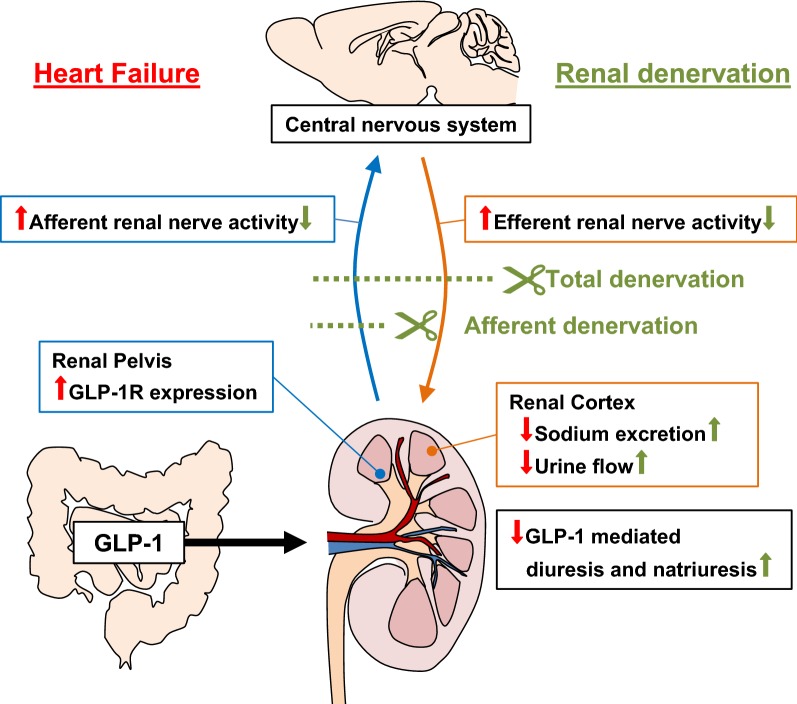
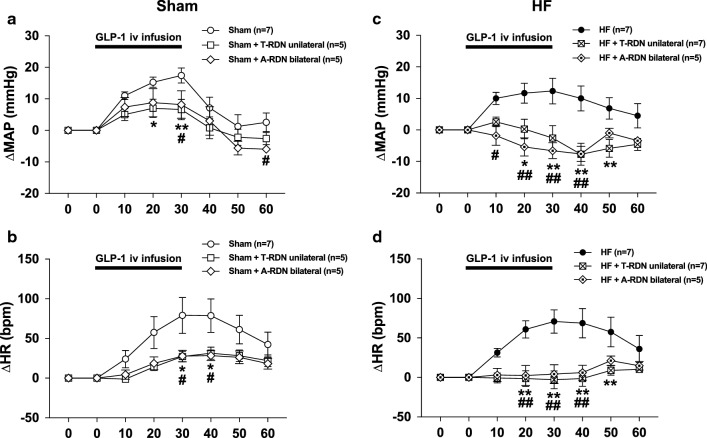
The excessive activation of neural circuitry involving afferent and efferent renal nerves suppresses diuretic and natriuretic responses to GLP-1 in HF. These pathophysiological responses to GLP-1 might be involved in the interaction between incretin-based medicines and established HF condition. RDN restores diuretic and natriuretic effects of GLP-1 and thus has potential beneficial therapeutic implication for diabetic HF patients.
胰高血糖素样肽-1(GLP-1)可诱导利尿和利钠。我们之前已经表明,GLP-1 激活传入肾神经,增加传出肾交感神经活动,这否定了正常大鼠中的利尿和利钠作用作为负反馈机制。然而,GLP-1 在心力衰竭(HF)中的肾脏作用尚未阐明。本研究旨在评估 HF 大鼠中 GLP-1 诱导的利尿和利钠作用及其与肾神经活动的相互作用。
通过冠状动脉结扎诱导 HF。通过向肾盂内注射 GLP-1 直接记录传入肾神经活动(ARNA),通过静脉输注 GLP-1 记录总肾交感神经活动(RSNA)。通过实时 PCR 和 Western blot 分析评估肾肾盂中 GLP-1 受体的表达,肾肾盂由传入肾神经密集支配。在冠状动脉结扎后的另一组大鼠中,通过对侧周应用辣椒素来进行选择性传入肾去神经支配(A-RDN),然后评估静脉输注 GLP-1 引起的利尿和利钠作用。
与假手术对照相比,HF 中:(1)向肾盂内注射 GLP-1 引起的 ARNA 增加反应增强(3.7±0.4 对 2.0±0.4 µV s),(2)肾肾盂中 GLP-1 受体表达增加,(3)静脉输注 GLP-1 引起的 RSNA 增加反应增强(132±30%对 70±16%的基线水平),和(4)静脉输注 GLP-1 引起的利尿和利钠反应减弱(尿流量 53.4±4.3 对 78.6±4.4 µl/min/gkw,钠排泄 7.4±0.8 对 10.9±1.0 µEq/min/gkw)。A-RDN 在 HF 中引起 GLP-1 引起的利尿和利钠反应显著增加(尿流量 96.0±1.9 对 53.4±4.3 µl/min/gkw,钠排泄 13.6±1.4 对 7.4±0.8 µEq/min/gkw)。
涉及传入和传出肾神经的神经回路的过度激活抑制了 HF 中 GLP-1 的利尿和利钠反应。这些对 GLP-1 的病理生理反应可能与基于肠促胰岛素的药物和既定 HF 状况之间的相互作用有关。RDN 恢复了 GLP-1 的利尿和利钠作用,因此对糖尿病 HF 患者具有潜在的有益治疗意义。