Department of Chemistry, Graduate School of Science, The University of Tokyo, Bunkyo-ku, Tokyo, 113-0033, Japan.
Department of Biotechnology, Graduate School of Agricultural and Life Sciences, The University of Tokyo, Bunkyo-ku, Tokyo, 113-8657, Japan.
Nat Commun. 2020 May 8;11(1):2272. doi: 10.1038/s41467-020-16145-4.
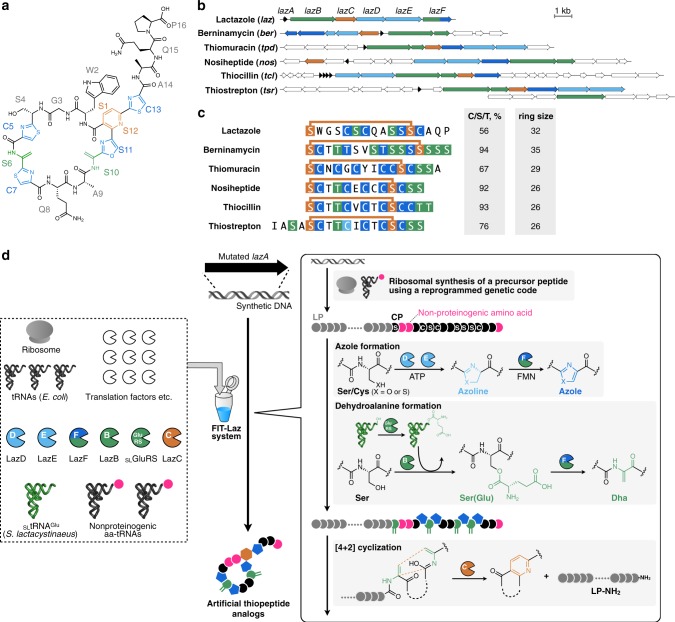
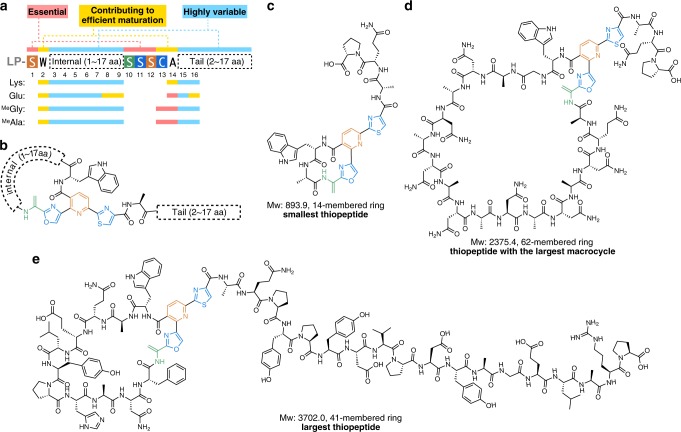
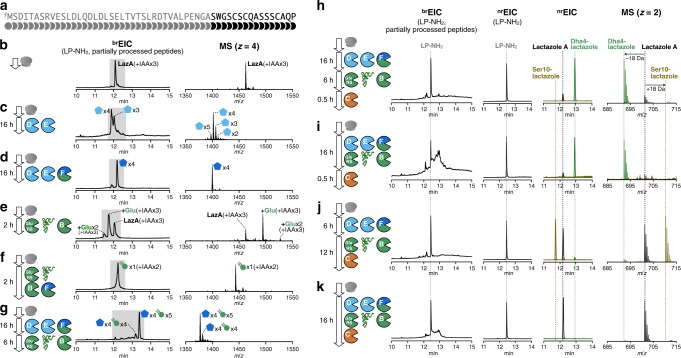
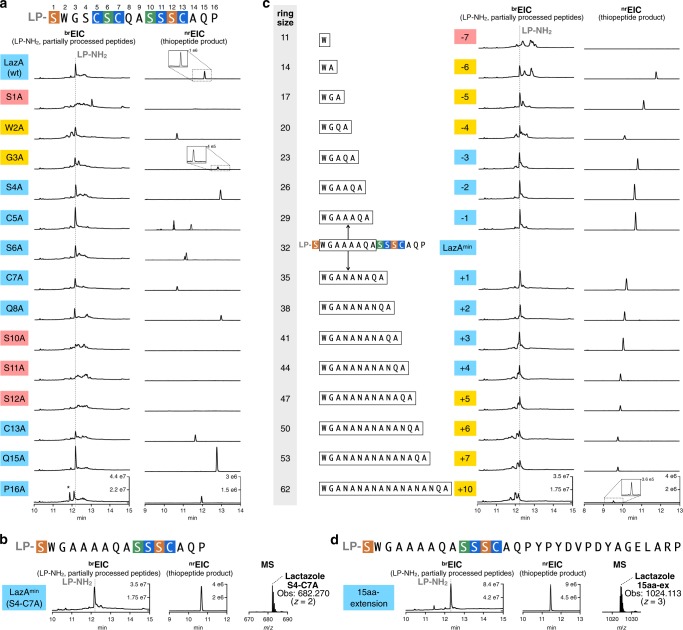
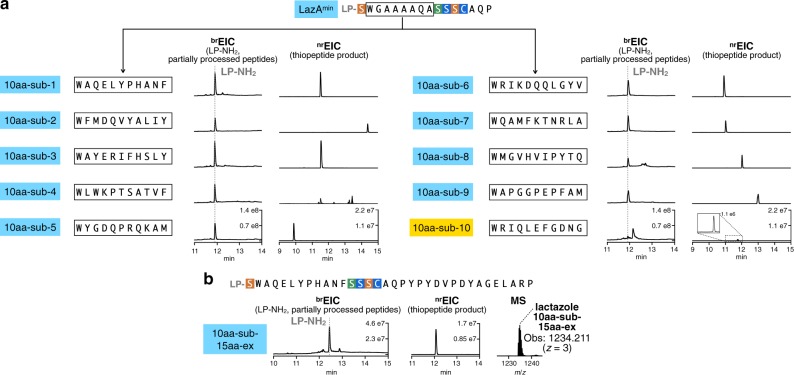
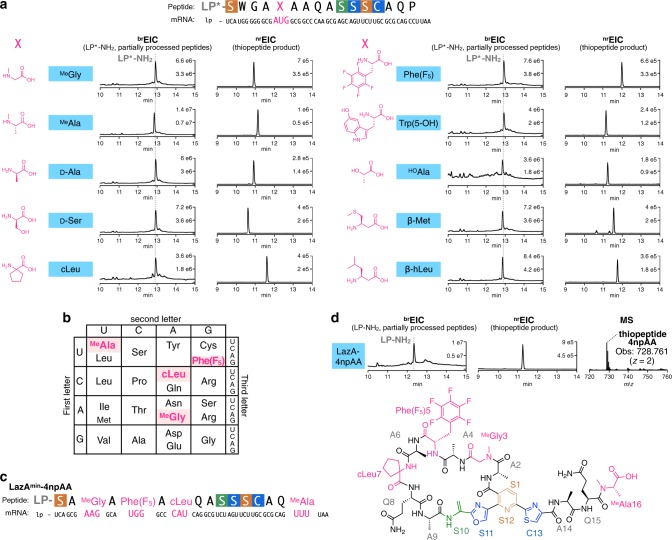
Lactazole A is a cryptic thiopeptide from Streptomyces lactacystinaeus, encoded by a compact 9.8 kb biosynthetic gene cluster. Here, we establish a platform for in vitro biosynthesis of lactazole A, referred to as the FIT-Laz system, via a combination of the flexible in vitro translation (FIT) system with recombinantly produced lactazole biosynthetic enzymes. Systematic dissection of lactazole biosynthesis reveals remarkable substrate tolerance of the biosynthetic enzymes and leads to the development of the minimal lactazole scaffold, a construct requiring only 6 post-translational modifications for macrocyclization. Efficient assembly of such minimal thiopeptides with FIT-Laz opens access to diverse lactazole analogs with 10 consecutive mutations, 14- to 62-membered macrocycles, and 18 amino acid-long tail regions, as well as to hybrid thiopeptides containing non-proteinogenic amino acids. This work suggests that the minimal lactazole scaffold is amenable to extensive bioengineering and opens possibilities to explore untapped chemical space of thiopeptides.
乳唑 A 是一种来自乳脂链霉菌的隐藏硫肽,由一个紧凑的 9.8 kb 生物合成基因簇编码。在这里,我们通过体外翻译(FIT)系统与重组乳唑生物合成酶的结合,建立了乳唑 A 的体外生物合成平台,称为 FIT-Laz 系统。乳唑生物合成的系统分析揭示了生物合成酶对底物的惊人耐受性,并导致了最小乳唑支架的发展,该支架仅需要 6 个翻译后修饰即可进行大环化。FIT-Laz 系统的高效组装为具有 10 个连续突变、14 到 62 个大环和 18 个氨基酸长的尾部区域的各种乳唑类似物以及含有非蛋白氨基酸的杂合硫肽提供了途径。这项工作表明,最小乳唑支架适合进行广泛的生物工程改造,并为探索硫肽的未开发化学空间提供了可能性。