Samsung Genome Institute, Samsung Medical Center, Seoul, 06351, Korea.
Department of Molecular Cell Biology, Sungkyunkwan University School of Medicine, Suwon, 16419, Korea.
Nat Commun. 2020 May 8;11(1):2285. doi: 10.1038/s41467-020-16164-1.
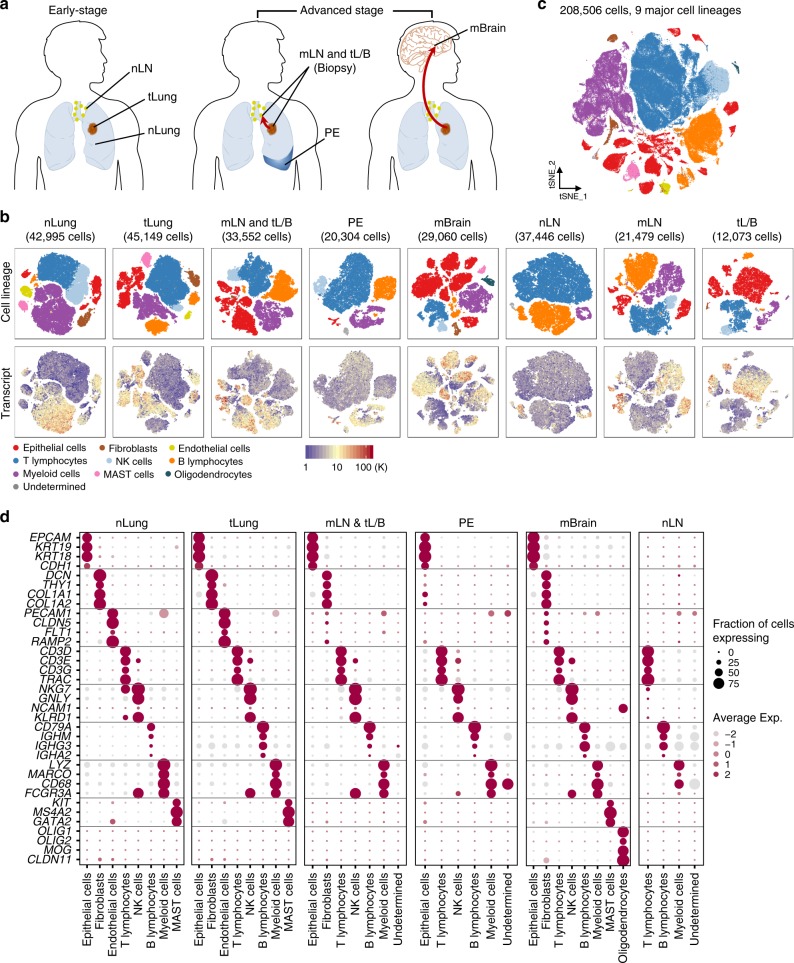
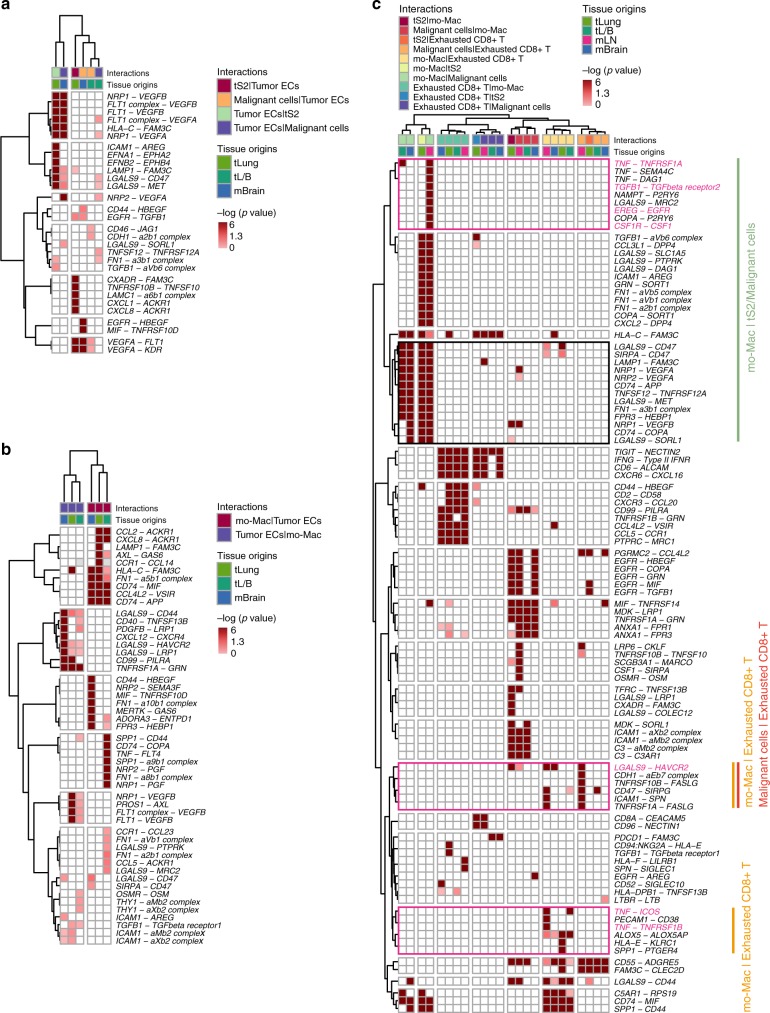
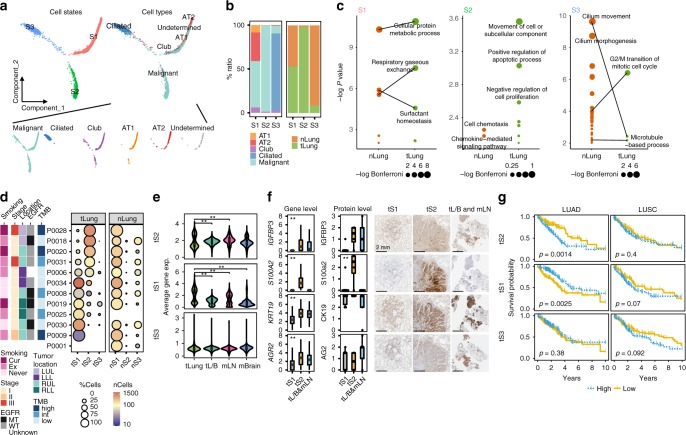
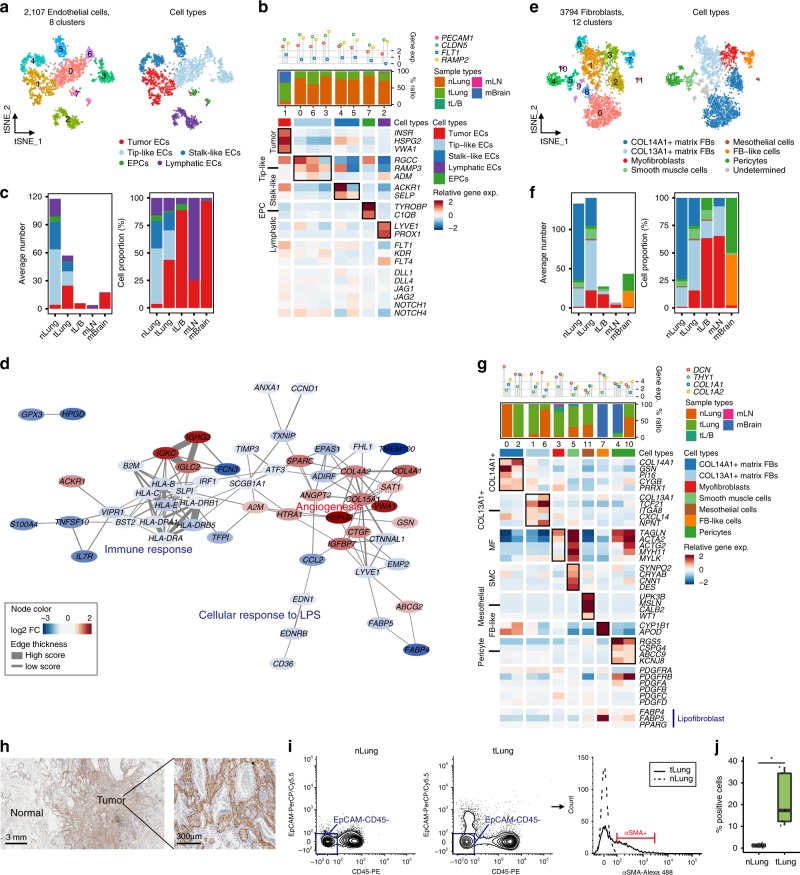
Advanced metastatic cancer poses utmost clinical challenges and may present molecular and cellular features distinct from an early-stage cancer. Herein, we present single-cell transcriptome profiling of metastatic lung adenocarcinoma, the most prevalent histological lung cancer type diagnosed at stage IV in over 40% of all cases. From 208,506 cells populating the normal tissues or early to metastatic stage cancer in 44 patients, we identify a cancer cell subtype deviating from the normal differentiation trajectory and dominating the metastatic stage. In all stages, the stromal and immune cell dynamics reveal ontological and functional changes that create a pro-tumoral and immunosuppressive microenvironment. Normal resident myeloid cell populations are gradually replaced with monocyte-derived macrophages and dendritic cells, along with T-cell exhaustion. This extensive single-cell analysis enhances our understanding of molecular and cellular dynamics in metastatic lung cancer and reveals potential diagnostic and therapeutic targets in cancer-microenvironment interactions.
晚期转移性癌症带来了最大的临床挑战,其分子和细胞特征可能与早期癌症不同。在这里,我们对转移性肺腺癌进行了单细胞转录组分析,转移性肺腺癌是最常见的组织学肺癌类型,在超过 40%的所有病例中被诊断为 IV 期。从 44 名患者的正常组织或早期到转移性阶段的 208506 个细胞中,我们鉴定出一种偏离正常分化轨迹并主导转移性阶段的癌细胞亚型。在所有阶段,基质和免疫细胞的动态变化都揭示了具有促肿瘤和免疫抑制作用的本体论和功能变化微环境。正常的骨髓细胞群体逐渐被单核细胞衍生的巨噬细胞和树突状细胞以及 T 细胞耗竭所取代。这种广泛的单细胞分析增强了我们对转移性肺癌中分子和细胞动力学的理解,并揭示了癌症-微环境相互作用中的潜在诊断和治疗靶点。