Department of Translational Neuroscience, College of Human Medicine, Michigan State University, Grand Rapids, MI 49503, USA; Hauenstein Neuroscience Center, Mercy Health Saint Mary's, Grand Rapids, MI 49503, USA.
Department of Translational Neuroscience, College of Human Medicine, Michigan State University, Grand Rapids, MI 49503, USA; Hauenstein Neuroscience Center, Mercy Health Saint Mary's, Grand Rapids, MI 49503, USA.
Exp Neurol. 2020 Aug;330:113327. doi: 10.1016/j.expneurol.2020.113327. Epub 2020 May 5.
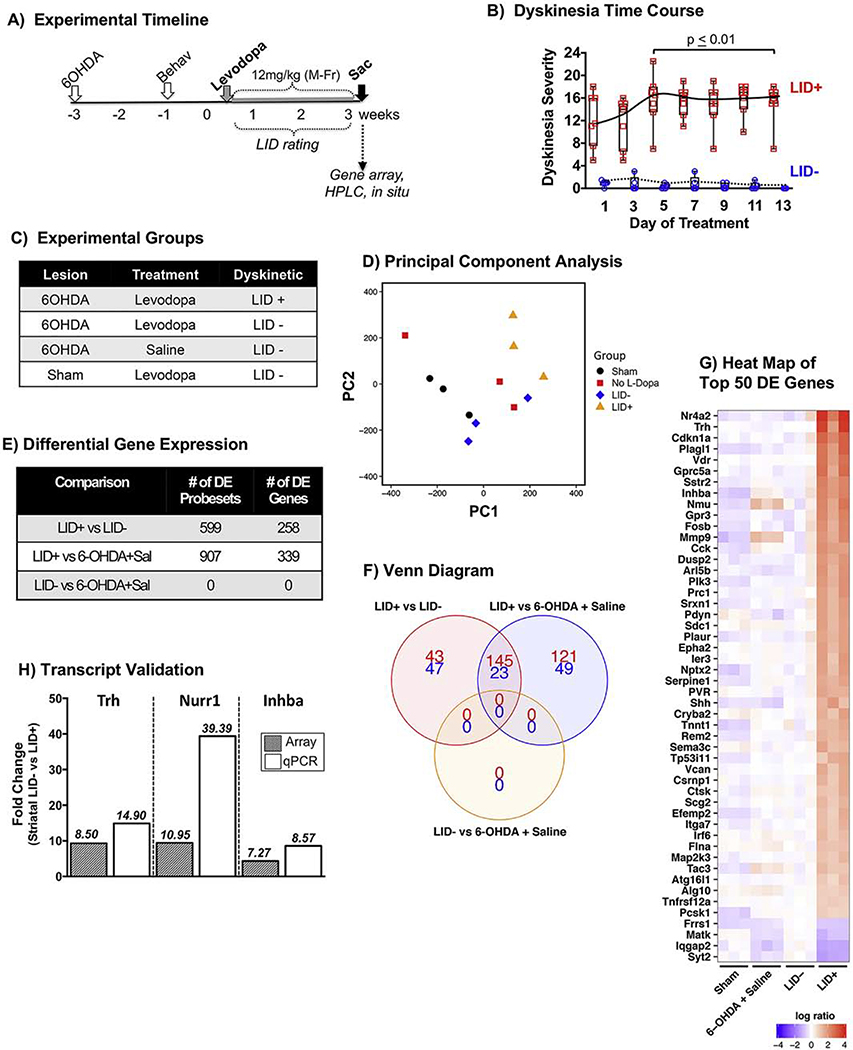
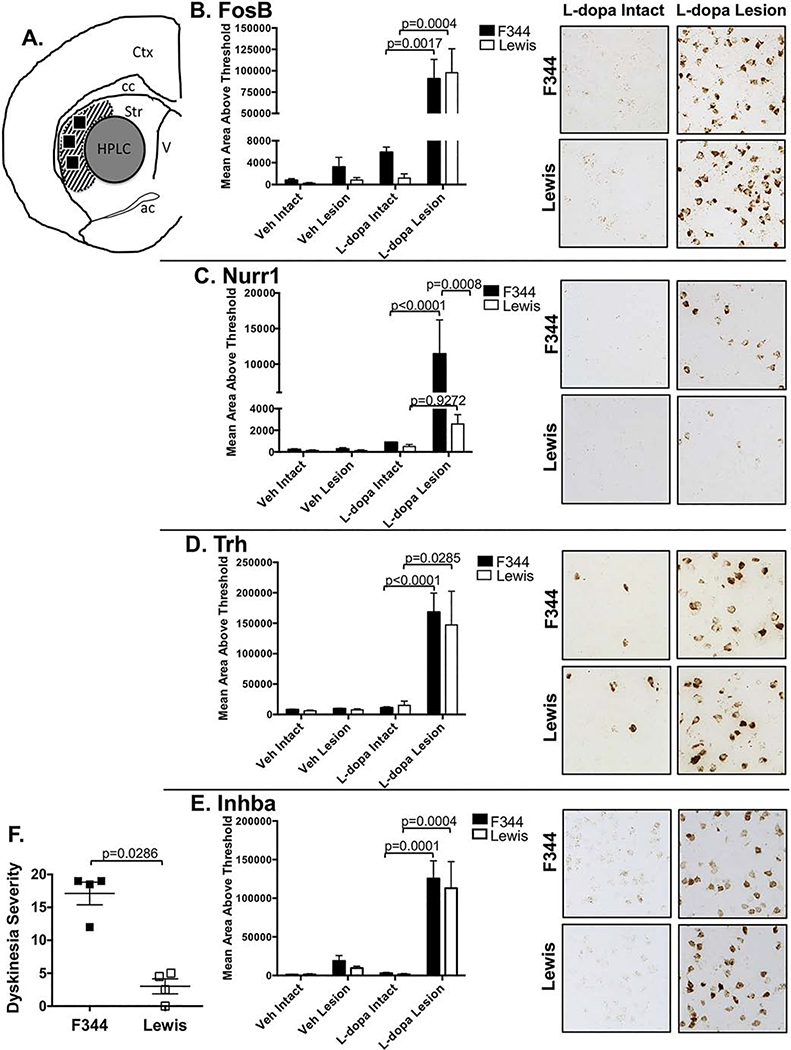
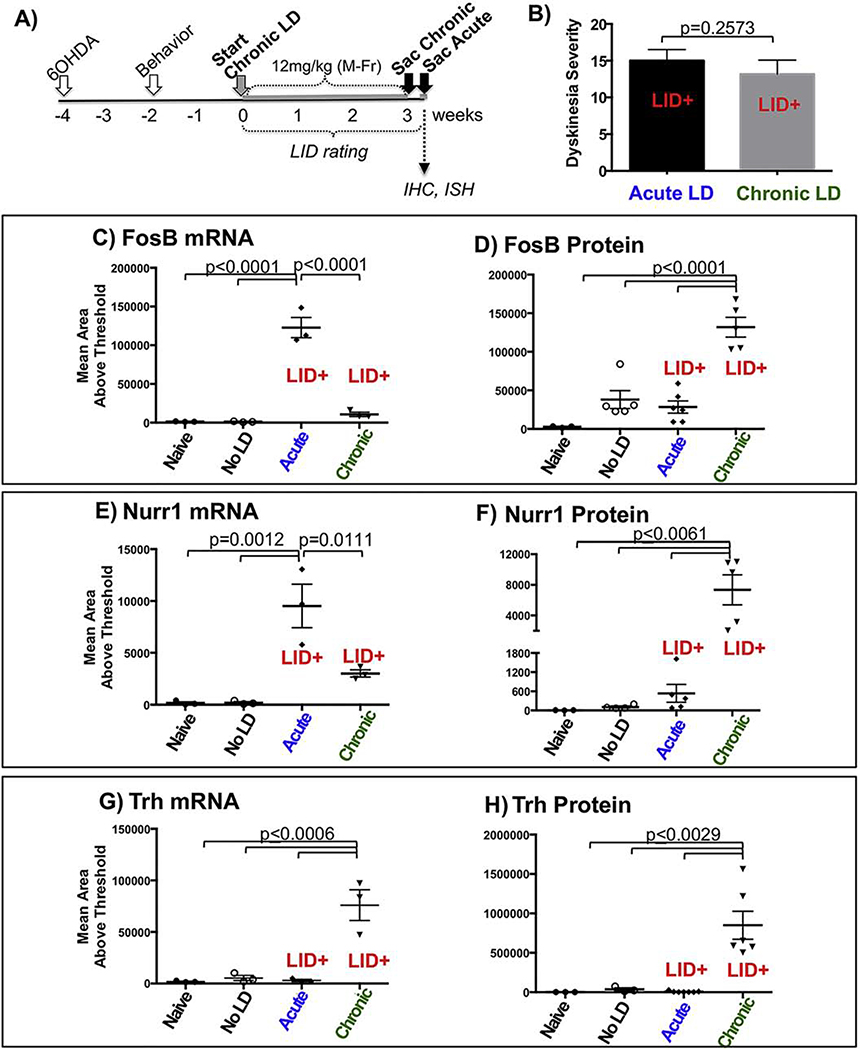
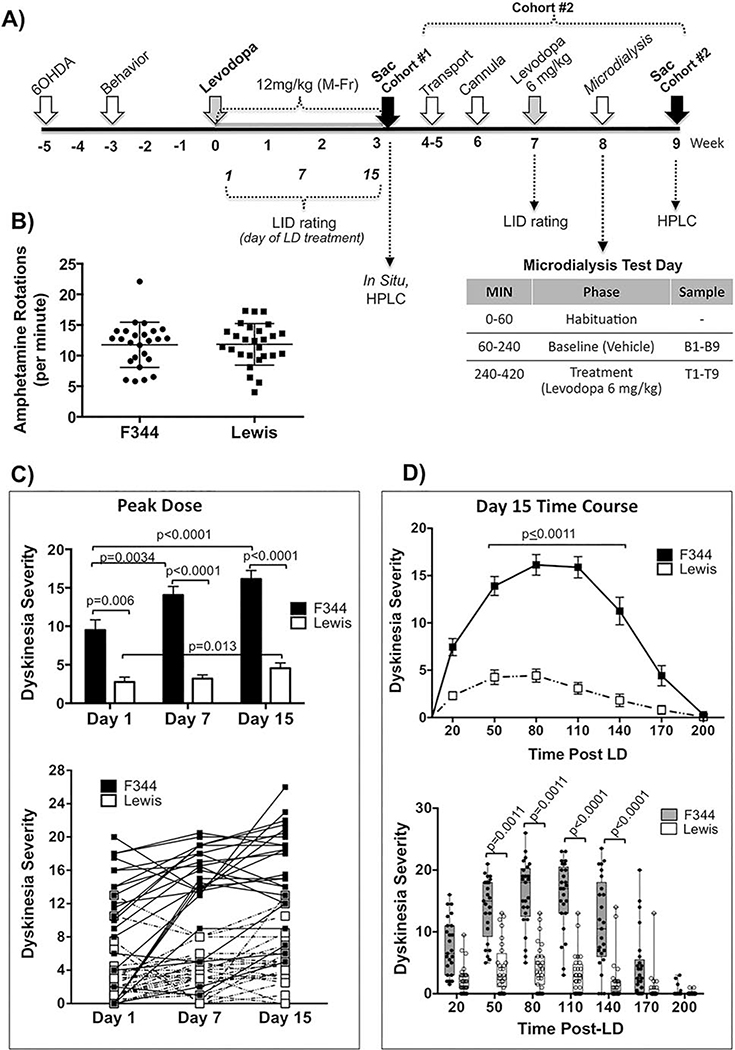
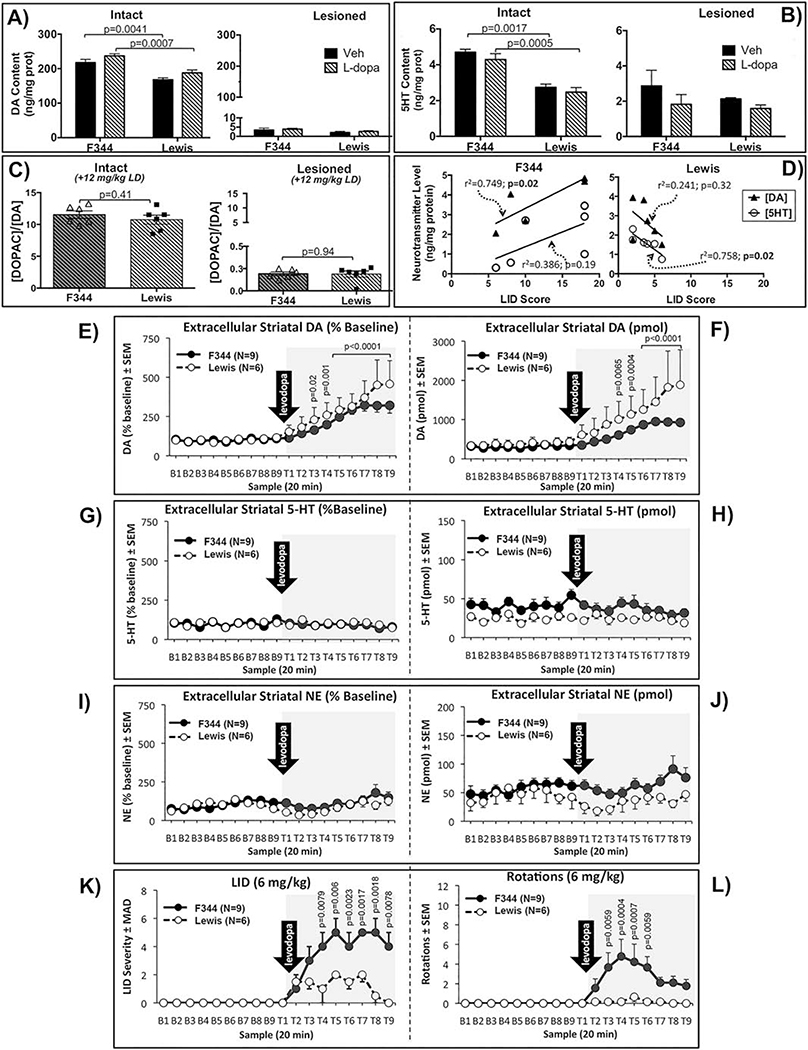
Numerous genes, and alterations in their expression, have been identified as risk factors for developing levodopa-induced dyskinesia (LID). However, our understanding of the complexities of molecular changes remains insufficient for development of clinical treatment. In the current study we used gene array, in situ hybridization, immunohistochemistry, and microdialysis to provide a unique compare and contrast assessment of the relationship of four candidate genes to LID, employing three genetically distinct rat strains (Sprague-Dawley (SD), Fischer-344 (F344) and Lewis-RT.1) showing differences in dyskinesia susceptibility and 'first-ever LID' versus 'chronic LID' expression in subjects displaying equal dyskinesia severity. In these studies, rat strains were easily distinguishable for their LID propensity with: 1) a majority of SD rats expressing LID (LID+) and a subset being resistant (LID-); 2) all F344 rats readily developing (LID+); and 3) all Lewis rats being LID-resistant (LID-). Following chronic levodopa, LID+ SD rats showed significant increases in candidate gene expression: Nr4a2/(Nurr1) > > Trh > Inhba = Fosb. However, SD rats with long-standing striatal dopamine (DA) depletion treated with first-ever versus chronic high-dose levodopa revealed that despite identical levels of LID severity: 1) Fosb and Nurr1 transcripts but not protein were elevated with acute LID expression; 2) FOSB/ΔFOSB and NURR1 proteins were elevated only with chronic LID; and 3) Trh transcript and protein were elevated only with chronic LID. Strikingly, despite similar levodopa-induced striatal DA release in both LID-expressing F344 and LID-resistant Lewis rats, Fosb, Trh, Inhba transcripts were significantly elevated in both strains; however, Nurr1 mRNA was significantly increased only in LID+ F344 rats. These findings suggest a need to reevaluate currently accepted genotype-to-phenotype relationships in the expression of LID, specifically that of Fosb, a transcription factor generally assumed to play a causal role, and Nurr1, a transcription factor that has received significant attention in PD research linked to its critical role in the survival and function of midbrain DA neurons but who's striatal expression, generally below levels of detection, has remained largely unexplored as a regulator of LID. Finally these studies introduce a novel 'model' (inbred F344 vs inbred Lewis) that may provide a powerful tool for investigating the role for 'dyskinesia-resistance' genes downstream of 'dyskinesia-susceptibility' genes in modulating LID expression, a concept that has received considerably less attention and offers a new ways of thinking about antidyskinetic therapies.
许多基因及其表达的改变已被确定为导致左旋多巴诱导的运动障碍(LID)的风险因素。然而,我们对分子变化复杂性的理解仍然不足以开发临床治疗方法。在目前的研究中,我们使用基因阵列、原位杂交、免疫组织化学和微透析技术,提供了对四种候选基因与 LID 关系的独特比较和对比评估,使用了三种具有不同遗传特征的大鼠品系(Sprague-Dawley(SD)、Fischer-344(F344)和 Lewis-RT.1),这些品系在表现出相同运动障碍严重程度的受试者中显示出运动障碍易感性和“首次 LID”与“慢性 LID”表达的差异。在这些研究中,大鼠品系因其 LID 倾向而易于区分:1)大多数 SD 大鼠表达 LID(LID+),一部分大鼠具有抗性(LID-);2)所有 F344 大鼠都容易发展(LID+);3)所有 Lewis 大鼠都具有 LID 抗性(LID-)。在慢性左旋多巴治疗后,LID+ SD 大鼠的候选基因表达显著增加:Nr4a2/(Nurr1)>Trh>Inhba=Fosb。然而,在接受首次慢性高剂量左旋多巴治疗的具有长期纹状体多巴胺(DA)耗竭的 SD 大鼠中,尽管 LID 严重程度相同:1)Fosb 和 Nurr1 转录本而非蛋白在急性 LID 表达时升高;2)FOSB/ΔFOSB 和 NURR1 蛋白仅在慢性 LID 时升高;3)Trh 转录本和蛋白仅在慢性 LID 时升高。引人注目的是,尽管在表达 LID 的表达 F344 和 LID 抗性 Lewis 大鼠中,左旋多巴诱导的纹状体 DA 释放相似,但 Fosb、Trh、Inhba 转录本在两种品系中均显著升高;然而,Nurr1 mRNA 仅在 LID+ F344 大鼠中显著增加。这些发现表明需要重新评估目前在 LID 表达中接受的基因型到表型关系,特别是转录因子 Fosb,通常被认为在 LID 中起因果作用,以及 Nurr1,它在与帕金森病研究相关的研究中受到了极大的关注,因为它在中脑 DA 神经元的存活和功能中起着关键作用,但它在纹状体中的表达,通常低于检测水平,在调节 LID 方面仍然在很大程度上未被探索。最后,这些研究引入了一种新的“模型”(近交系 F344 与近交系 Lewis),可能为研究“运动障碍易感性”基因下游的“运动障碍抗性”基因在调节 LID 表达中的作用提供有力工具,这一概念受到的关注较少,并为抗运动障碍治疗提供了一种新的思维方式。